
Early Goldenrod is a wildflower native to Eastern North America[1]. Scientifically known as Solidago juncea, it can grow up to 3’ tall in full sun and well draining soil[2]. Blooming showy yellow flowers for up to six weeks in mid to late summer, it attracts numerous species of bee, butterfly, moth, as well as other insects who feed destructively on the plant[3][4].
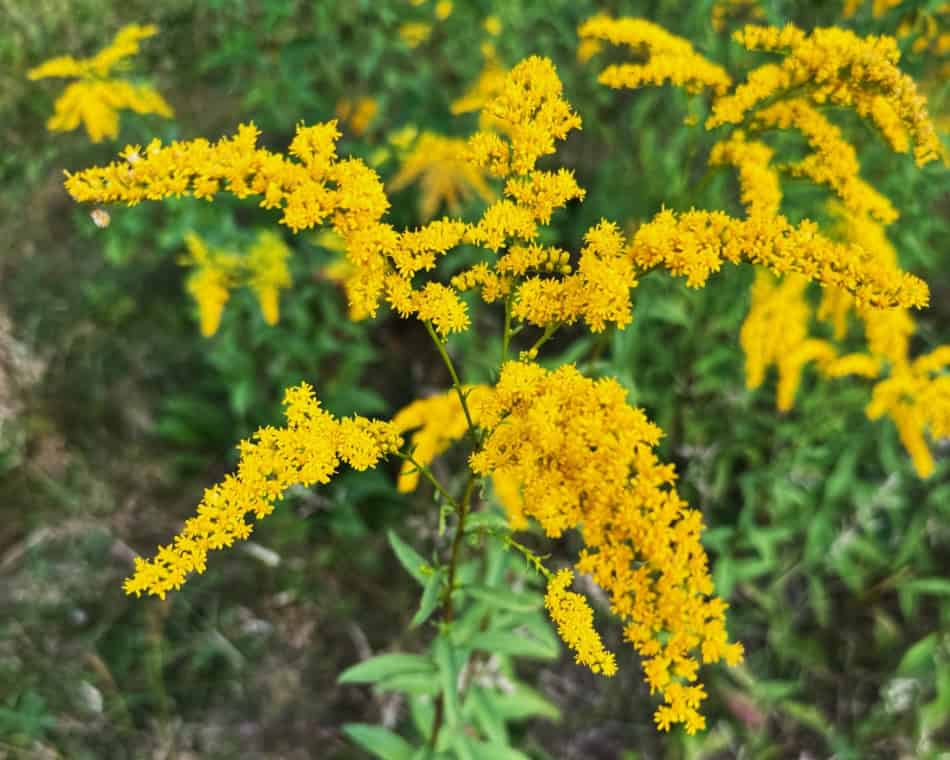
The first of all goldenrods to bloom, Early Goldenrod is often present, but not nearly as plentiful as it’s more aggressive cousins such as Canadian Goldenrod. However, the flowers are quite attractive and the plant is readily identifiable often by the leaflets at the main axils along the stalk, in conjunction with the bloom time.
Goldenrods as a whole are classified as keystone plants, meaning they support wildlife and food web far more than most other species. Beyond it’s flowers, Early Goldenrod is a host plant for several species of moth caterpillar, further showing it’s importance to the ecosystem.
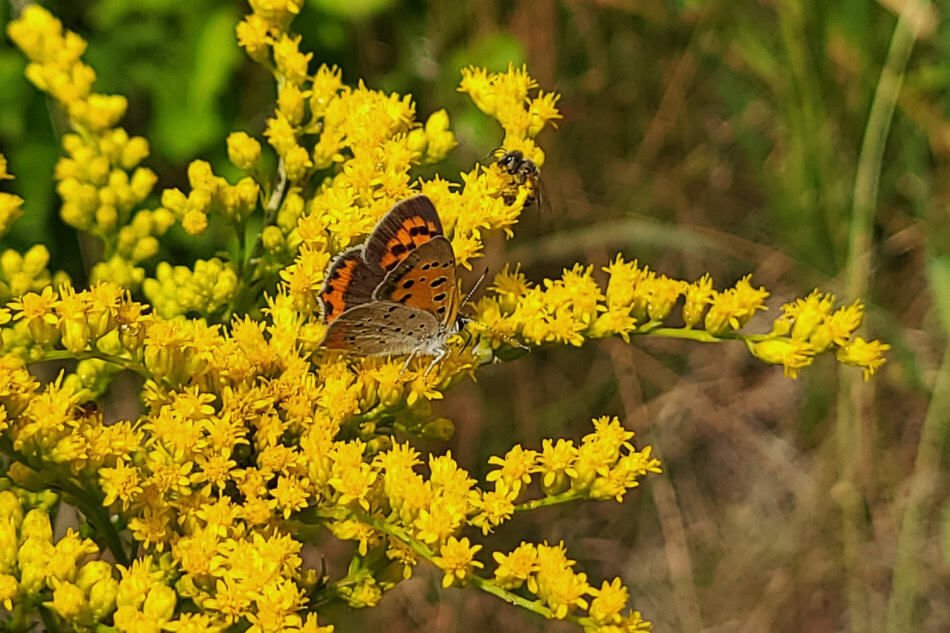
Now, ‘goldenrod’ is often thought of as an aggressive type of plant, and with many species, this is true. Now although this species of goldenrod produces rhizomes, it is a less aggressive species than many others. It seems to thrive in similar conditions to most goldenrods, so not too wet, but well-draining soil and as much sun as is available. In drier environments the leaves may turn brown/crispy, but the plant is probably ok as long as it isn’t it’s first year.
Native Range
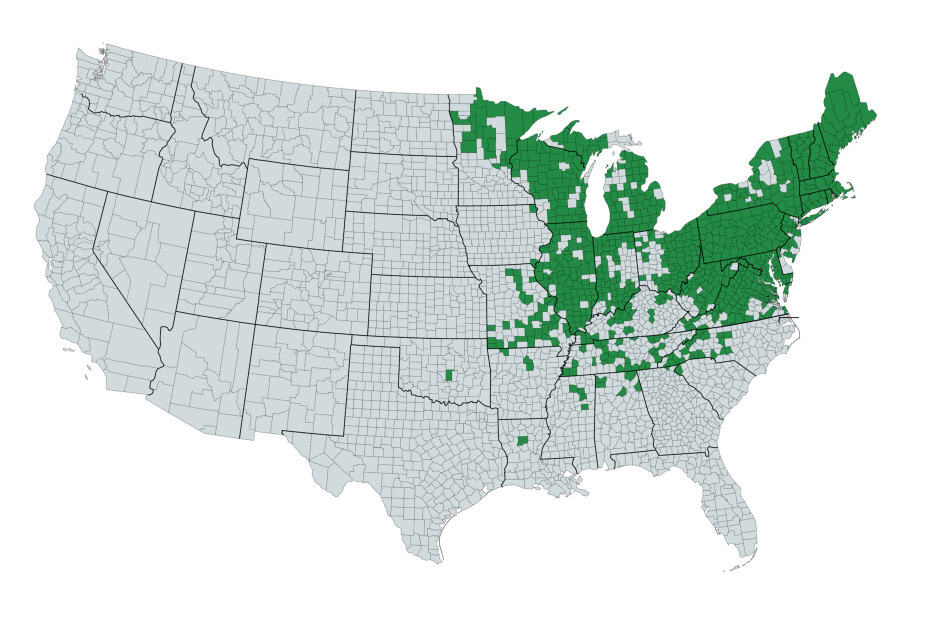
The primary native range of Early Goldenrod is in the upper Midwest and North East North America. From Southern Missouri to Manitoba Canada, East to New Brunswick/Nova Scotia, and North Carolina[1]. Within the Midwest it primarily stays East of the Mississippi.
Reference Table
| Scientific Name | Solidago juncea |
| Common Name(s) | Early Goldenrod |
| Native Range, USDA Zone | Eastern North America, USDA Hardiness Zones 3-8 |
| Bloom Time | Summer/Late Summer |
| Bloom Duration, Color | Six weeks, yellow |
| Height | 2-4′ |
| Spacing / Spread | 2-3′ |
| Light Requirements | Full Sun |
| Soil Types | Sandy loam to clay, but must drain well |
| Moisture | Dry to medium-moisture |
| Fauna Associations / Larval Hosts | Numerous species of bee, butterfly, wasp, fly, and other insects feed on foliage. Hosts at least two species of moth. |
Benefits
Beauty
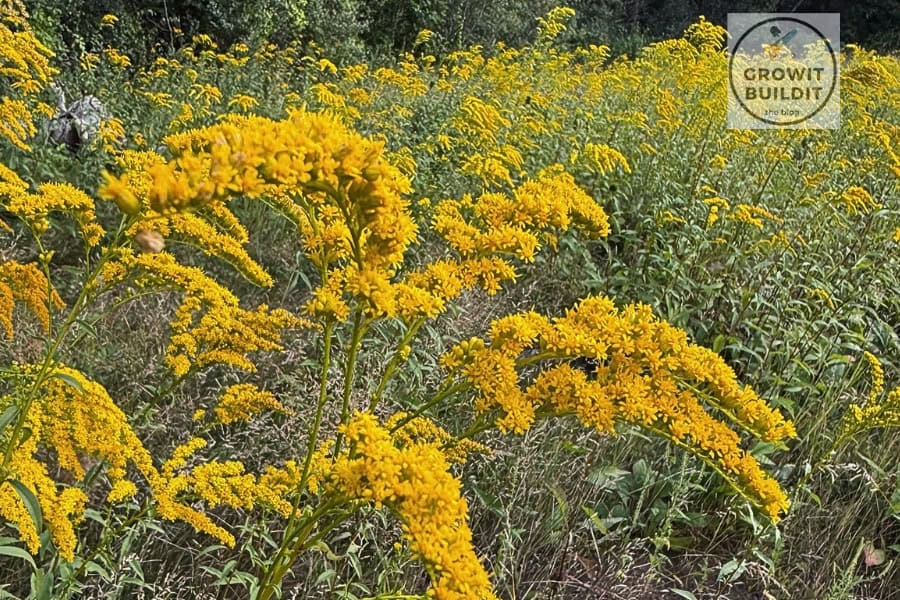
Like all goldenrods, Early Goldenrod makes plumes of yellow flowers each year. It is quite showy when there are multiple plants blooming, as the yellow really pops against green foliage.
Wildlife
Goldenrods are considered a keystone plant, as they are so beneficial to wildlife. This species in particular competes with numerous other flowers as it blooms in late summer. But, as such, it has been found to be very valuable to native species.
Long Bloom Time
Identification and Characteristics
Stalk
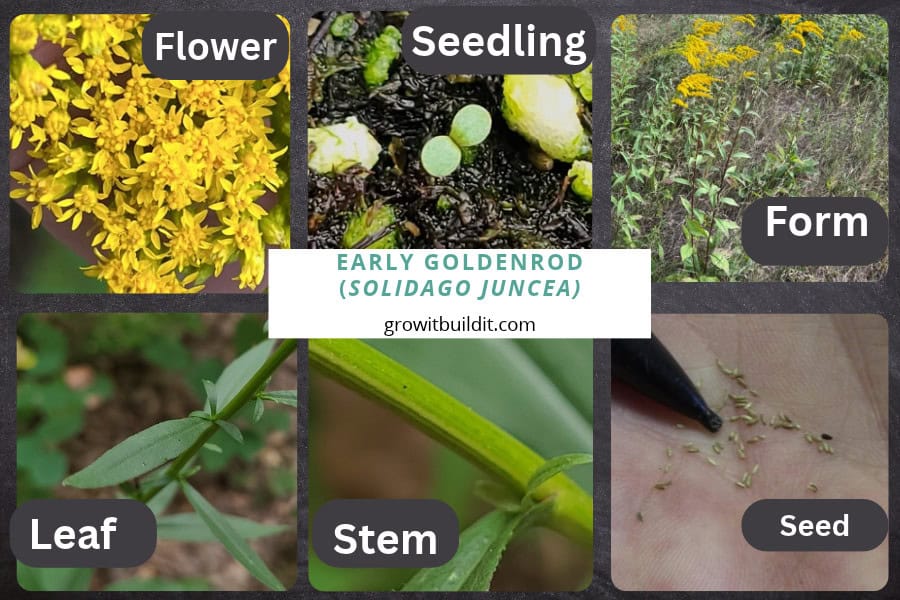
The stalk of this plant grows upwards of 3’ tall, and generally doesn’t have any branching. It is a round, ridged shape, smooth, and green to reddish-purple in color.
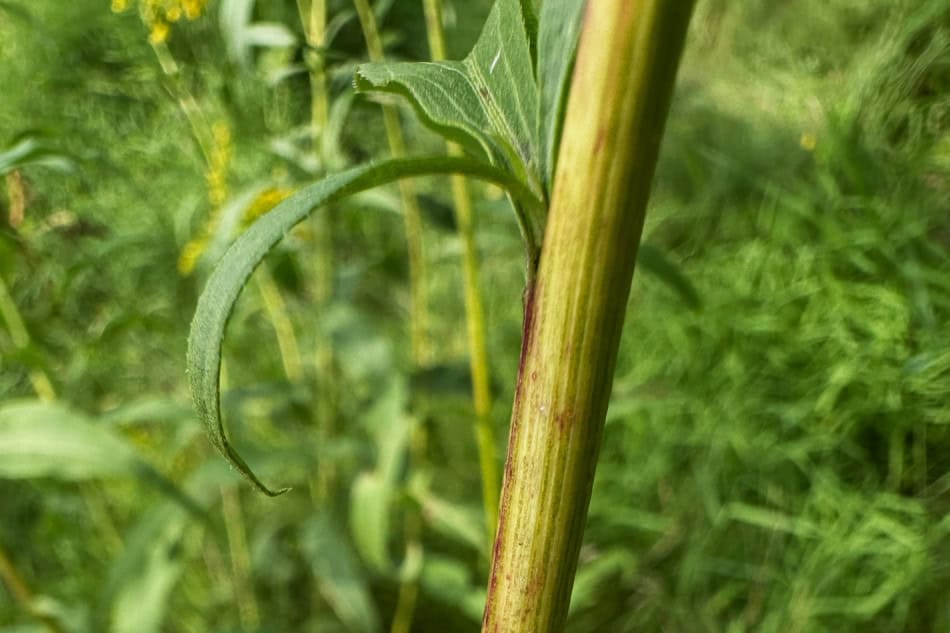
Leaf
Leaves are alternately arranged, and usually 3-6” long by 1/2” to 1-1/2” wide, lanceolate in shape to narrow-ovate, with smooth margins[2]. There are often two leaflets at the axil, which really help in identification. The color is medium green, and can have tiny hairs on the margins.
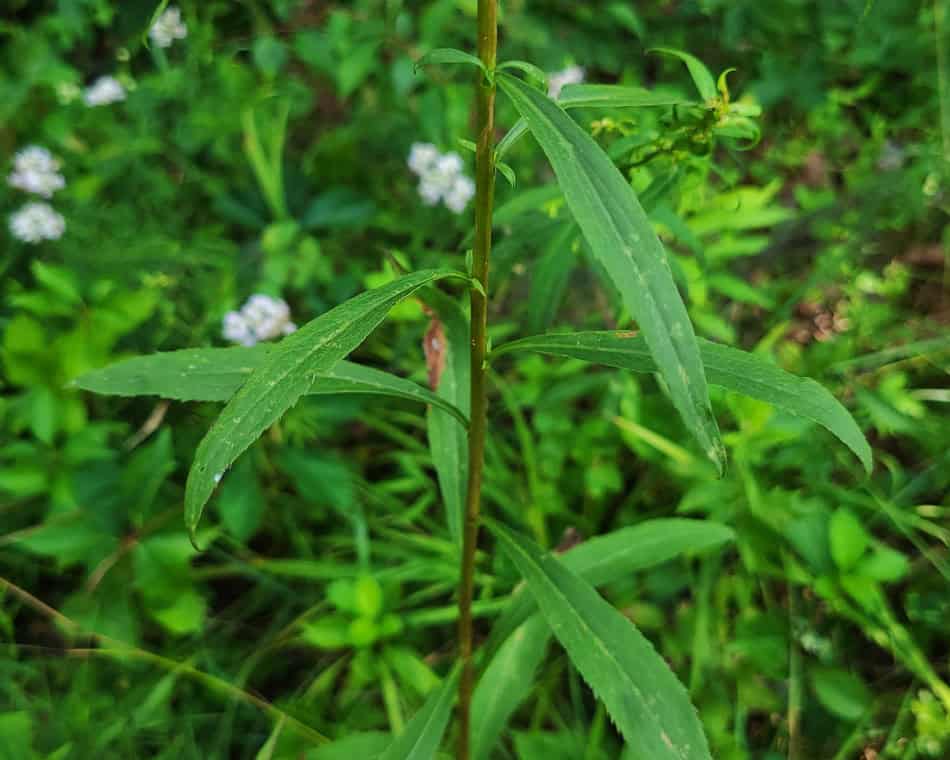
Flower
The floral structure is at the end of the stalk and will be a panicles of flowers running along stems that arch, similar to fireworks (although not as dramatic as Wrinkle-leaf Goldenrod). These flowers will last up to six weeks, and be a super-bloom for about 3-4 weeks and very showy[2].
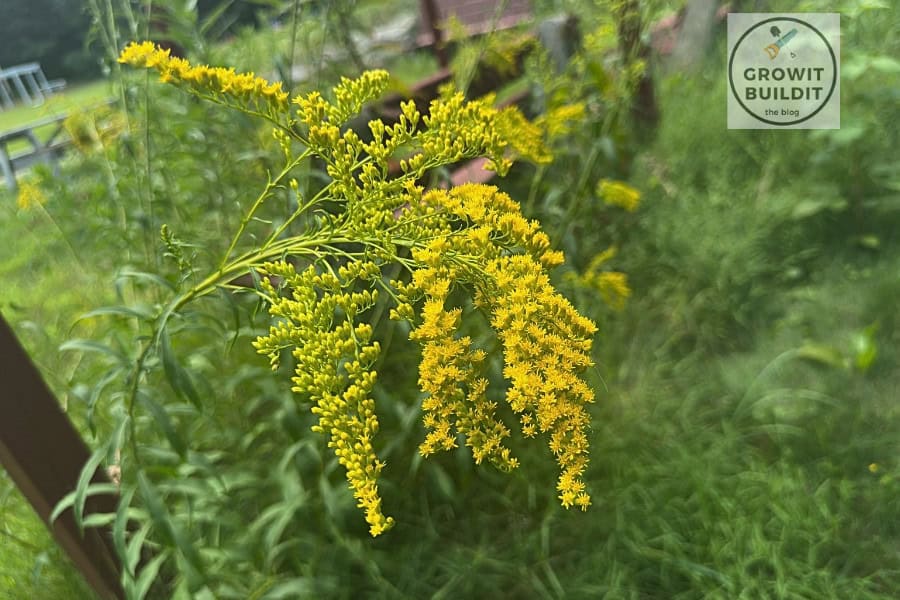
Individual flowers are very tiny, up to 6 mm diameter with 4-14 ray florets.
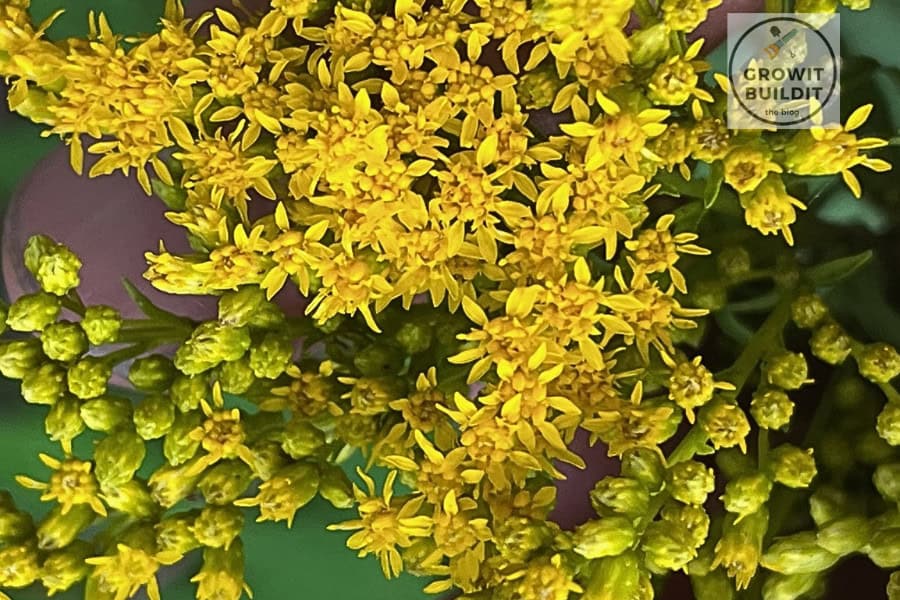
Root
The root system is a stout caudex with rhizomes. Although, this is by no means as aggressive as it’s cousin, Canadian Goldenrod, it will produce a modest amount of vegetative offshoots.
Growing Conditions
The preferred growing conditions of Early Goldenrod is full to part-sun, medium to dry soils that are well-drained. Drainage is the key! As this plant does not do well in soggy, poorly aerated soils although it can tolerate some moisture.
Maintenance
If you have fertile soil, or grow it without much competition, it is possible for this plant to lean/flop over. Perform the Chelsea Chop in late June to avoid this.
Fertilizer
Do not fertilize this plant. That will make it excessively tall, and more likely to fall over.
How to save seed
About four weeks after blooming you can save seed. To do so, wait until the flowerheads turn a white color, indicating the seed is ripe. Then cut below the seed head and place it into a brown paper bag or container, and let it dry out for a week in a cool dry place. Then, rub your hand along the stalks to release the seed and chaff.
If you are a bit adventurous, on a calm day in a safe container (like an aluminum baking sheet) you can use a lighter to burn the feathery tufts away, leaving only seed. Just take care not to hold the flame on the seeds as you may kill the seed. But a short burst of flame can really eliminate some of the chaff – but do this at your own risk!
But regardless if you burn off the tufts, you can store dry seed in a baggy or envelope out of direct sunlight in a cool dry place for up to 3 years and retain decent viability.
How to Grow Early Goldenrod from Seed
To germinate Early Goldenrod, you need to overcome two dormancy mechanisms in that the seed needs to be exposed to sunlight to germinate as well as go through a cold-moist stratification period of two months. The easiest way to do this is to winter sow the seed, although you can use a moist-paper towel in a ziplock bag in the fridge too (but it may get mold).
But to plant seed, whether winter sowing or seed that has been cold stratified in the fridge for sixty days, simply fill a suitable container with moist potting soil and tamp firm. Scatter the seed on top of the soil, and press it in with your thumb – but don’t bury it. It needs exposure to sun. Place the container in a location that gets morning sun and afternoon shade, and germination should occur once temperatures regularly get above 50F.
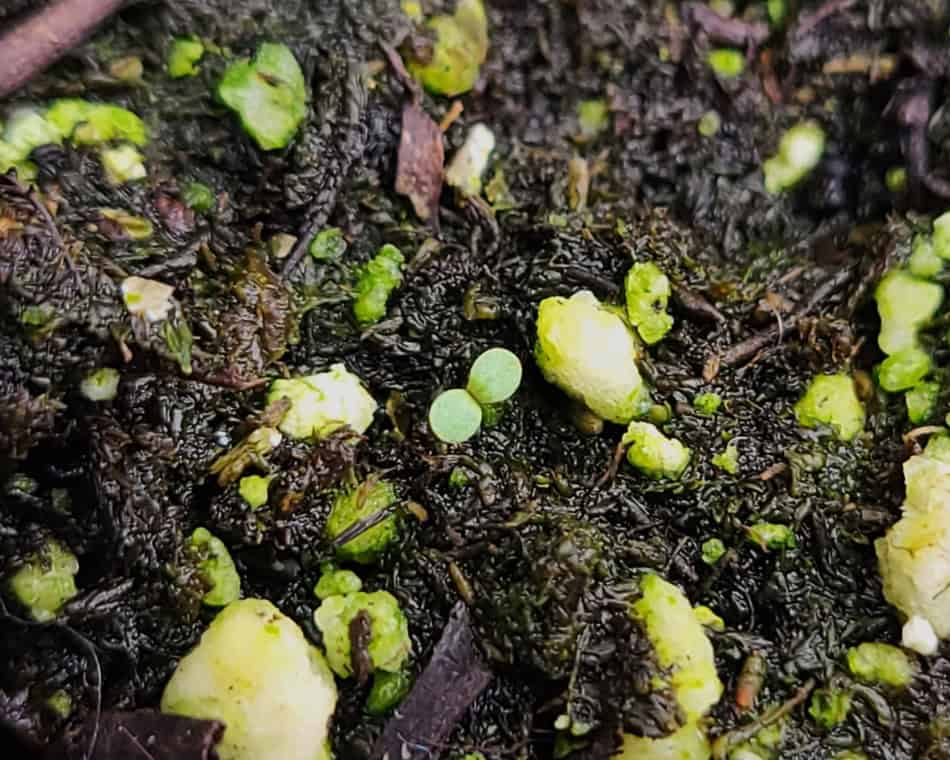
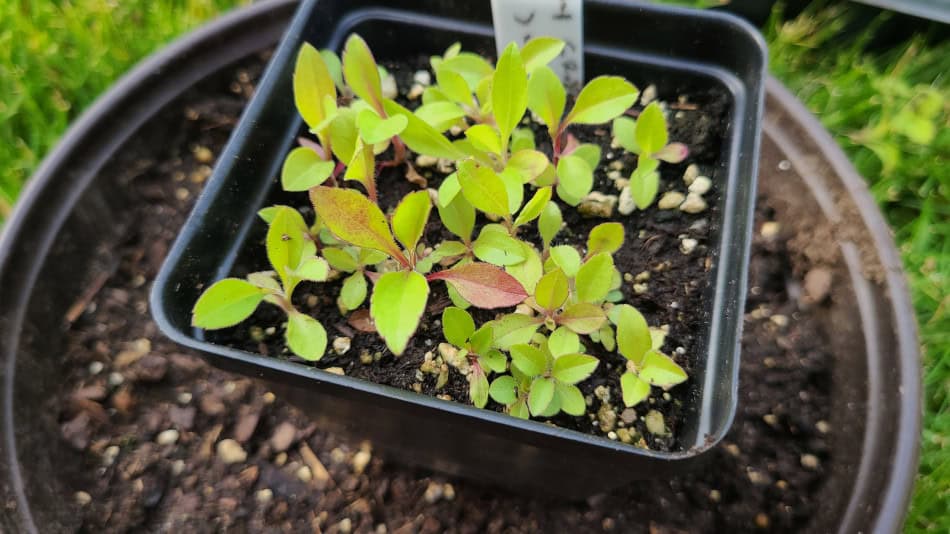
If you get a high germination rate with many seedlings in a single pot, then I strongly suggest you thin them out with a tweezer. [See my guide to separate seedlings here] In a typical 4” pot, you should have no more than 3-5 seedlings. Let these grow until they get 2-3 sets of true leaves, then separate into other containers, or plant in their final location using the hunk-o-seedlings method.
Wildlife, Pests, and Diseases associated with Early Goldenrod
Pollinators
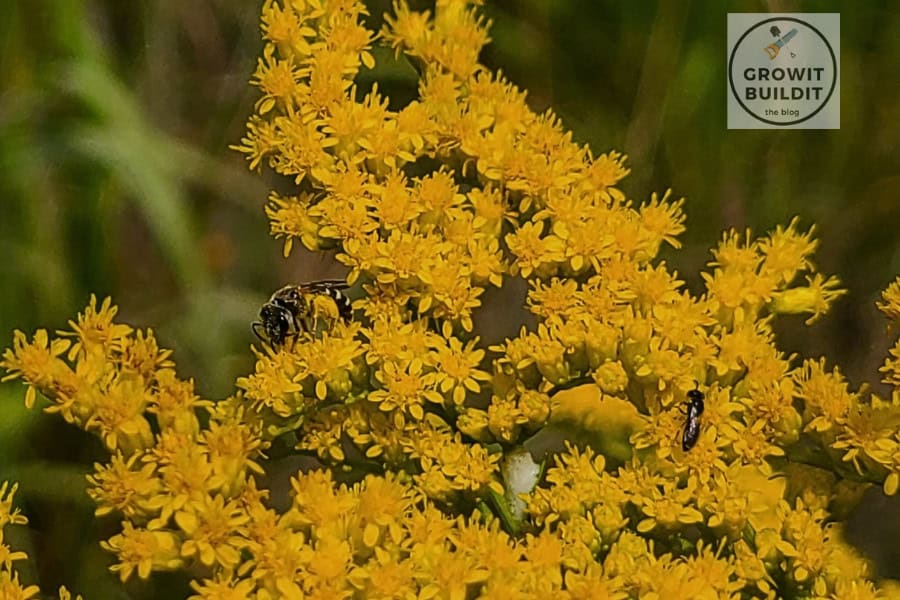
Numerous species of pollinator are attracted to Early Goldenrod. This includes native bees, bumblebees, honey bees, beetles, wasps, flies, moths, and yes, butterflies. In particular, it’s earlier flowering period mean that native insects are the primary pollinators of it[3].
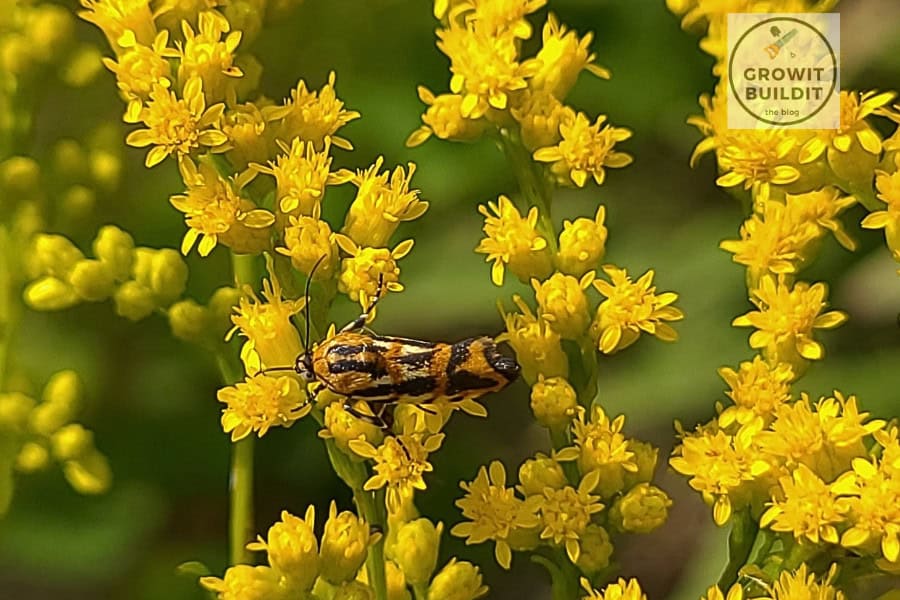
In addition to attracting pollinators, Early Goldenrod is a host plant for two species of moth caterpillar, Epiblema scudderiana, and Tischeria solidagonifoliella.
Deer and Rabbits
Although these plants are not preferred forage of deer and rabbits, they may browse them (especially when young). So, protect young plants with liquid fence or other means.
Disease
This plant is generally not effected by disease, although in drier conditions or drought the lower leaves can turn brown and crispy.
Where you can buy Early Goldenrod
Early Goldenrod is not typically sold in nurseries, as it isn’t a typical ‘garden friendly’ plant. But it can be purchased at specialty nurseries that deal in Native Plants. You can find native plant nurseries near you on our interactive map.
Where to buy seeds
We have ordered a variety of native flower seeds from Everwilde Farms, which you can order right from Amazon through our link on our RECOMMENDED PRODUCTS PAGE. (We may earn a small commission when you purchase through our links, at no cost to you. This helps support our website.)

Uses of Early Goldenrod
Landscaping
Although this plant isn’t that aggressive, you will likely get plenty of volunteers from rhizomes or self-seeding if you don’t deadhead the plant. So, be prepared for that. But this plant can be a good choice for any border garden, wildflower garden, or densely planted native plant garden where other plants and grasses keep it in check.
Companion Plants
There are numerous companion plants that would work well with Early Goldenrod. For some that bloom concurrently, try Smooth Blue Aster, Blue Lobelia, Spotted Bee Balm, and Hoary Vervain. Some species that bloom prior to Early Goldenrod, but like similar conditions would include Downy Wood Mint, Echinacea angustfolia, Tennessee Coneflower, and Wild Bergamot. Some nice grass pairings would include Little Bluestem, Prairie Dropseed, and Pink Muhly Grass.
Medicinal Uses
There are 10 uses of Early Goldenrod documented by three Tribes. These include infusions of root or the whole plant to treat fever, convulsions, digestion/stomach pain, jaundice, or a decoction of flowers as an emetic[5].
Conclusion
Early Goldenrod is one of those goldenrods that can make a good addition to a garden, even a more formal one since it isn’t that aggressive. The wildlife value it brings is substantial, in that it attracts a huge number of species of pollinator as well as other beneficial insects. So, if you are designing a garden for wildlife, or just love Goldenrods, consider adding this species – you won’t regret it!
Find more native plants here
References:
[1] – Solidago juncea Aiton, USDA NRCS. Accessed 27NOV2026.
[2] – efloras.org, Solidago juncea Aiton. Accessed 12NOV2026. Archived.
[3] – Federal Highway Division, Ecoregional Revegetation Application (ERA)
[4] – Gross, Ronald S., and Patricia A. Werner. “Relationships among flowering phenology, insect visitors, and seed‐set of individuals: experimental studies on four co‐occurring species of goldenrod (Solidago: Compositae).” Ecological monographs 53.1 (1983): 95-117.
[5] – Solidago Juncea, North American Ethnobotany Database. Accessed 14NOV2026.
Recent Posts
Bald Faced Hornets - A Complete Guide To These Dangerous Wasps
Bald faced hornets are one of the most fearsome insects in North America, under certain conditions. They make huge nests that can hold hundreds of workers by late summer – and those nests will be...
Crabgrass is an invasive weed from Eurasia that plagues gardens and lawns alike across the world. A creeping annual grass that is a more pale shade of green then regular turfgrass making it...