
Bald faced hornets are one of the most fearsome insects in North America, under certain conditions. They make huge nests that can hold hundreds of workers by late summer – and those nests will be well defended. It is best to leave well enough alone if possible. But, in out-of-the way locations, away from people or high up in the trees, and they are relatively harmless to you. So, while scary, in this guide I will teach you to confirm the identity for both the bug and nest, evaluate if it is a risk to you, and then how to handle them if you need to remove them, as I’ve had them construct nests hanging off the corner of my garage two years in a row.
Background
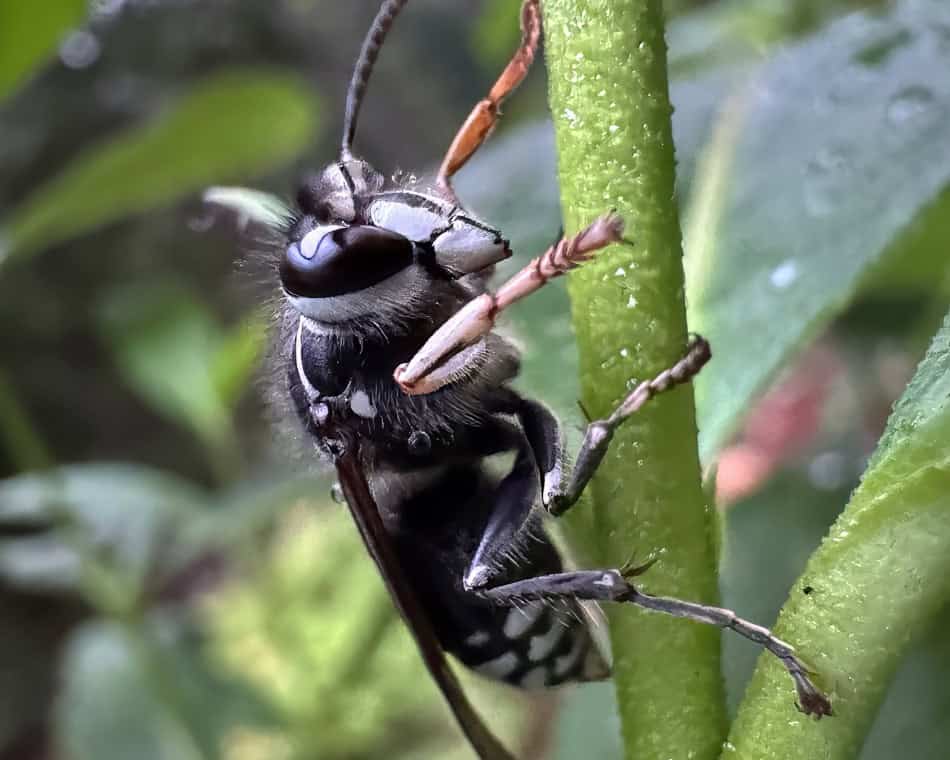
Bald faced hornets are not actually ‘true hornets’ despite their common name. But they are actually a type of yellowjacket wasp, scientifically known as Dolichovespula maculata. (The genus Dolichovespula contains around 8 species of yellow jacket).
But nonetheless, as you would expect from learning they are a type of yellow jacket, they are extremely aggressive wasps if they feel threatened. In general they will ignore and avoid people as long as their nest is not threatened. That being said, if you are looking up bald faced hornets you have probably either noticed a nest near your home, or had the unfortunate experience of getting too close to their nest. But before you decide to go scorched earth on the nest, we should try to confirm the identity.
Identification
But these wasps are typically 1/2” to ¾” long, six legs, and mostly black in color. There will be white patches on the body, and yellow or pale white markings on the face. And their face…well, it certainly looks menacing. They have large mandibles which are quite powerful for catching prey and chewing wood.
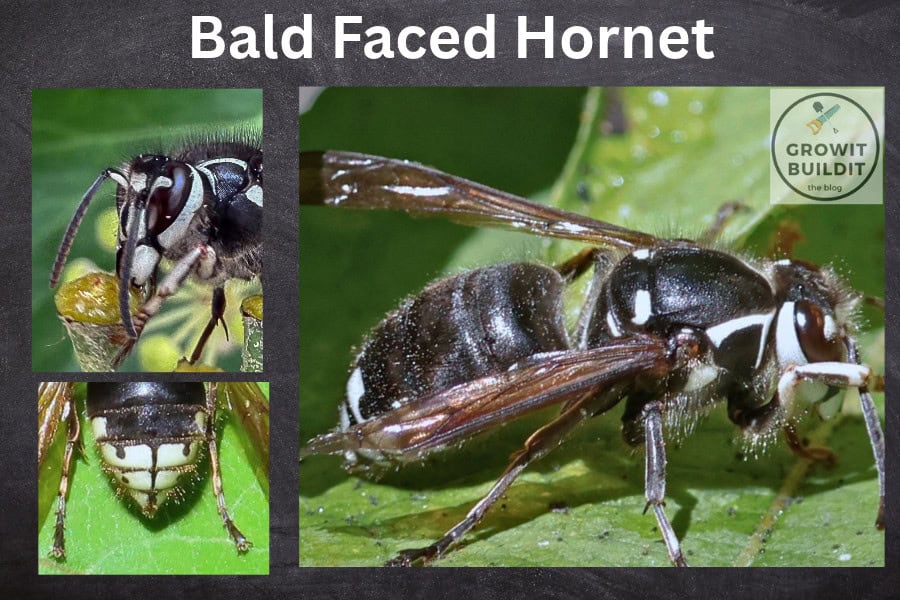
If the temperature is above 50 degrees Fahrenheit, then they probably won’t pause for you to take a picture as they are constantly on the move. The only real way to view live ones is to video them from a short distance away, to better see They spend their day gathering food, building and expanding the nest, and finally being a defender of the nest.
Nest identification
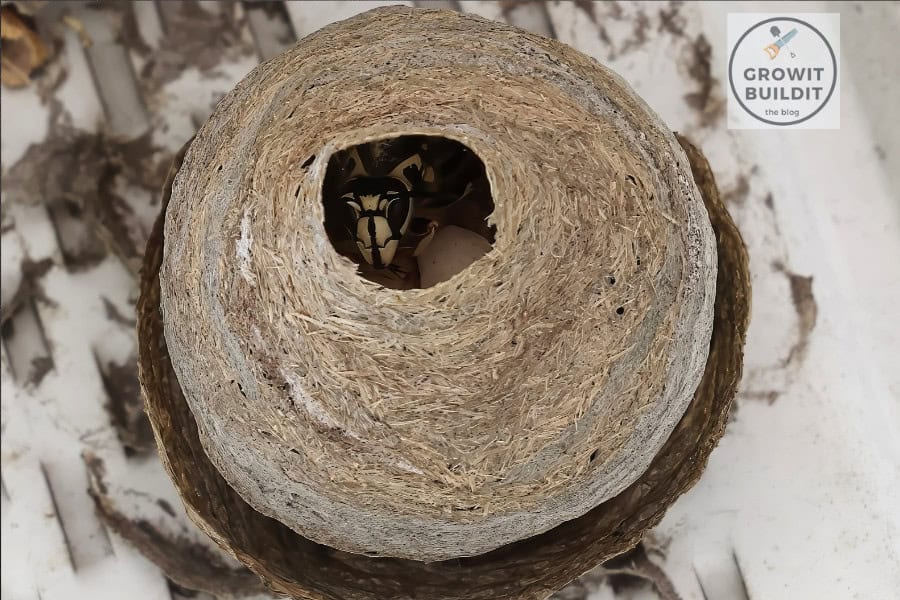
In Spring, nests are spherical and 4-6” diameter. As summer carries on, they increase the diameter by building concentric layers. As the nest increases in size, it often changes to a football or tear-drop shape and can reach 12” diameter. They are always the gray color shown in these images, as they are constructed from the workers chewing up bits of wood from fence posts and dead trees, combining that with saliva to make the papery substance, and it always comes out a shade of gray.
Where their nests are located
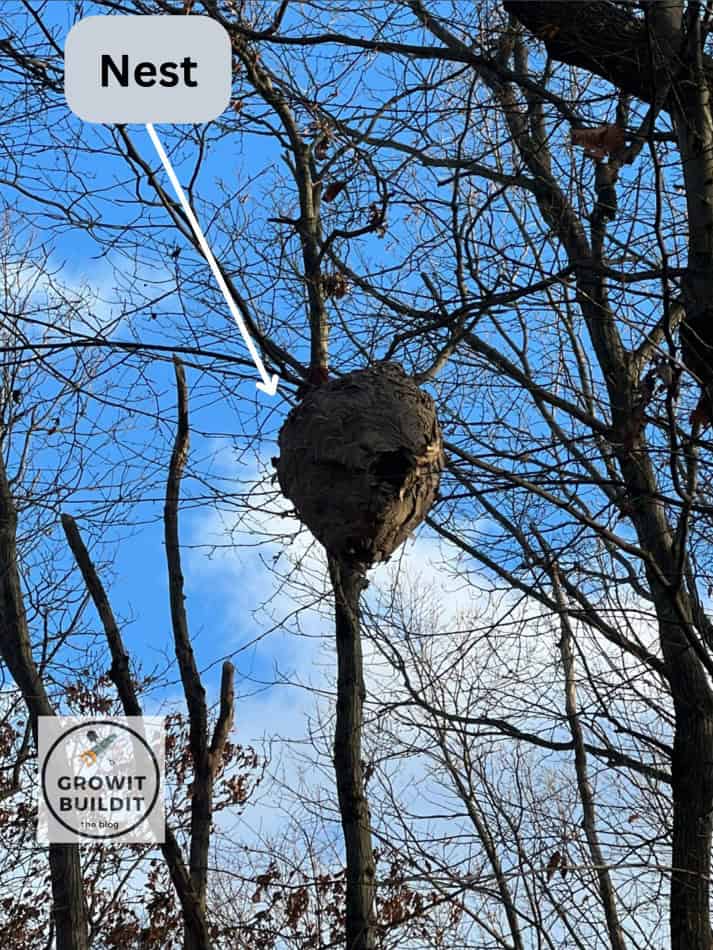
Bald faced hornet nests are always located in an elevated place, at least 3’ off the ground (but often much higher). You can find them way up in trees, hanging from branches, shrubs, under eaves, and hanging off gutters. I made a gallery below to show the variety of locations (and heights) that you could encounter them.
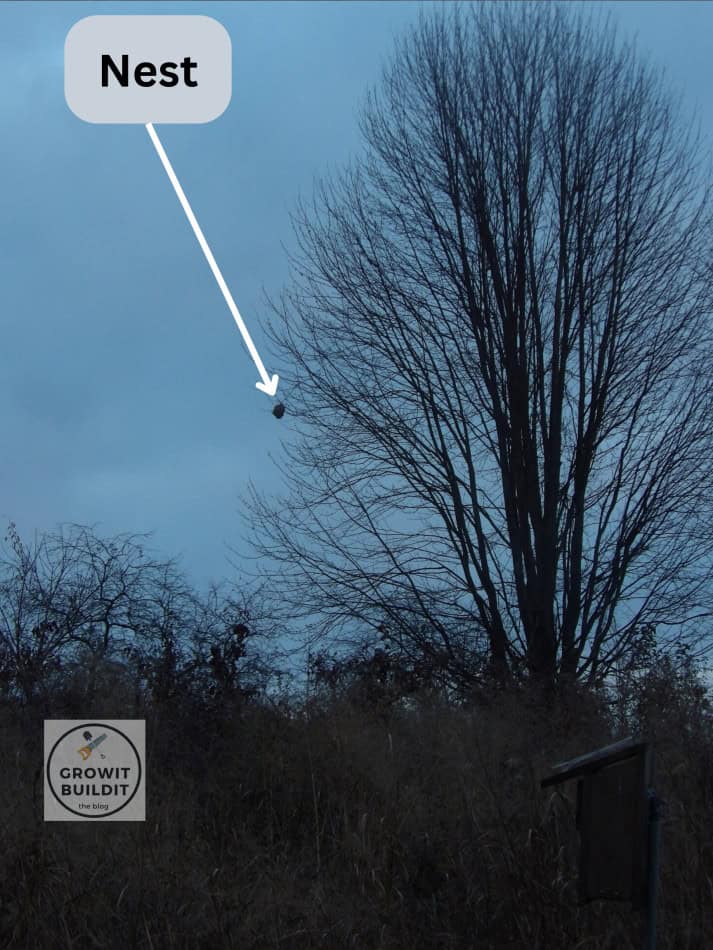
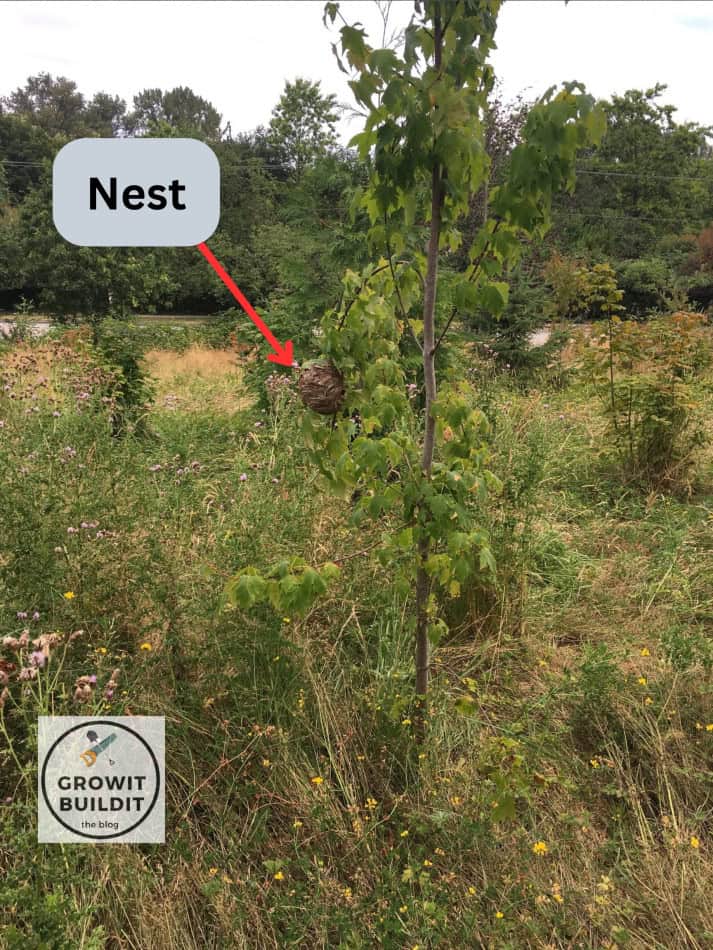
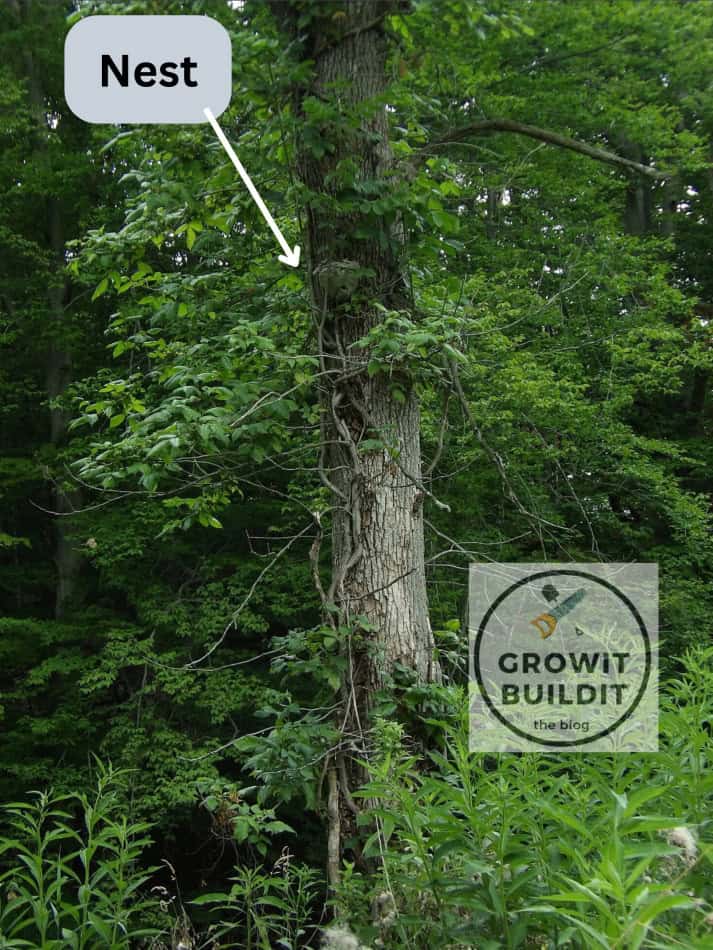
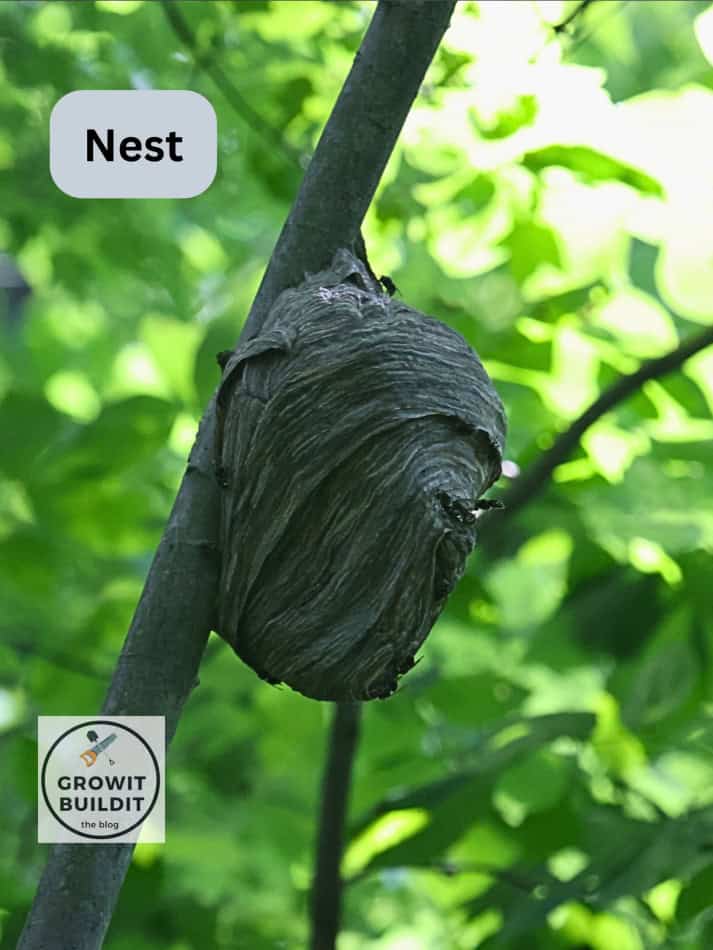
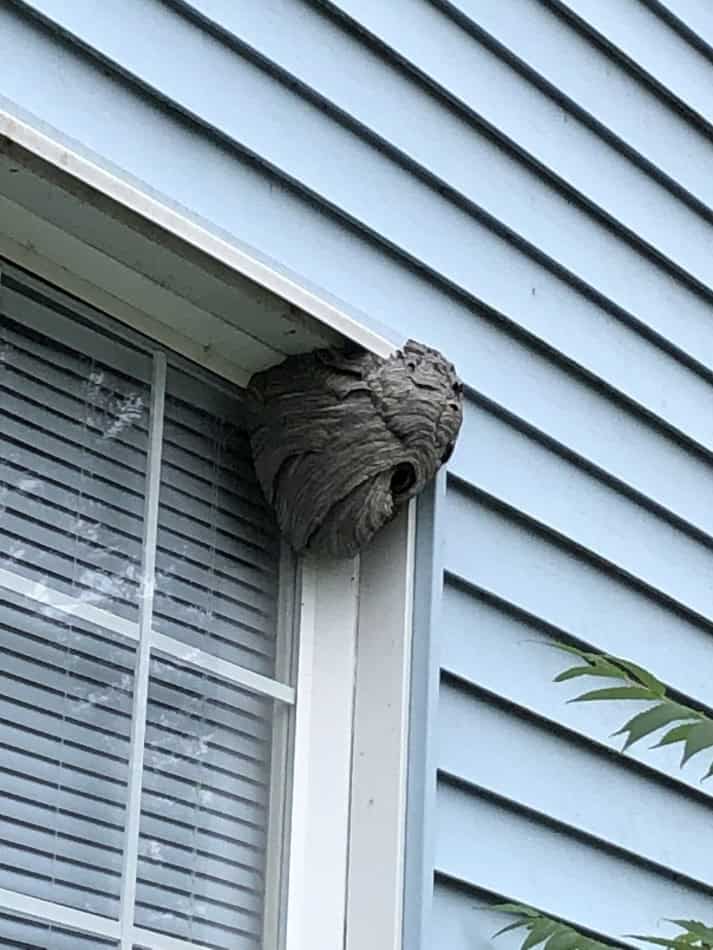
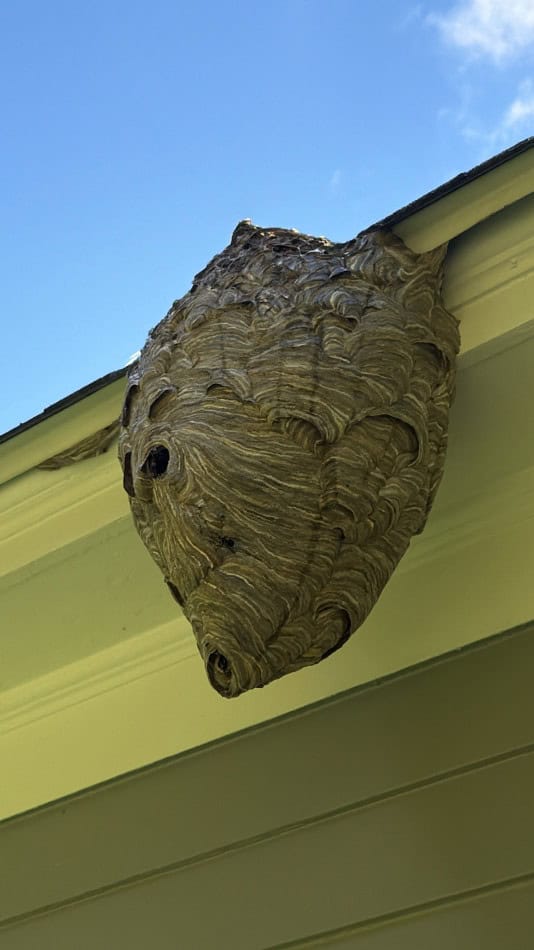
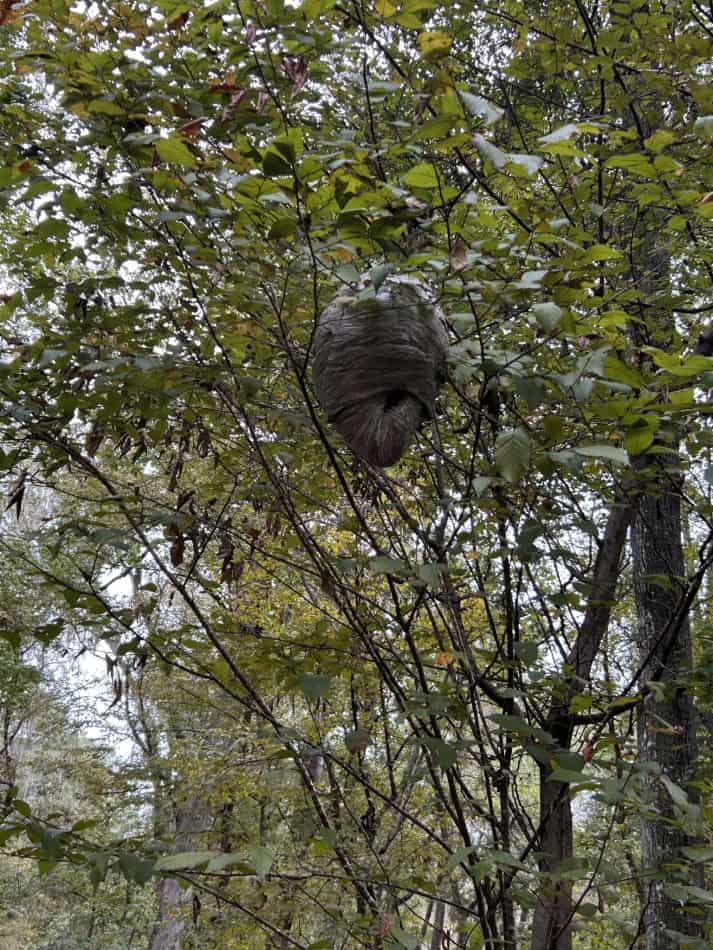
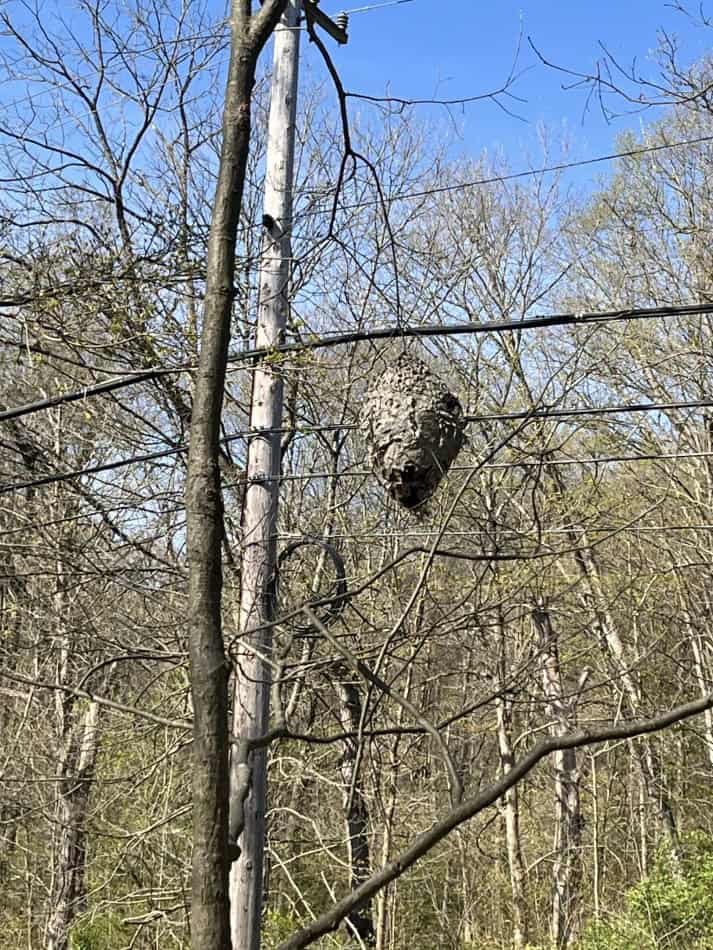
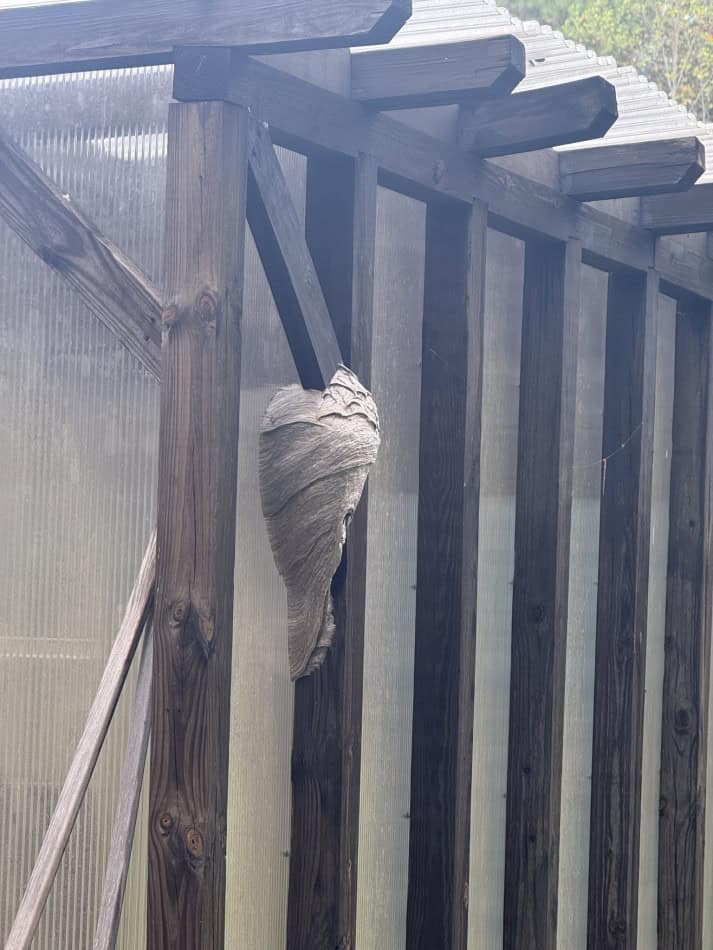
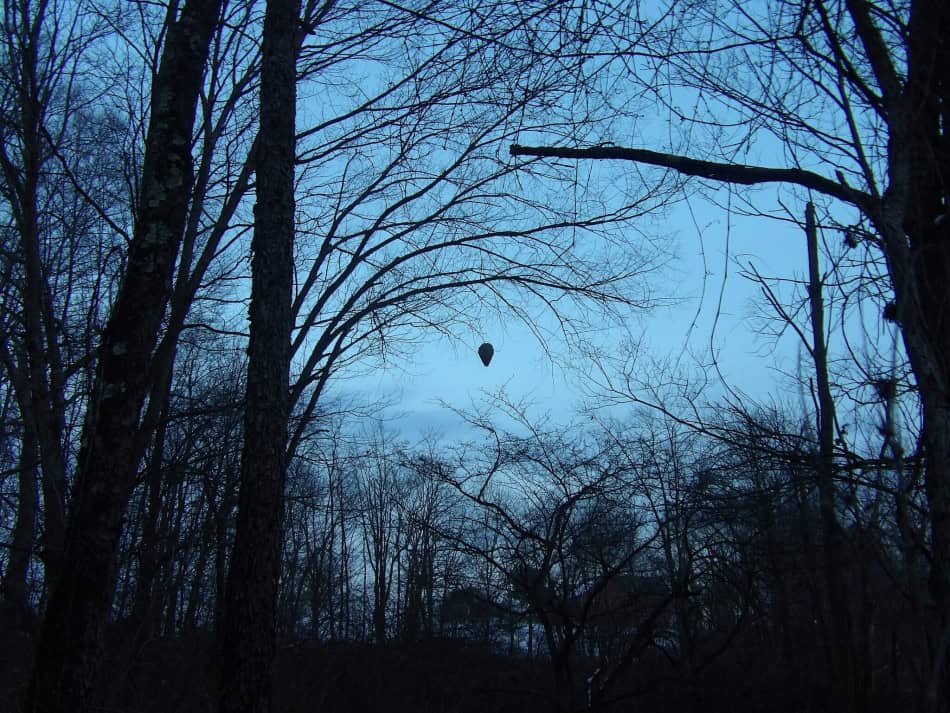
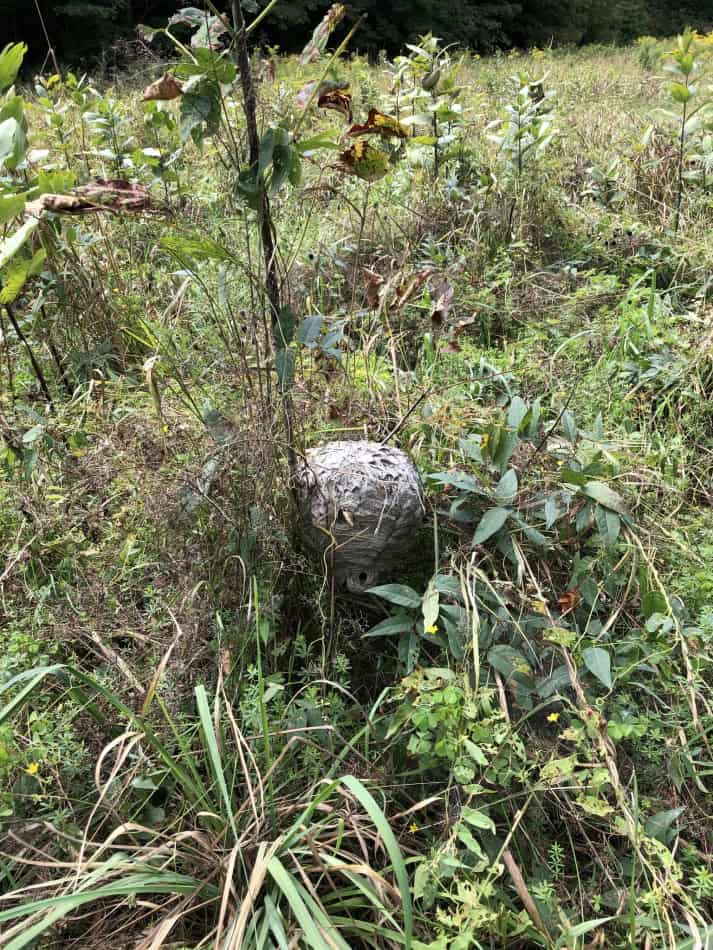
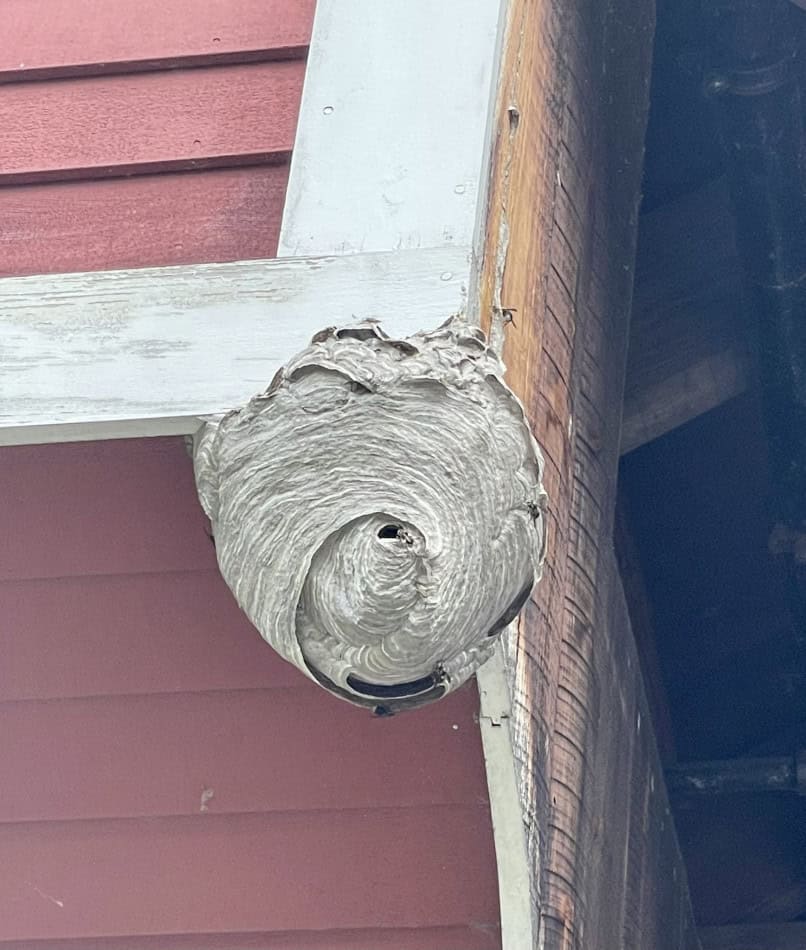
Below is a short clip of them roaming around their nest. Note the aerodynamic appearance and clear black and white markings. Combine that with the somewhat spherical nest, and you can be reasonably sure of their identity. I’m showing you a couple different clips here – one was a nest hanging off the corner of my garage in May (I live in zone 6/7 border in PA), and the other was later in summer way up in a tree at a state park near my home.
Are they a threat?
So, their stings are incredibly painful. On the ‘pain’ scale their sting can be comparable to a Saddle Back Caterpillar. And if you bump or get too close to their nest, they will swarm you inflicting multiple stings per wasp! Unlike honeybees, yellow jackets can sting multiple times and still fly away to live another day. But before attempting to kill them, or hiring a professional to dispose of them, take a few steps back and evaluate the situation.
- Is the nest close (within 10-15’) of where people regularly walk, or lawnmowers pass?
- Are you or a family member allergic to stings?
If the answer to either of those questions is yes, then you should consider removal. Now, if you have a nest that is 20’ up a tree, then I personally wouldn’t worry about them. The thing is, once fall arrives, the newly hatched queens will leave and go find somewhere else to spend winter, and the nest will die out never to be used again. Furthermore, killing a nest so high up a tree brings it’s own set of problems like a safe escape path for you, plus just falling off a ladder.
But if your nest is lower to the ground, and isn’t too large, there are ways to kill them while minimizing your risk. Basically, you are going to don some protective clothing, and spray wasp killer directly up the nest hole. But before you run and do this, try to take advantage of a couple environmental factors – darkness and temperature.
Wasps don’t like to fly at night, and they can’t see very well. So, early morning before dawn while it is still relatively dark is a great time to catch them all sleeping. Second, they don’t move fast in cooler temperatures, again, early morning is usually the coolest. So if you are battling a nest in Spring, use the cool morning temperatures to your advantage.
But this nest hanging off my garage was about 5” diameter, and about 8’ off the ground. I’m just over 6’ tall, so can easily spray into the hole. I waited until dusk on a cooler day that was in the 50’s (this was in May), and I planned my attack and escape. Below is an aerial shot of my home, with the nest location and the back-door to my garage labeled. So, on a cool evening I opened the back door to my garage, put on a thick hoodie, and spayed right up into the hole of the nest and then sprinted around the two corners, directly into my garage and slammed the door. After making sure none followed me inside (they didn’t), I took off my stuff and waited about 10 minutes before inspecting where the nest was from about 20’ away. I just patiently watched for any movement, and after a few minutes decided their was none. I checked the nest periodically over the next week and didn’t see any activity, and then just removed it.
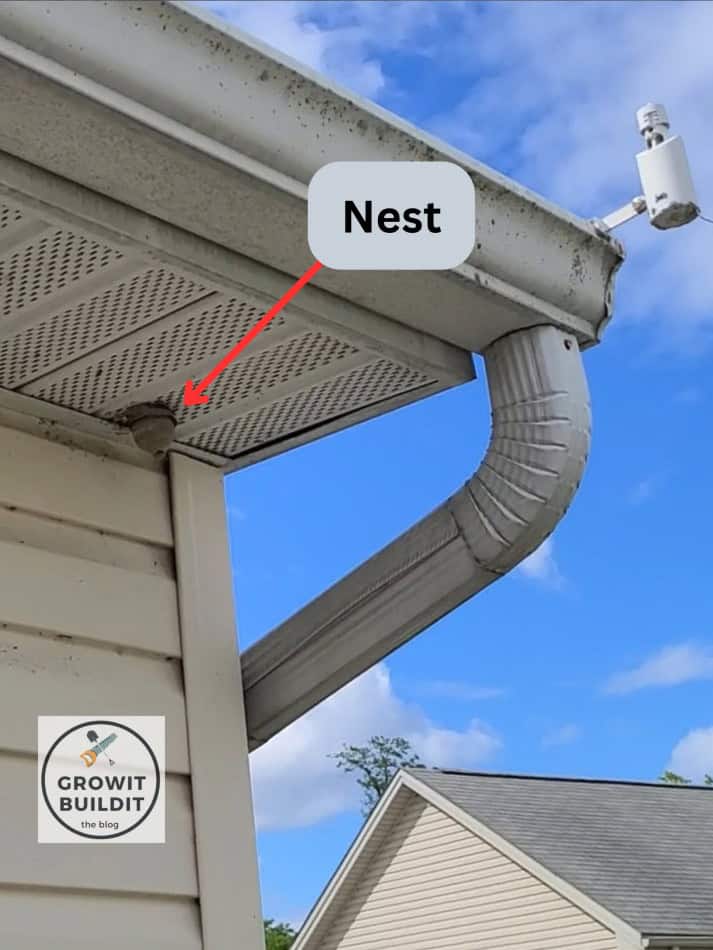
The aftermath
This is the inside ‘honeycomb’ of the bald faced hornet nest that was hanging off my garage (they don’t actually have any honey).
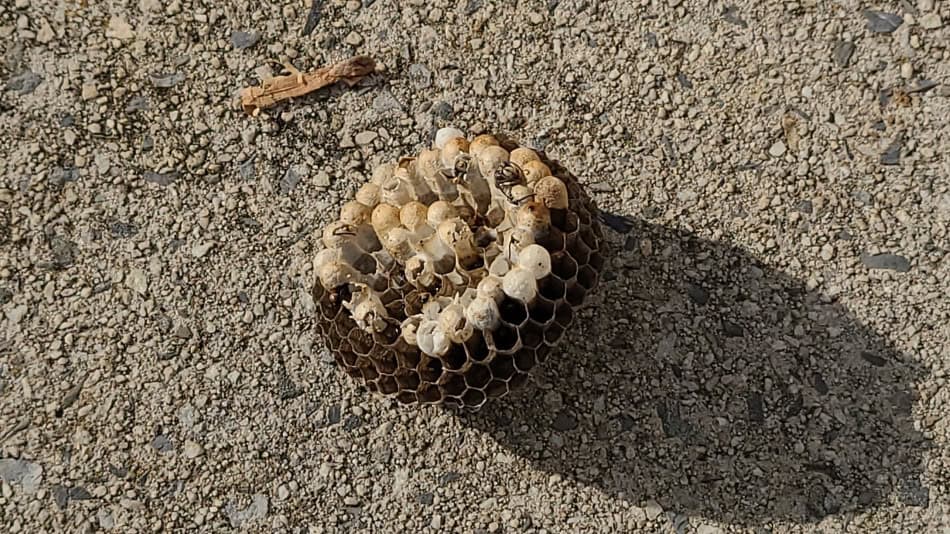
Why my attack worked
1 – I waited until dusk (dawn would’ve worked too)
2 – I had cool temperatures
3 – I attacked in Spring, before the colony was huge
4 – I planned my route
5 – I acted fast
And because of those five factors & the grace of God, I was not stung. But is this the right approach for everyone? Absolutely not. There are other considerations you should think about.
When should you hire a professional to remove a nest
I have removed small bald-faced hornet nests in Spring, when temperatures were cool. But if they built a nest at a lower elevation – say 3’ off the ground (they do, sometimes), and that nest grew large…then I would have serious doubts that I could get close enough to it to spray up the hole without getting swarmed by hundreds of bald-faced hornets. Or, if I was allergic to stings, I probably would not attempt killing a nest for my own personal safety. Furthermore, if a nest was built under an eve, but within 20’ of where I regularly walked, I may consider hiring someone, as I would not see a safe way for me to get close enough (ladder) to spray and not be hurt.
What else can you do to stay safe
So I have been quite fortunate in that the two times bald faced hornets decided to build nests at my house, they were in a very conspicuous position. But, since those times, I tend to pay close attention to any potential nest area, as if they are allowed to fully construct their colony, it could grow exceptionally large and dangerous. So, in Spring, when doing your annual Spring cleanup or getting flowerbeds ready, PAY ATTENTION to any insects! Look for new nests being constructed. And you can actually spot queens, and they aren’t always moving fast due to cooler temps. So, it is an opportunity to ‘snuff’ them out before they can even begin a new nest/colony. I’ve actually done this with common Yellowjackets before, and have found/killed queens in mulch possibly scouting for new nests. And although we are an environmentally mindful blog, I do not tolerate yellowjackets in my yard unless I can’t kill them safely. I’ve been lit up by them too many times, and have no patience for it. Furthermore, they will not go extinct if they are not allowed to nest in my yard.
General behavior / facts
What do they eat?
So Bald Faced Hornets primarily prey on other insects. This often includes flies, bees, and even their cousins, common yellow jackets. So they, and their larvae primarily eat meat.
Native range
The primary native range for Bald Faced Hornets is most of North America. They inhabit from the far reaches of Alaska and the NW territories in Canada, South to Southern California. They also cover the entire eastern seaboard, and can be found everywhere but the great plains, where a lack of nesting sites probably prevents their expansion. You know -no trees on the prairie, no structures, nowhere to hang the giant nest.
Lifecycle
Colonies are only used for a single year, and are never reused. So, how does it all get started? Well, a queen who went dormant in a rock pile, or tucked away in tree bark will emerge in Spring. She will start a new nest by chewing some wood from a tree or fence board, mixing this with her saliva to form a paste that makes up the nest material. These nests are all made of what is effectively a homemade paper. From here, she will lay several eggs once a base nest is constructed. And she will tend to these larvae until they reach worker size, and can then contribute to the colony. This would include expanding the nest by creating more ‘paper-paste’, bringing food to the nest, and tending the young. All members are expected to be defenders of the nest if it is threatened.
But a general seasonal timeline goes like this:
- In early Spring, once outdoor temperatures get above 50F, female queens who have overwintered emerge from tree bark, rock or brush piles, and begin constructing a nest and laying eggs, gathering food (savaging meat, capturing other insects)
- By mid Spring the nest will be about the size of a softball, 4-8” diameter. There will be dozens of workers, and numerous pupae & larvae in the nest
- By late summer / early fall the nest can grow to the size of a basketball
Final notes
Dealing with Bald Faced hornets is not a pleasant task, and killing a nest always carries risk. I do not advise anyone to try to do so if they are allergic, or unless they have the odds in their favor with a clear, safe escape path. Also, if a nest is way up a tree, far from where anybody walks, then consider leaving the nest alone. I guarantee that there are more nests around then you realize, and they generally don’t bother anyone. It is only when they are close to humans that problems arise, and when they build the nest 20-50’ up a tree…well, they aren’t threatening anyone.
Find more gardening tips here
References:
[1] – Grissell, E. E., and Thomas R. Fasulo. “Yellowjackets and Hornets, Vespula and Dolichovespula spp.(Insecta: Hymenoptera: Vespidae).” (2024).
[2] – Controlling Baldfaced Hornets and Yellowjackets in and Around Structures. NC State Extension. Accessed 12NOV2026
[3] – Penn State Extension. Accessed 12NOV2026.
[4] – Baldfaced Hornets in Landscapes. NC State Extension Fact Sheets. Accessed 12NOV2026.
Recent Posts
Crabgrass is an invasive weed from Eurasia that plagues gardens and lawns alike across the world. A creeping annual grass that is a more pale shade of green then regular turfgrass making it...
Bald Cypress is one of the more curious native trees to grace North America. Being semi-evergreen, it's leaves/needles turn a orange-bronze color in Autumn that can look truly stunning. Growing it...