
Wrinkle-leaf Goldenrod is a herbaceous perennial flower native to Eastern North America[1]. Scientifically known as Solidago rugosa, it can grow up to 5′ tall by 3′ wide in full sun and moist to medium-moist soil[2]. It blooms beautiful yellow blooms in late Summer for up to two months, feeds numerous species of bees, butterflies, wasps, and hosts five species of moth caterpillar[3].
When it comes to Goldenrods, they have a reputation as being overly aggressive garden thugs. And many species are, in particularly Canadian Goldenrod. However, they earn that reputation mostly from rhizomes, which are underground root/stems that will sprout new plants. Wrinkleleaf Golden does produce rhizomes, but they are creeping, or clump-forming. So, you can grow this plant in a regular flower bed and not have new ones popping up 50′ away from spreading rhizomes, as one would have from Canadian Goldenrod, for example.
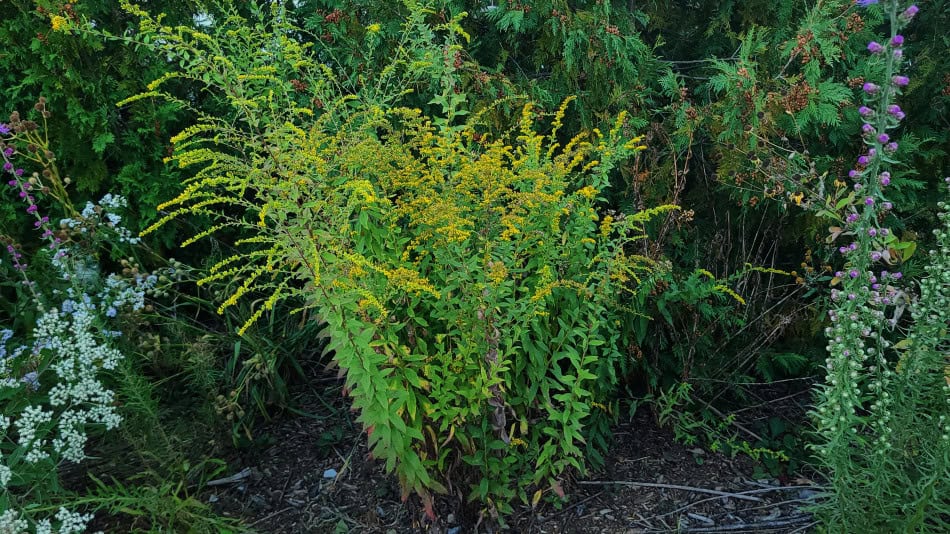
That being said, the flower structure / form and color make this one of the showiest yellow flowers you can grow. The long panicles resemble fireworks, and some particularly showy specimens have spawned a variety known as ‘fireworks’. On overcast days or in low light, these flowers just seem to glow they are so bright.
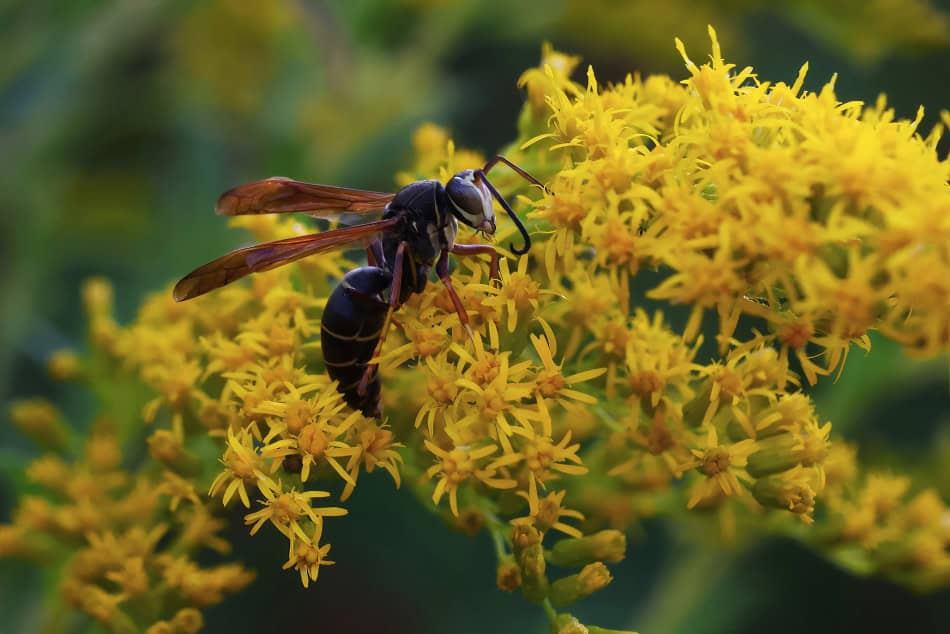
But looks aren’t the only reason to grow this plant. It is one of the better flowers for late season pollinators, and my plants are frequently packed with various bumblebees, sweat bees, solitary wasps, pollinating flies, and numerous other species that I have no idea what they are. It is a flurry of activity, as it is an excellent nectar source in late summer / early Fall. But read on below for more specific info:
Native Range
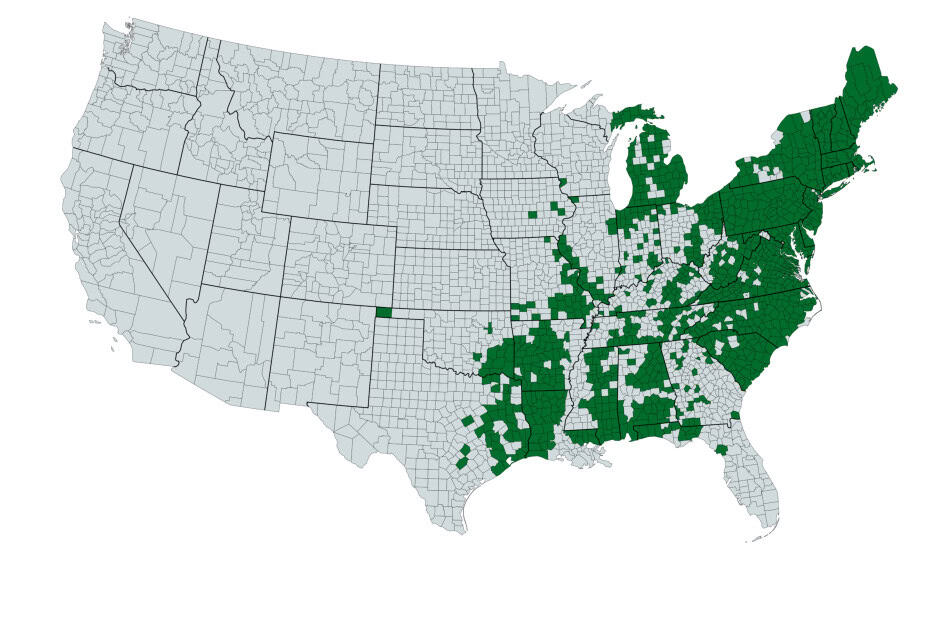
The primary native range is Eastern North America, from Texas to Iowa, East to Florida and Maine. It also is native in Canada, in Ontario and Quebec.
Reference Table
| Scientific Name | Solidago rugosa |
| Common Name(s) | Wrinkle-Leaf Goldenrod, Rough-Stemmed Goldenrod, Rough-Leaf Goldenrod |
| Native Range, USDA Zone | Eastern North America, USDA Hardiness Zones 4-8 |
| Bloom Time | Late Summer, early Fall. |
| Bloom Duration, Color | 4-8 weeks, Yellow |
| Height | 3′ (1 m) |
| Spacing / Spread | 2-3′ |
| Light Requirements | Full sun to part-sun |
| Soil Types | Any texture as long as it is well-drained |
| Moisture | Moist to medium-moist soil that drains |
| Fauna Associations / Larval Hosts | Bees, wasps, flies, butterflies, beetles, skippers. Numerous other species eat foliage. |
What are the Benefits of Wrinkle-Leaf Goldenrod
Beauty
This flower is absolutely gorgeous. When in peak bloom, in proper conditions the panicles can grow to by upwards of 6″ long. It has an extremely bright shade of yellow that pops against darker foliage, and it’s arching stalks can make it resemble a firework going off.
Wildlife
Attracting dozens of species of pollinators, this plant provides lots of nectar and pollen to various species of bee, butterfly, wasp, and moths. It is a host plant for at least five species of moth.
Non-aggressive
Unlike other Goldenrods, this one is not aggressive. You should still deadhead it to prevent self-seeding, as it produces thousands from a single plant. But the rhizomes it produces are creeping/clump forming, so it will not begin popping up in your lawn. With creeping rhizomes you can simply root-prune it in Spring.
Identification and Characteristics
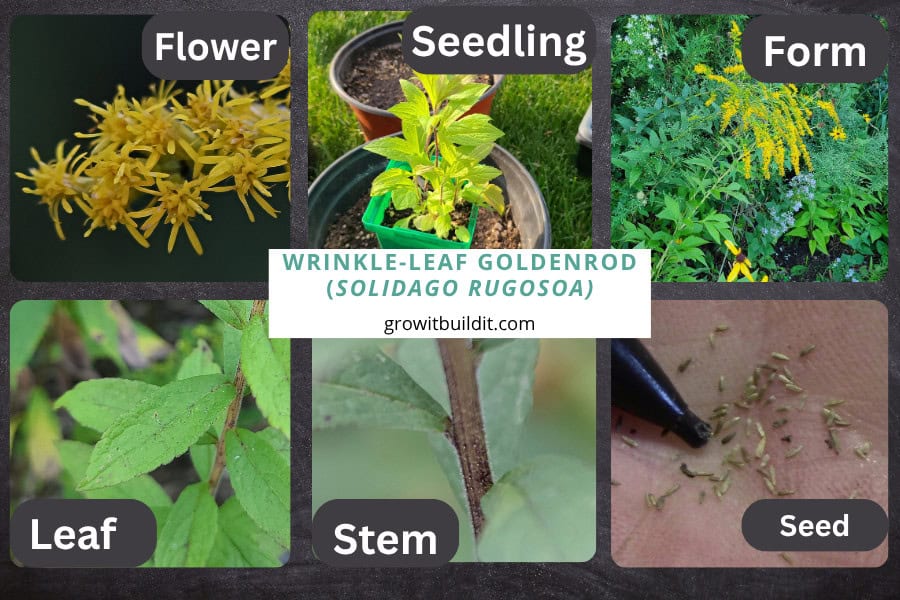
The overall plant can range from 1-5′ tall, and in areas of tough competition will be erect. In lesser competition, or rich soil it may lean or arch similar to Blue-Stemmed Goldenrod.
Stalk
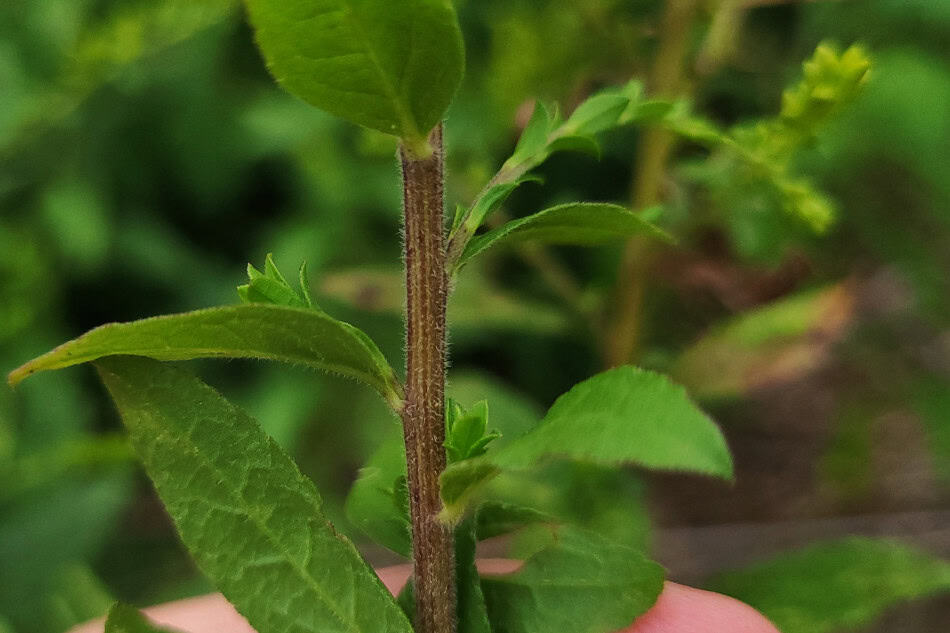
The central stalk is medium green and round. Unfortunately the stem can be densely bristled with hairs, to smooth, which makes this ID feature a bit useless.
Leaf
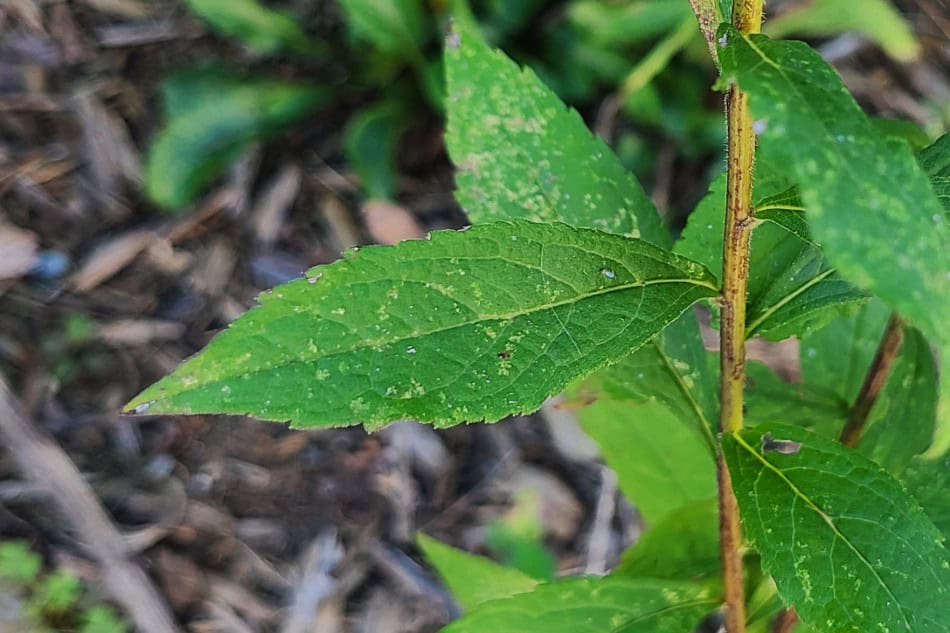
Alternate leaves shaped elliptic, lanceolate, or Ovate to ovate-lanceolate can grow up to 4″ long by 1-1/2″ to 2″ wide with serrated margins. The top-side of the leaf will have numerous pinnate veins, providing them with a ‘wrinkly’ appearance, hence it’s common name. They are medium green, and can be smooth or pubescent.
Flower
The main stalk will have panicles of flowerheads. On larger plants the panicles can be 4-6″ long, and they can resemble bursting fireworks (and hence an available cultivar).
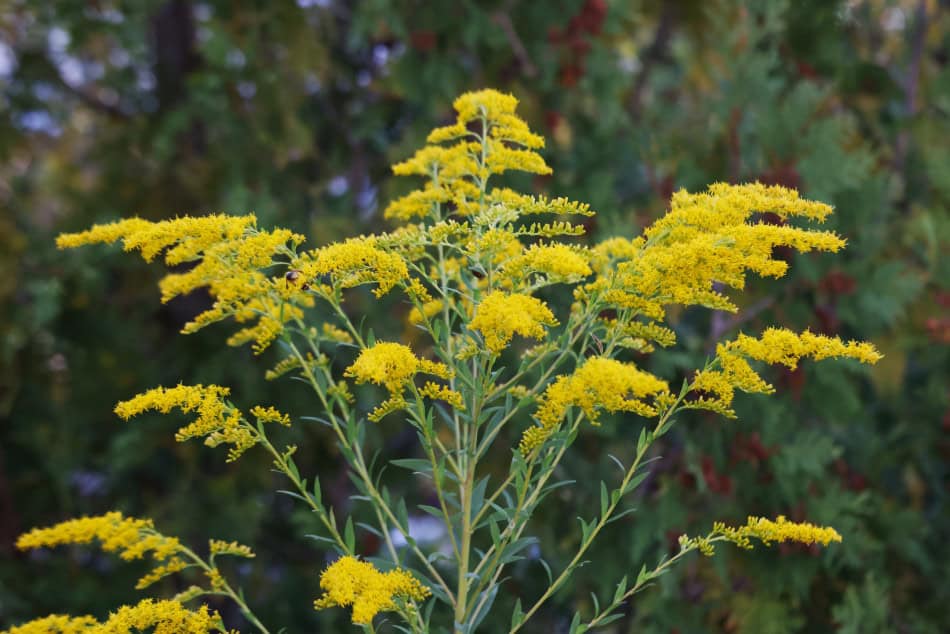
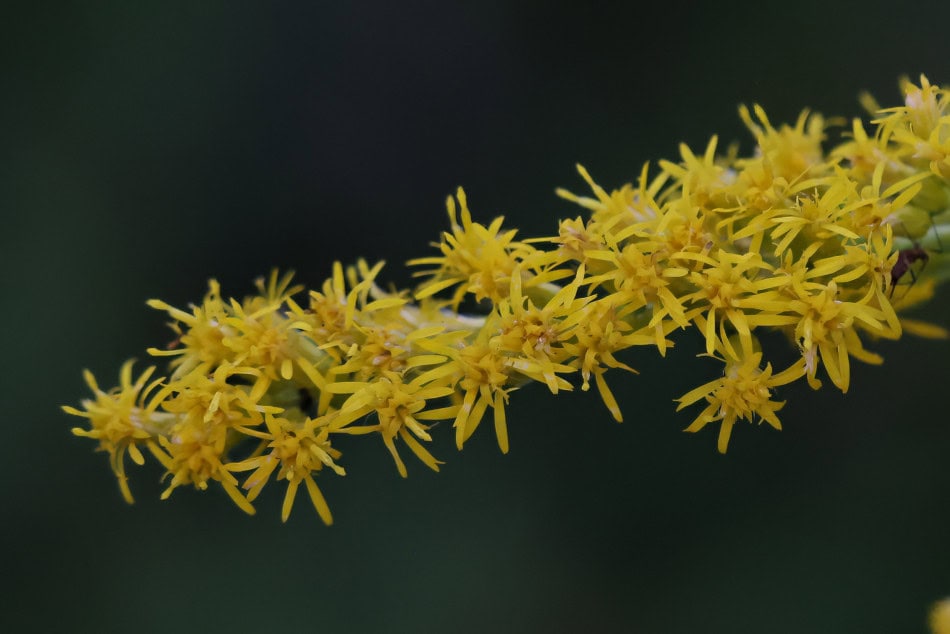
They will often curve downwards when they reach that height. Flowerheads are typical of Solidago sp. in that they are small at 1/8″ diameter with 4-8 ray florets and central disc florets. Blooming lasts for 4-8 weeks in late summer to early Fall.
Root
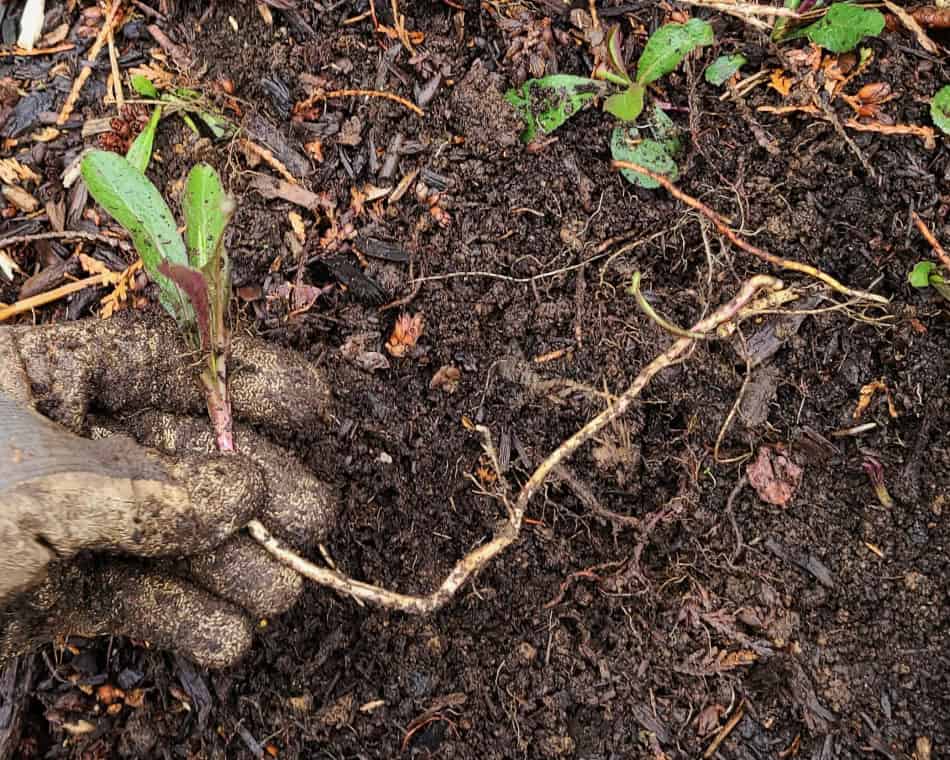
Most references state that this species is rhizomatous. The USDA notes that it has creeping rhizomes, and this matches my experience. I can confirm that it is rhizome producing (see image below), however I’ve had this in the ground since at least 2023, and it has primarily has had short rhizomes. So, in my book that puts it as the least aggressive Goldenrod that does produce rhizomes, and you should not have any issue keeping it contained provided you deadhead the seeds in the fall.
Growing Conditions
Sunlight Requirements
The main preference is full sun but it can tolerate part-sun. If it only gets sun from one direction, it may be prone to leaning/arching or flopping over. The Chelsea Chop performed by the 4th of July can help reduce the likelihood of this happening.
Soil / moisture Requirements
It prefers soil that has good drainage, but is tolerant of any soil from sandy to loam, provided it has access to moisture. This plant isn’t that drought tolerant, and will look pretty shabby if it experience prolonged dry periods in high heat, as the lower leaves will die and turn brown.
Maintenance
There are three primary maintenance chores with this plant. First, keep rhizomes in check in early Spring. Again, this hasn’t been a problem for me in three years, but it will produce them. Second, Chelsea Chop the plant in early Summer to reduce the odds that it leans or flops. Third, deadhead this plant to prevent self-seeding. As beautiful as Goldenrod and Asters are, they each seem to produce 10000 seeds that germinate at a rate of 125%.
Fertilizer
Do not fertilize this plant. It will grow too tall and flop over.
How to save seed
Saving seed is quite easy from this flower. About 3 weeks after blooming, seed heads will form, and when they turn white (not off-white). Cut below the seed heads, and place directly into a large container or paper bag. Leave this in a cool dark place, like a garage for a week to further dry out. Once that is done, you can rub your hand along the stalk to release the seed.
There will be feather-like hairs attached to the seed. These help the seed float some distance away via the wind. It is not necessary to remove this ‘chaff’, however, if you want to you can place into an aluminum baking tray outdoors and briefly expose it to an aim-and-flame lighter. Just long enough to burn the ‘fluff’, but leave the seed.
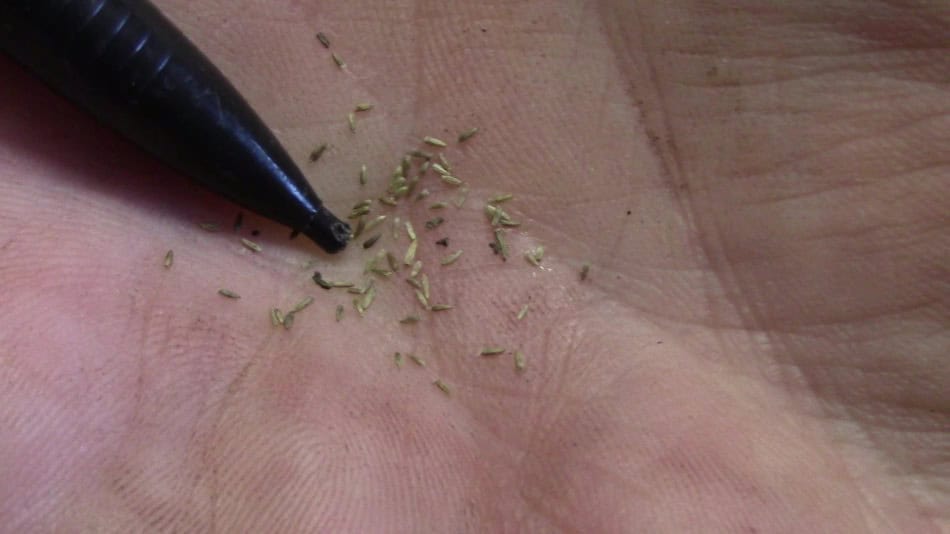
Dried seed can be stored in a sealed container in the fridge for a couple of years.
How to Grow Wrinkle-Leaf Goldenrod from Seed
Wrinkle-leaf Goldenrod seeds have a dormancy mechanism that will prevent premature germination[4]. It’s a strategy to stop seed that drops in the fall from sprouting during a warm period in fall (like during an Indian Summer). So, to overcome that mechanism, we need to cold stratify the seed for two-months. In addition to that, the seed must be surface sown as the UV radiation will help break through the seed coating.
The absolute easiest way to achieve this is to Winter Sow the seed, but one could cold-stratify in the fridge on a paper towel. But, for planting either stratified seed, or winter sowing, simply fill a suitable container with moist potting soil. Sprinkle seed on top of the soil and press in with your thumb, but don’t bury the seed. Give it a bit of water via misting, and place the container in a location that gets morning sun and afternoon shade. Germination will occur in early Spring, once temperatures regularly get into the 60’s Fahrenheit.
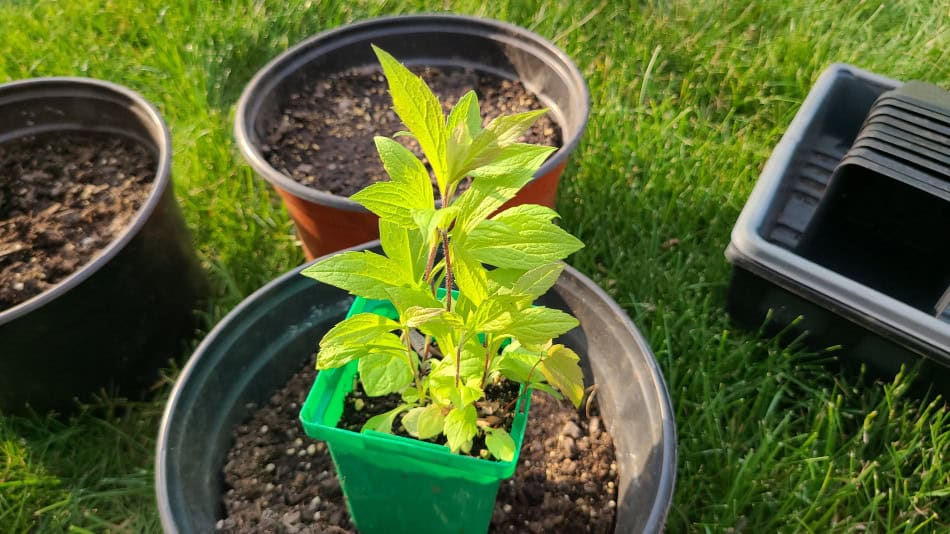
Propagating via division
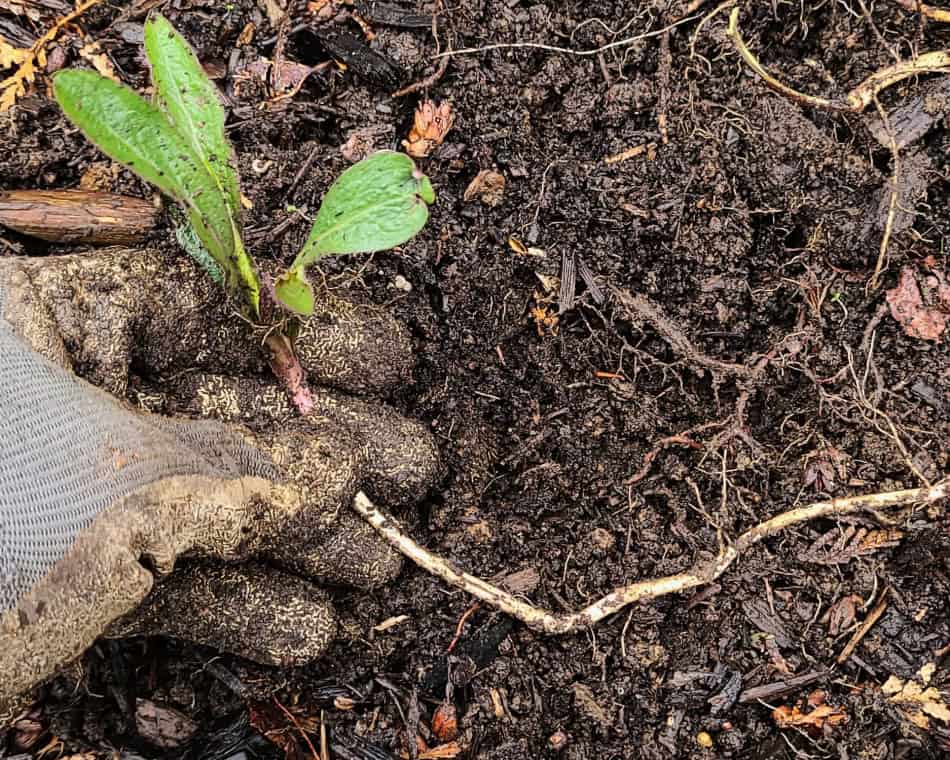
Since this plant makes creeping rhizomes, you can easily get more plants by just pulling up and cutting off a sucker in the Spring. Just make sure there are a few ‘hair’ like roots on it, and replant it into a new location or container right away. It’s probably one of the easiest perennials to divide. You can do this once the plant emerges in Spring (pictured below). Just dig or pull up on one of the plants after loosening the soil, and snip with pruning shears.
Propagation by cuttings
This species can be propagated via stem cuttings too. Simply cut below a junction of leaves on a new stalk and place into a pot, in the shade for several weeks. Once roots have formed, it can be transferred to a larger pot or planted to a final location.
Wildlife, Pests, and Diseases associated with Wrinkle-Leaf Goldenrod
Pollinators
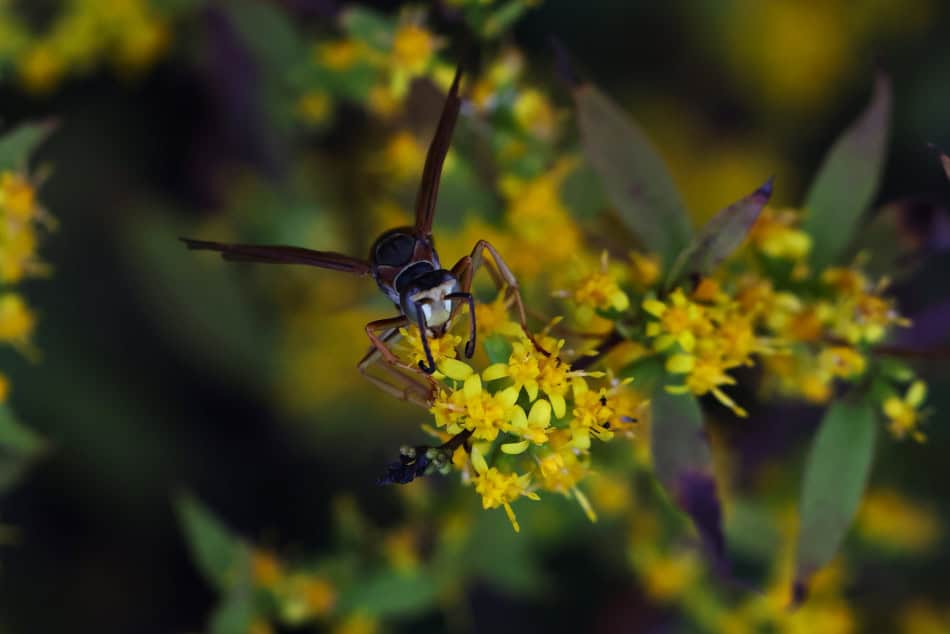
Wrinkle-leaf Goldenrod really does an amazing job of attracting pollinators. It is known for bringing in lots of bumblebees, honeybees, various beetles, wasps, flies, moths, and smaller butterflies. Additionally it is a host plant for at least five species of moth (Coleophora puberuloides, Coleophora rugosae, Cremastobombycia solidaginis, Dichomeris leuconotella, Tischeria solidagonifoliella)[3]. There are numerous other insects that will feed destructively on the flowers and foliage though, but never enough to really damage the appearance.
Deer and Rabbits
Young foliage of Goldenrods can be at risk for being browsed by deer and rabbits. Once established, or later in the season the foliage either tastes bitter or rough, and this seems to dissuade them from eating it.
Disease
This plant is not really effected by disease at all. It is just all around tough as nails.
Where you can buy Wrinkle-Leaf Goldenrod
Wrinkle-Leaf Goldenrod is not typically sold in nurseries, as it isn’t a typical ‘garden friendly’ plant. But it can be purchased at specialty nurseries that deal in Native Plants. You can find native plant nurseries near you on our interactive map. Note that there is a variety of Wrinkle-Leaf Goldenrod known as ‘Fireworks’, and the blooms look like the large fireworks at the 4th of July!
Where to buy seeds
We have ordered a variety of native flower seeds from Everwilde Farms, which you can order right from Amazon through our link on our RECOMMENDED PRODUCTS PAGE. (We may earn a small commission when you purchase through our links, at no cost to you. This helps support our website.)

Uses of Wrinkle-Leaf Goldenrod
Garden Uses
Since this plant doesn’t run wild all over a flowerbed, it can be used in a lot of settings and is pretty versatile. The main concern one should have is that the there are nearby plants, as in very close so that there is competition for Winkle-Leaf Goldenrod to lean on. This will help keep the plant vertical and reduce the likelihood of flopping. Even if the plant is Chelsea-Chopped in July, it may still arch/lean over more than one would want.
Companion Plants
Oh boy – there are a lot of companion plants for this one! If you looking for concurrent blooms, I strongly recommend Rough Blazing Star (Liatris aspera) and Short’s Aster. The blooming period overlaps and the color contrasts are oh-so-pretty. I have all of mine on the east side of a row of Eastern Red Cedars, so they are less likely to dry out, yet still get a lot of sun. Some other honorable mentions would be White Turtlehead and Heart-Leaved Aster.
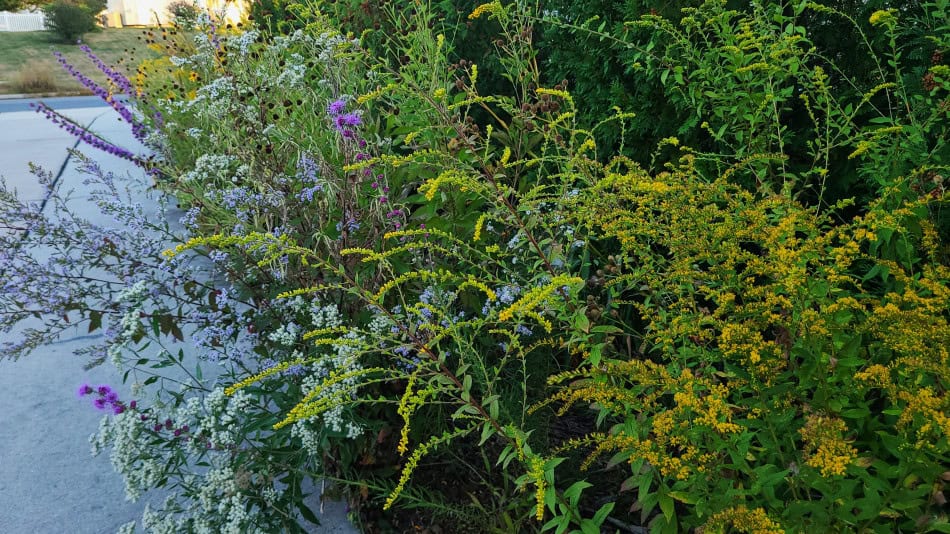
Some other specimens that work well but bloom before would be Blue Lobelia, Blazing Star, Ironweed, Sneezeweed, Swamp Milkweed. For grasses, try Bottelbrush Grass and Little Bluestem.
Medicinal Uses
The Iroquois Tribe used Wrinkle-Leaf Golden Rod Medicinally. They used the whole plant as a liver aid, and a decoction of leaves / flowers for treating dizziness/sunstroke[5].
Final Thoughts
This is one of the showier / prettier varieties of Goldenrod, and one that is not very aggressive. Contrasting with most other members of the Solidago genus, you can provide high-value to pollinators late in the season and not worry about pulling unwanted specimens 50′ away. This is in addition to being absolutely beautiful.
Find more native plants here
References:
[1] – Solidago rugosa Mill. USDA NRCS. Accessed 05OCT2026
[2] – Paul, V. 2021. Plant guide for wrinkleleaf goldenrod (Solidago rugosa). USDA-Natural Resources Conservation Service, Rose Lake Plant Materials Center. East Lansing, MI.
[3] – Federal Highway Division, Ecoregional Revegetation Application (ERA)
[4] – Van Der Grinten, M. 2001. Propagation Protocol Database information for Solidago rugosa. USDA-NRCS-Big Flats PMC, Corning, NY
[5] – Solidago rugosa, North American Ethnobotany Database. Accessed 06OCT2026.
Recent Posts
Bald Cypress is one of the more curious native trees to grace North America. Being semi-evergreen, it's leaves/needles turn a orange-bronze color in Autumn that can look truly stunning. Growing it...
So, if you are going to be spending time in the woods, or even anywhere with taller weeds you should take care to protect yourself from ticks. They cause numerous diseases like Lyme disease, and now...