
One of the first flowers to bloom in Spring is commonly known as wild violets. Whether you see them popping up in your lawn, along the edge of a forest, or just randomly in a flower bed there is no mistaking the fact that Spring is upon you. And violets are one of those natives that provide lots of benefits for your ecosystem by providing nectar to bees and ants as well as hosting several species of butterfly. Although there are numerous species of violet, I’m going to focus on arguably the most common one, Viola sororia. But these methods will work on most violets.
Related ==> Native Plants that can survive in your lawn
Transplanting violets
This is arguably the easiest way to get violets. Simply dig some up and move them to where they will be happy. If you have an area of your yard that has lots of violets, and another area that has none, you can simply dig up and move a few.
The timing is important here, as you never want to transplant a blooming plant. When plants are blooming, or making seed, they are sending the vast majority of their energy to these processes. And, when we dig up a plant, we are always disturbing the relationship the roots have with the soil, and will negatively harm the plants ability to take up water and nutrients. So – don’t dig up anything when blooming or when forming seed. Instead, look for the curled leaves like this:
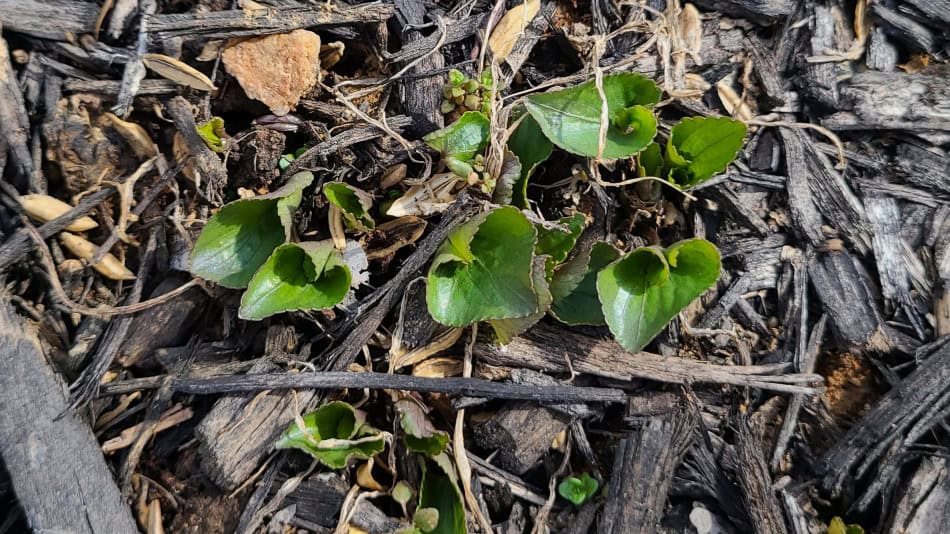
But you can then simply dig up the clump and move it to a new hole, and water. Just give about a 2″ gap to the leaves, and plan on digging around 4″ deep. It helps to have moist soil, so thoroughly water before transplanting.
How to divide violets
Ok, so if you notice a large clump of violets, when they are first emerging you can divide them. Timing is everything, and if they are blooming, then I would avoid this method. But, in early Spring, when you see the curled leaves just poking out of the grass, but before any flowers are showing, you can divide them.
To do this, thoroughly water the ground then dig out the clump using a spade or trowel. Make sure you dig away from the clump by about 2″. Then, simply pop it out of the ground. Wash the clump with a hose so that you can fully expose the roots. You will be treated to something that looks like this:
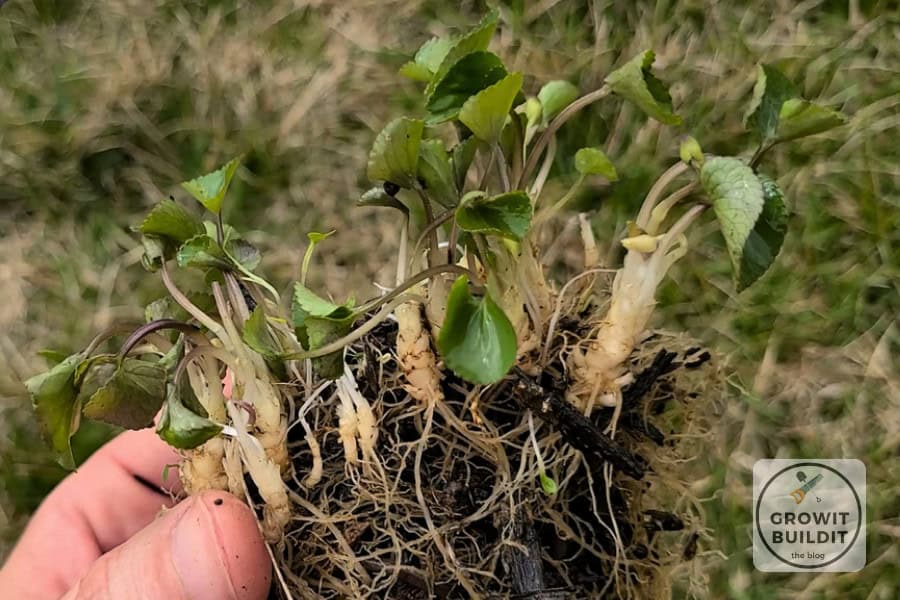
As you can see, the clump expands every year, but you can peel off individual plants. Gently untangle the roots.
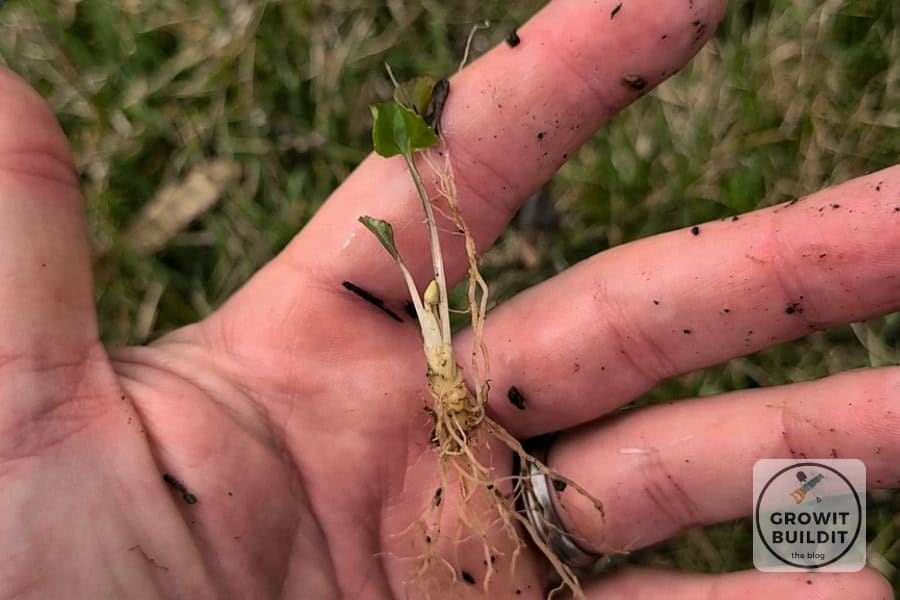
You now can simply plant the individual plant in a new hole, and it give it a bit of water. If you are doing this in early Spring when temperatures are cool or fall when plants are about to go dormant, then the chances of it being successful are very high. You can replant the original clump from whence you removed it, as it is probably good conditions for it since it was able to grow to a large size.
Saving seed from violets
Saving violet seed is a bit trickier. The flowers are low to the ground, and thus the capsules are too. They are also fairly inconspicuous, and just don’t really stand out. But, you can usually find seed capsules in late Spring or in late Fall on plants that were pollinated. The capsules will begin by pointing downwards, and eventually will point upwards and split open. This is the key! Never collect unless the capsule is pointing upwards or open, as the seed is not yet ripe.
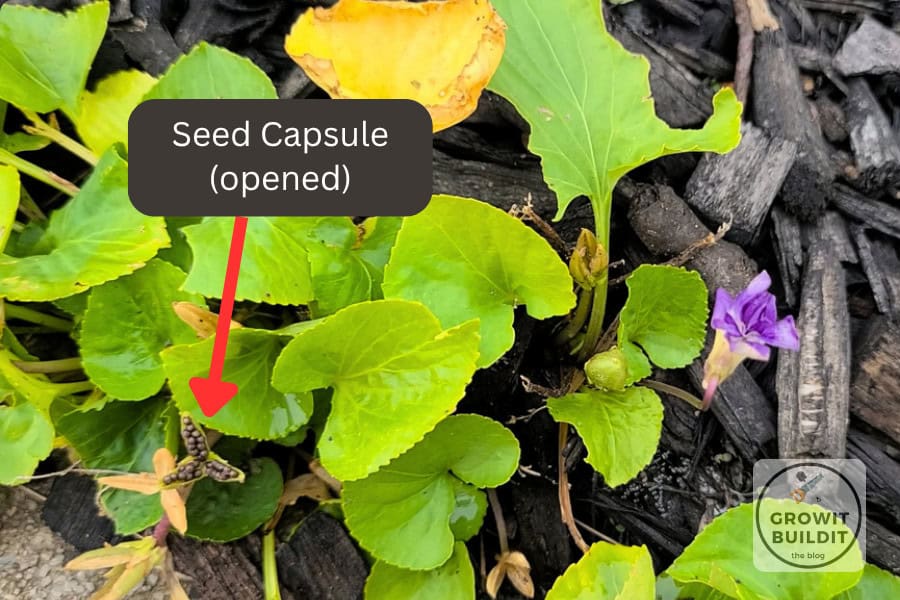
The above image shows the full plant, and the capsule location. This capsule is opened, and the seed will easily fall out. So, pull it carefully. You can also slide a paper plate under it prior to removal, which can catch any errant seed that falls.
But that is the trick – you need to wait for the capsule to open, as you want that seed to fully mature. If you take the capsule before it opens, then the seed may not be mature and not be viable.
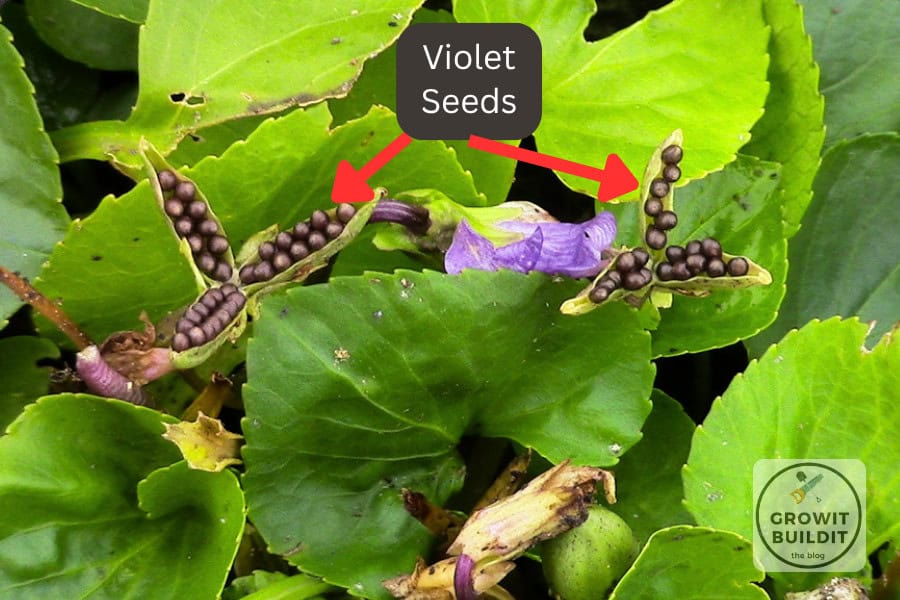
I find that the seed capsules are small enough that I can just pinch them off, and I don’t seem to lose much seed.
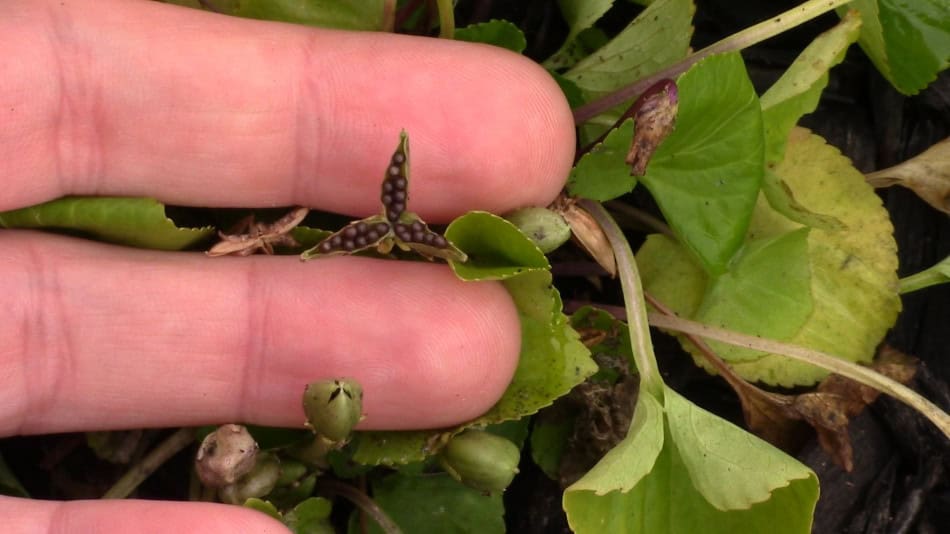
But after this, you can let the capsules dry for a week or so, out of the sun in a cool place. Then, store them in a baggy for up to a year, in the fridge. But unless you really want to start them in pots, you can always just not even store them, but go scatter them in a suitable location that is part-sun. They will sit over the winter, and promptly germinate in Spring.
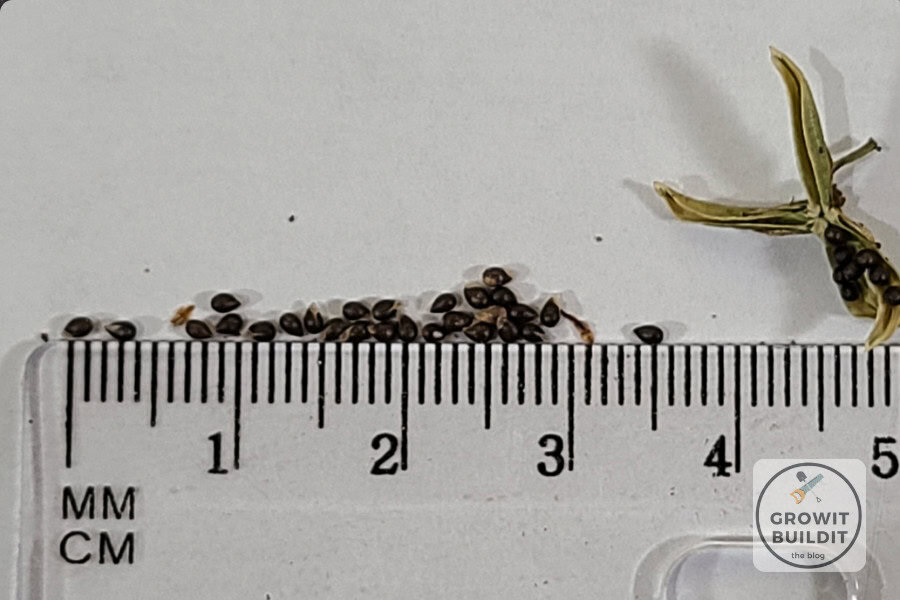
How to grow violets from seed
Ok – so now you want to germinate some? Sure thing. No matter what species of violet you are trying to grow, they pretty much all will have a decent (~50%) germination rate if you cold stratify or winter sow them. Most viola species will respond pretty well to 90-120 days of cold stratification. And if you are growing regular blue violets (V. sororia) then 60 days is enough.
But for winter sowing, simply fill a suitable container with moist potting soil. I like to do this between Christmas and New Years. Place your seed on top of the soil, and press it in, but don’t cover it. Place your container outside (don’t worry about the snow) and wait until Spring, at which time the seeds should germinate.
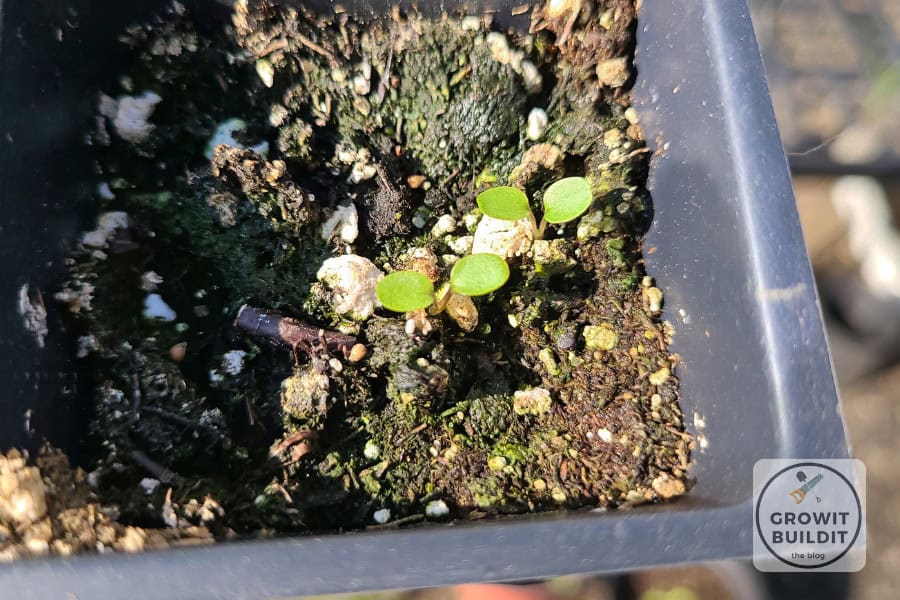
After the seedlings develop their first true leaf (where it is curling, see below), you can separate, thin, or transplant them to their final location. I find that deer and rabbits don’t really bother violets too much. So, just place them in their final location, and enjoy.
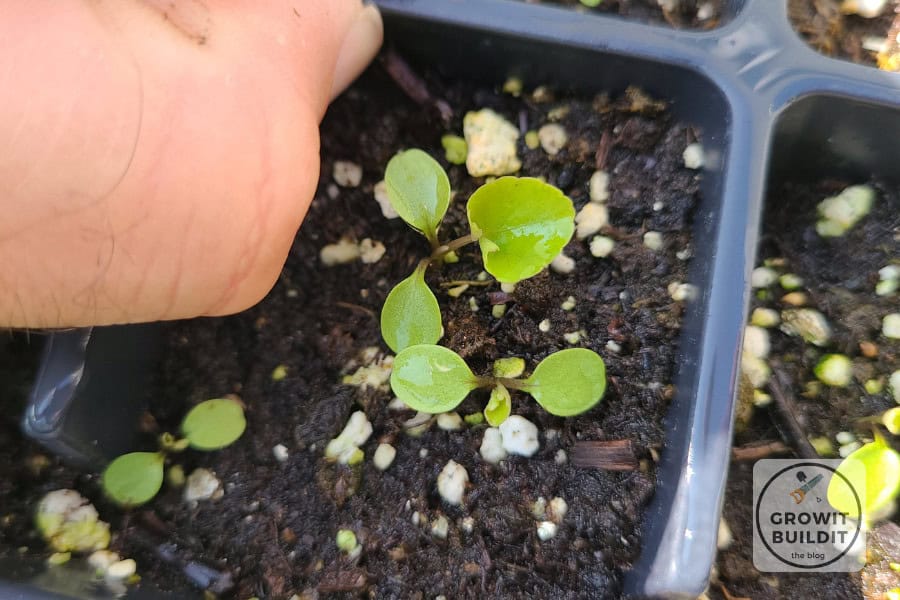
Getting wild seedlings
If you have a patch of violets, or just a mature plant in a flower bed, you may be able to get some free seedlings. In Spring, look near the mother plant. Frequently I will see clusters of violet seedlings near a mother plant. And, these seedlings can be carefully dug up and placed into pots. Let them grow for a while, until they get their first true leaves, at which point you can then transplant them to their final location.
Find more native plants here
References:
[1] – Solbrig, O. T., Sandra J. Newell, and D. T. Kincaid. “The population biology of the genus Viola: I. The demography of Viola sororia.” The Journal of Ecology (1980): 521-546.
[2] – Baskin, Carol C., and Jerry M. Baskin. Seeds: ecology, biogeography, and, evolution of dormancy and germination. Academic press, 2000.
[3] – Kilgore, Sam, et al. “Seed collection, storage, and germination practices may affect Viola reintroduction outcomes.” Native Plants Journal 23.1 (2022): 40-55.
Recent Posts
So, if you are going to be spending time in the woods, or even anywhere with taller weeds you should take care to protect yourself from ticks. They cause numerous diseases like Lyme disease, and now...
At some point in your life, you are going to have to loosen a rusted, stuck, or seized screw. It is almost guaranteed! So, depending on the situation, one of these will work. I've noticed that lots...