
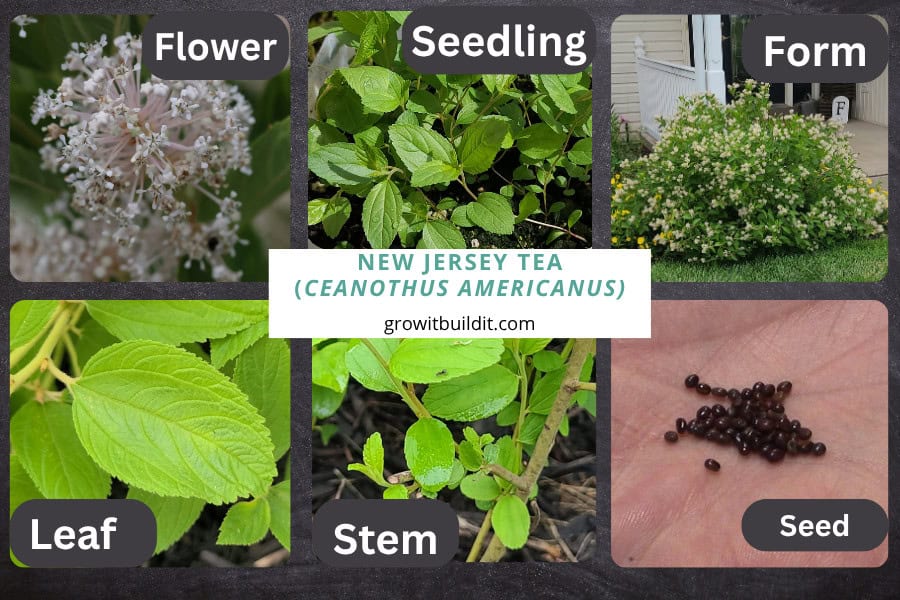
New Jersey Tea is a flowering shrub native to eastern North America. Scientifically known as Ceanothus americanus, it grows 3-4′ tall by several feet wide in full sun and well-draining soil[1][2]. Blooming clusters of fine white flowers for up to a month in summer, it attracts bees, butterflies, and is a host plant for around 40 species of caterpillar[3].
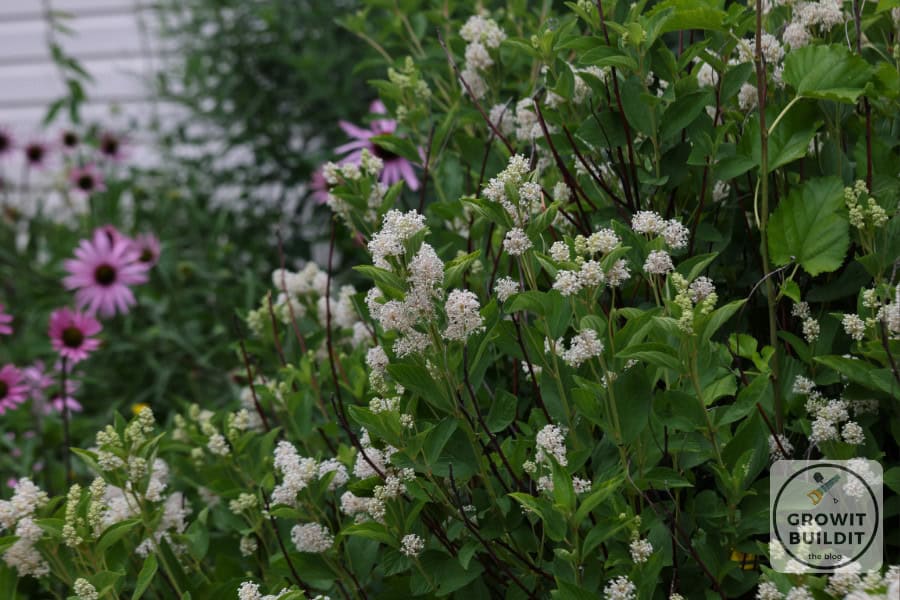
One of the often overlooked shrubs in landscaping, New Jersey Tea is a shrub that most homeowners can grow that does it all – it’s flowers feed bees, butterflies, and numerous other curious-looking insects. It is a major host plant in that it’s leaves feed over forty species of caterpillar (also deer and rabbits), and it’s seeds feed various game birds. And it does all this while being very attractive with it’s leaves and feathery-white flowers. It is really quite amazing that this shrub isn’t more common in residential landscaping.
While the deer browsing can seem discouraging, it really doesn’t harm the plant long term. So, evolutionary speaking this plant evolved to send up new shoots after a fire, almost like a herbaceous plant. However, this evolutionary regeneration also applies to deer browsing. When I have suffered damage, the plant refills itself in rather quickly.

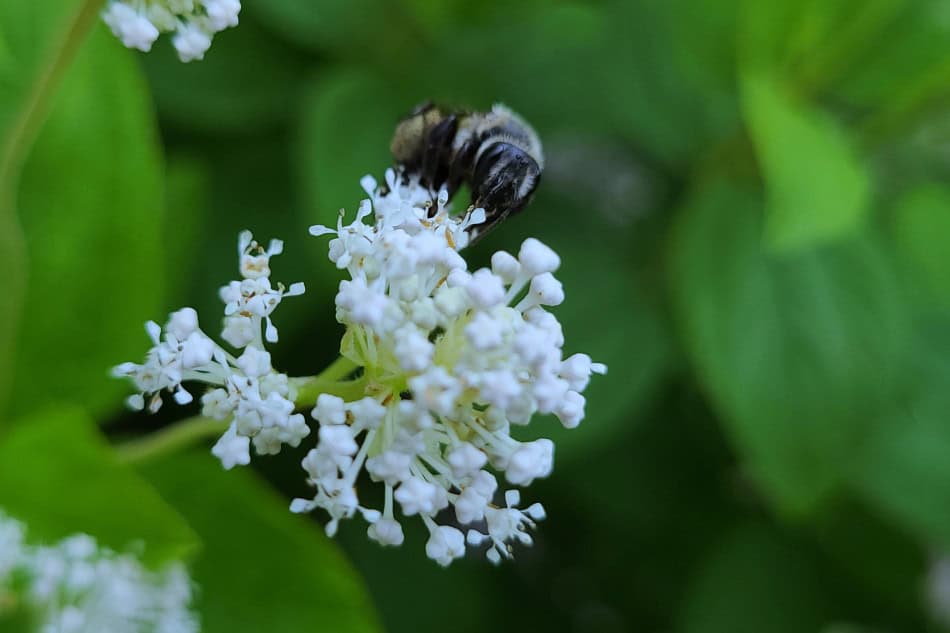
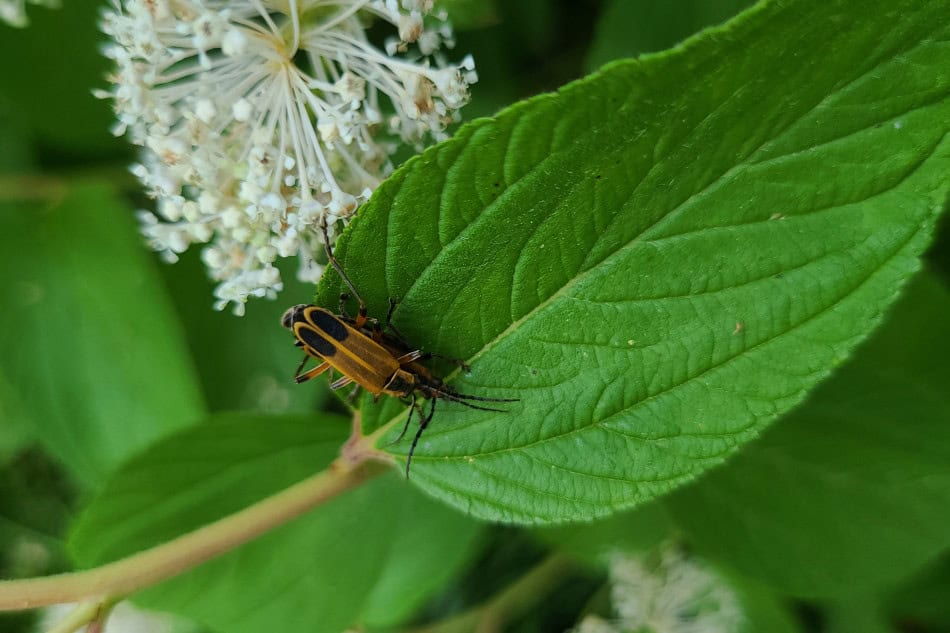
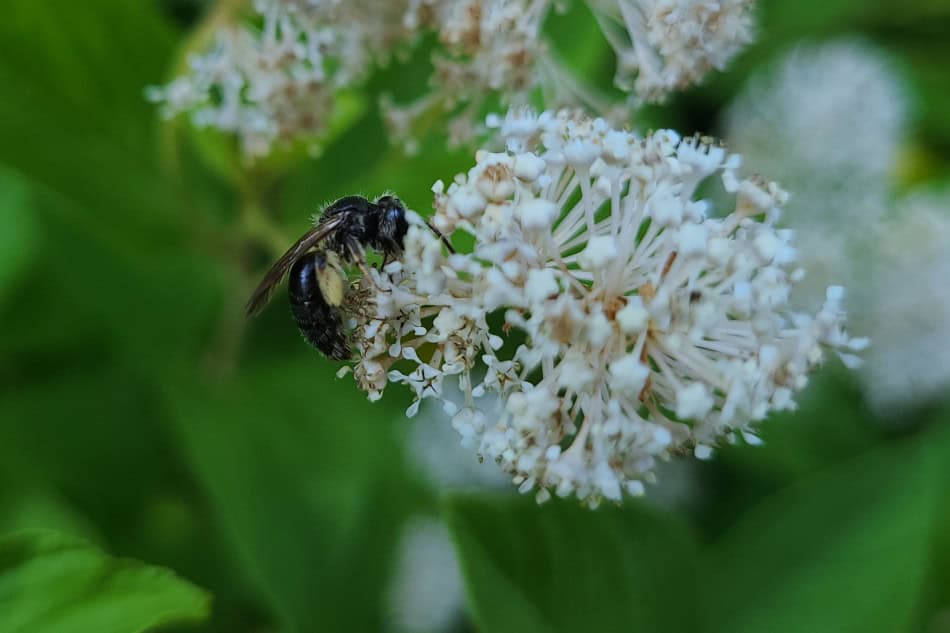
When in bloom the flowers are truly a buzz with all manner of pollinator, from larger bumblebee to very tiny bees that I cannot even identify. You also get a healthy number of skippers and pollinating beetles as well. This is all in addition to just looking good.
I first germinated seeds of New Jersey Tea back in 2021, and have been growing it ever since. As of 2026 I have about 7 plants of various maturity at my home. And, I will share all that I’ve learned over the years in this profile.
Native Range
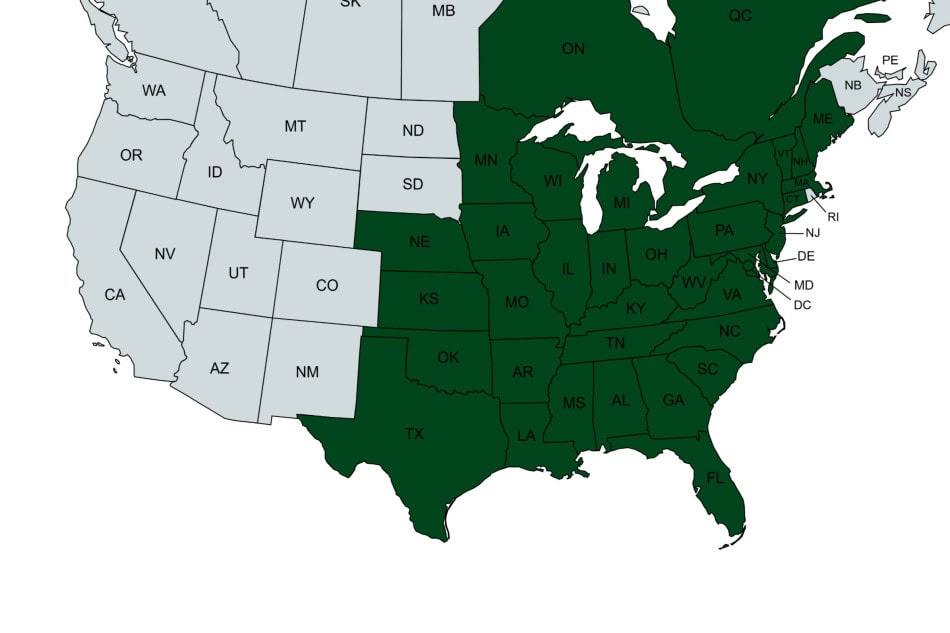
The native range of New Jersey Tea is eastern North America. From Florida to Maine, and west to eastern Texas/Nebraska and Ontario Canada[1].
Reference Table
| Scientific Name | Ceanothus americanus |
| Common Name(s) | New Jersey Tea |
| Native Range, USDA Zone | Eastern North America, USDA hardiness zones 4-8 |
| Bloom Time | Spring to summer |
| Bloom Duration, Color | 4 weeks, white |
| Height | 3-4′ |
| Spacing / Spread | 3-5′ |
| Light Requirements | Full sun to part shade |
| Soil Types | Sandy, loam, or clay loam. The soil must drain well. |
| Moisture | Dry to medium moisture |
| Fauna Associations / Larval Hosts | Numerous species of pollinators feed on nectar of the flowers. Hosts up to 43 species of moth, including about 8 species that are specialized to New Jersey Tea[3][4]. |
What are the Benefits of
Beauty
The delicate panicles of flowers of New Jersey Tea are gorgeous. Dotting the shrub almost like snowballs, they are beautiful from afar or when examined up close. Plus, the white color means the plant can pair with pretty much any other species.
Wildlife
While all native plants are beneficial to wildlife, New Jersey Tea is on another level. It is what is known as a Keystone Species in that it supports caterpillars of a large number of species. There is documentation of 43 species caterpillars of moths, butterflies, and other insect larvae feeding on the leaves as well as other parts of the plant. Now, many people would consider damage from insects a bad thing in their garden, but it actually carries a huge benefit to the local ecosystem in that these caterpillars are often the primary food source for baby birds. Read more on keystone species and their benefits here.
Drought tolerant
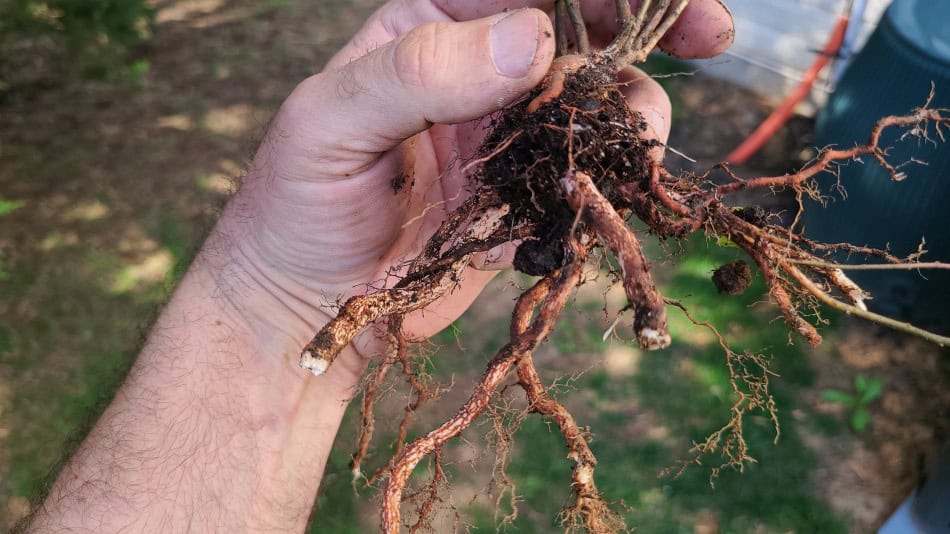
New Jersey Tea produces a stout, deep taproot that can allow it to access lower layers of the water table. This in-turn allow New Jersey Tea to survive dry conditions, slopes, sandy soils, and droughts.
Can make tea from the leaves
When the Boston Tea Party happened and the British stopped allowing the import of tea to the colonies, they responded by making tea from the leaves of New Jersey Tea. While it doesn’t have caffeine, it tasted well enough and kept the revolutionary war soldiers morale high[1].
Identification and Characteristics
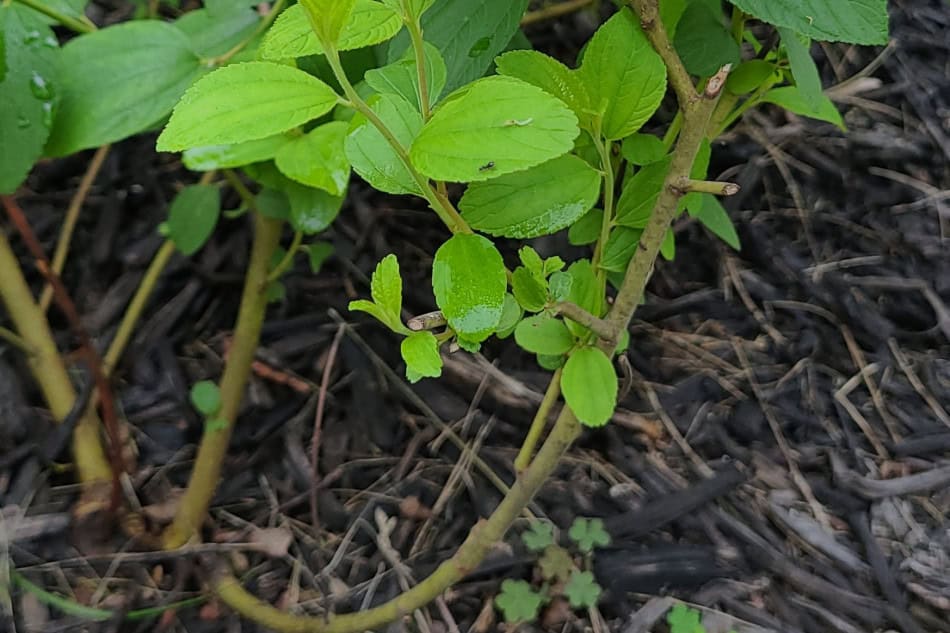
Stalk
The overall plant typically gets to be about 3′ tall. Multiple shoots emerge from the base of the plant that are ascending. Young shoots are light green to yellow with hairs, and eventually turn woody.
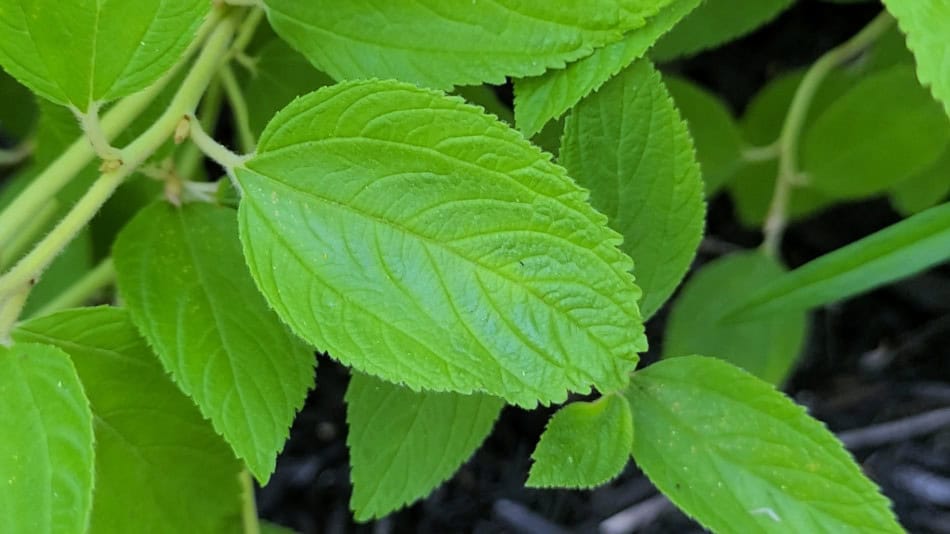
Leaf
Leaf arrangement for New Jersey Tea can be alternate or opposite, which isn’t helpful in identification. They are medium-green, generally up to 3″ long by 2″ wide and ovate with smooth to fine-serrations[2].
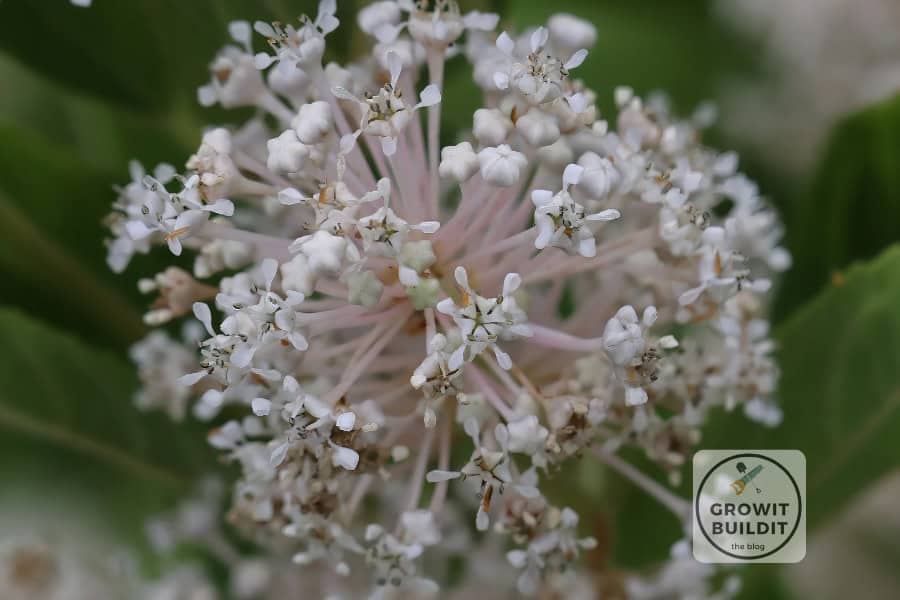
Flower
At the end of the stems will be panicles attached to a stem that is several inches long. An overall panicle is up to 5″ long by 2-3″ diameter. The pleasantly aromatic flowers are very fine, upwards of 1/4″ diameter with 5 white petals[2].
Root
The root system for New Jersey Tea is a taproot[1]. It can typically reach two feet deep[5].
Growing Conditions
The preferred growing conditions are full sun and well-draining soil. It can tolerate some shade, but the soil must drain. If you’re unsure of your soil texture or drainage, see my guides for the mason-jar test here and drainage test here.
How to save seed
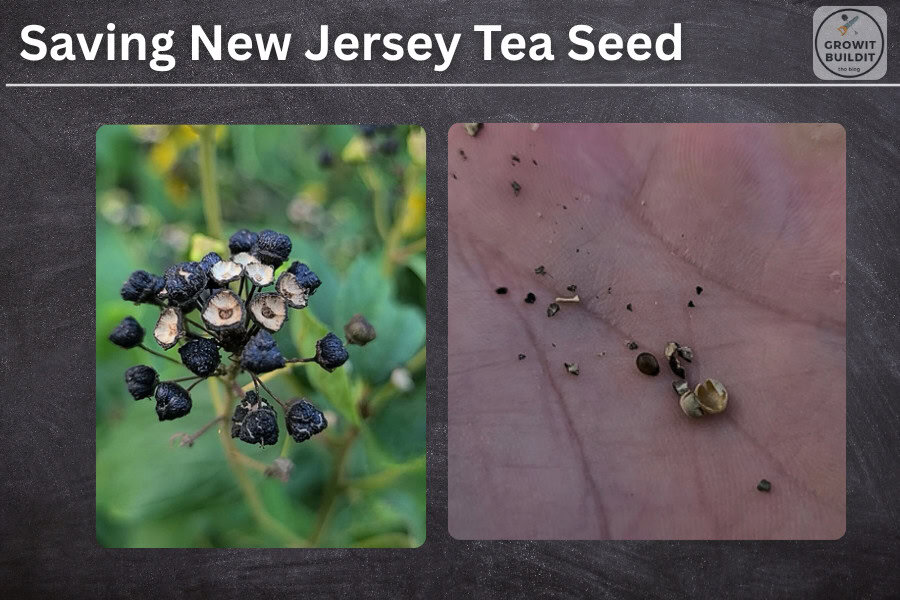
Saving seed from New Jersey Tea is a bit more involved than other plants. It’s going to produce capsules that ripen 1-2 months after flowering. Each capsule will have a seed in it. You need to break off the cluster of capsules when they start to turn black.
It can be a pain to extract the seed from the capsules. But I have only used my hands to do this thus far. It may be possible/effective to use a rolling pin to release the seed as well. But dried seed can be stored in a cool dark place for at least a couple years.
How to Grow New Jersey Tea from Seed
The seed of New Jersey Tea has a hard coating that will prevent premature germination, and the seed needs a cold-moist stratification period of 2-4 months to achieve a high germination rate[6][7].
Scarification
The literature and seed sources have various suggestions for scarification. I have experimented a bit, and found that using sand paper, or the near-boiling water soak both produced equal results. But you can rub the seed on sandpaper until the coating changes color for scarifying. Or, you can boil a small amount of water, then remove it from the boil for about 10-30 seconds, finally pouring it over seed in a coffee cup, and allowing it to soak for 24 hours. Below are my results. Please note that each of these treatments had sixty days cold-moist stratification via winter sowing afterwards.
| Scarification Method | Germination Rate |
|---|---|
| Hot water soak | 80% |
| Sand paper scarification | 67% |
| Sandpaper scarification + hot water soak | 73% |
Although the percentages appear to indicate the hot water soak is best, statistically they were all the same since each treatment only had a sample of 15 seeds with no replication. So, whatever method you find easiest should work.
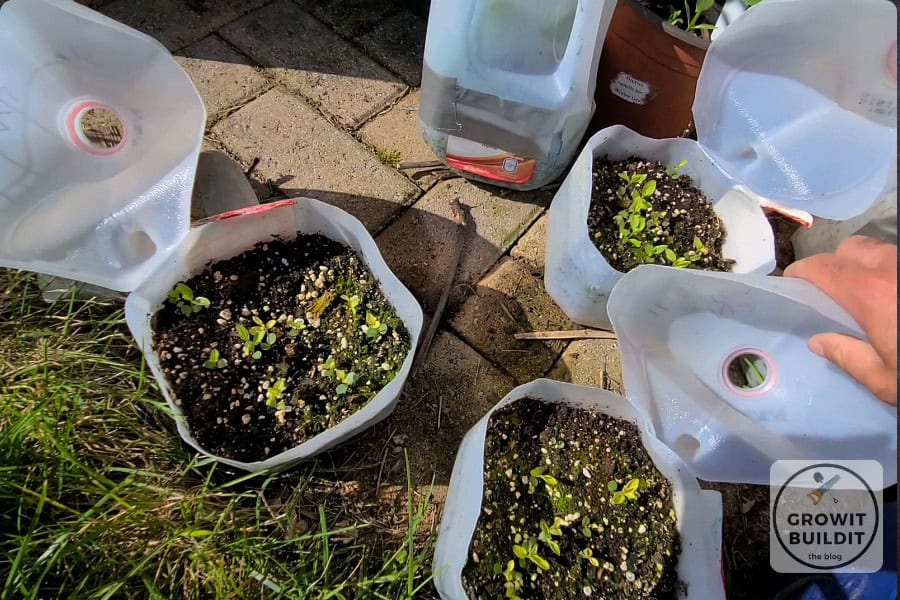
For cold-moist stratification, I found sixty days to be sufficient. You can achieve this using a moist-paper towel in a zip-lock bag in the fridge, or via winter sowing. My personal preference is to just winter sow, since then you don’t have to worry about mold or anything else.
But for planting stratified seed or winter sowing, just fill a suitable container with moist potting soil. Plant seeds fairly shallow, only 1/16-1/8″ (1.5-3 mm). I generally just press them firmly into the soil and leave them uncovered in a milkjug. Place containers in a location that receives morning sun and afternoon shade, and keep moist. Germination should occur fairly quickly when temperatures regularly approach sixty degrees during the daytime.
When seedlings have 2-3 sets of true leaves, you can then thin them, separate seedlings into larger pots, or plant them out to their final location. I strongly encourage you to protect the seedlings with Liquid Fence until the plant is fully established. In fact, with this plant I generally grow it in a large container for a full season, then plant it out in the fall.
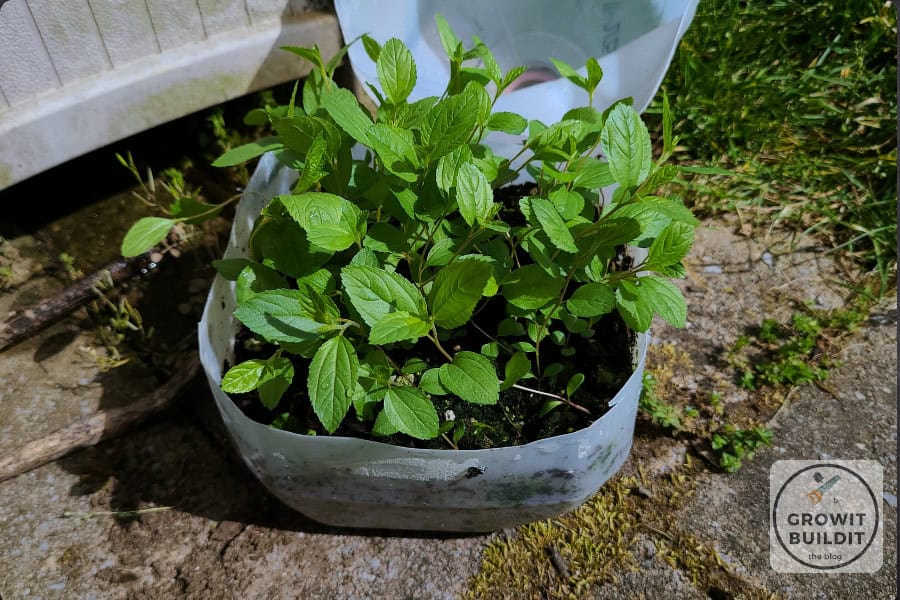
This shrub is fairly quick to establish, jumping up to 2′ tall by the start of it’s third year when grown from seed. In my experience it is fully grown by year five being roughly 3′ tall by 3-5′ wide.
Other methods of propagation
New Jersey Tea can be propagated via softwood cuttings. The protocol specifies that it should root within a few months in a greenhouse setting[8].
One additional method of propagation that I came up with, well, perhaps it’s just a modified form of cuttings is to just chop off a new shoot with it’s root attached in Spring, and plant it somewhere else. Sort of like division, but not where you dig up the whole plant and cut it in half. Instead, just do it to a single stem a week or two after it emerges, or from the prior year’s growth. I did this a couple years ago, and the plant is thriving.
Wildlife, Pests, and Diseases associated with New Jersey Tea
Pollinators
Alright, so this plant does an amazing job attracting pollinators to the flowers. And you will see a large number of species that you probably won’t recognize. But in addition to that, as I’ve previously stated, New Jersey Tea does an amazing job hosting caterpillar species (40+)[4][4], and gets the moniker of a Keystone Plant according to the National Wildlife Foundation.
Birds
Several species of gamebirds will eat the seed capsules. This would include turkey, grouse, and quail[2].
Deer and Rabbits
Deer and rabbits do love to eat New Jersey Tea. I have seen plenty of damage on some of my plants. The best way to prevent this is to either plant enough so that it can tolerate the browsing, or to spray with Liquid Fence.
Disease
Although rare, it is possible for New Jersey Tea to get foliar diseases like powdery mildew or leaf spot. I personally haven’t seen them on my plants.
Where you can buy New Jersey Tea
New Jersey is not commonly sold in nurseries. But it can often be purchased at specialty nurseries that deal in Native Plants. You can find native plant nurseries near you on our interactive map.
Where to buy seeds
We have ordered a variety of native flower seeds from Everwilde Farms, which you can order right from Amazon through our link on our RECOMMENDED PRODUCTS PAGE. (We may earn a small commission when you purchase through our links, at no cost to you. This helps support our website.)

Uses of New Jersey Tea
Garden Uses
This shrub can be grown as a focal point, accent, or even as a deciduous hedge. It really isn’t too picky where it grows provided the soil drains well.
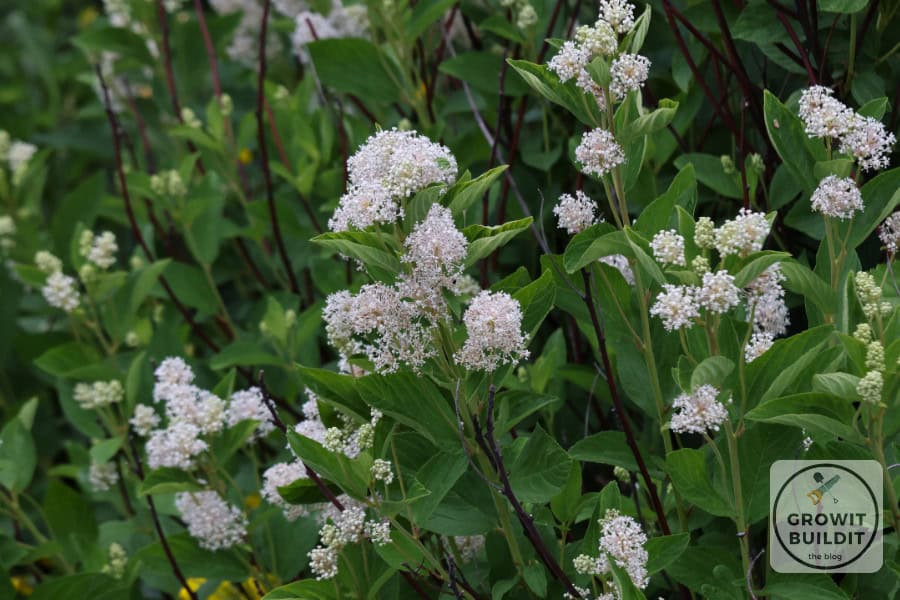
From a homeowner’s perspective, the only maintenance that one may want to do is to break off any branches that experienced winter dieback. In milder climates, the woody stems will produce leaves in Spring. But in harsh winters, I have experienced dieback, when the woody stems (some or most) do not produce leaves/flowers. In those situations, you can choose whether or not to break off the old ones. It really doesn’t matter, as new shoots will take the place of the old very quickly, often filling itself in that same year.
Companion Plants
New Jersey Tea will grow well with pretty much any plant that likes similar growing conditions of full sun and well-drained soil. I personally like to keep it with similar height species. But below are some suggestions for what you can grow it with:
- Anise Hyssop
- Blue False Indigo
- Butterfly Weed
- Culver’s Root
- Downy Wood Mint
- Purple Coneflower or Tennessee Coneflower
- Penstemons like Foxglove Beardtongue or Gray Beardtongue
- Sundrops
There are also numerous grasses that can go well with New Jersey Tea. Little Bluestem, Dropseed, or Pink Muhly all love similar growing conditions, and would look great together.
Medicinal Uses
So, New Jersey Tea was used extensively by Native Americans (41 uses documented by 11 tribes)[9]. The uses were wide ranging, often involving a decotion or infusion or roots to treat everything from ‘bowel complaint’, injured feed, toothaches, colds, and pulmonary troubles. Now, some modern research has found that the roots have properties that do coagulate blood.
Edible uses
Both Native Americans and early settlers used leaves to brew a tea. The leaves do not have any caffeine in them, but the flavor tastes well enough.
Final Thoughts
New Jersey Tea is a total package shrub that looks great, is tough, does an amazing job feeding pollinators, and hosts dozens of caterpillars. It’s a shame that this shrub isn’t planted more often, as it combines beauty with ecological value. And even if it does get browsed by deer, it bounces right back throwing up more shoots very quickly.
Find more native plants here
References:
[1] – Wynia, R.L. 2010. Plant fact sheet for New Jersey tea (Ceanothus americanus). USDA-Natural Resources Conservation Service, Manhattan Plant Materials Center. Manhattan, KS 66502.
[2] – Angier, Bradford. Field Guide To Edible Wild Plants. Stackpole Books. 1974. pp154.
[3] – Shropshire KJ, Tallamy DW. 2025. Lepidoptera of North American north of Mexico: An annotated list containing geographic ranges and host plant records. ZooKeys
[4] – Federal Highway Division, Ecoregional Revegetation Application (ERA)
[5] – Bottomley, W. B. “The root-nodules of Ceanothus americanus.” Annals of Botany 29.116 (1915): 605-610.
[6] – David J. Horvath, Ceanothus (americanus), Propagation Protocol Database, Native Plant Network. Accessed 28JUL2026
[7] – Stewart, J. Ryan, and Irene McGary. “Brief exposure to boiling water combined with cold-moist stratification enhances seed germination of New Jersey tea.” HortTechnology 20.3 (2010): 623-625.
[8] – John M. Englert, Ceanothus americanus, Propagation Protocol Database, Native Plant Network. Accessed 28JUL2026
[9] – Ceanothus americanus, North American Ethnobotany Database. Accessed 28JUL2026
Recent Posts
So, if you are going to be spending time in the woods, or even anywhere with taller weeds you should take care to protect yourself from ticks. They cause numerous diseases like Lyme disease, and now...
At some point in your life, you are going to have to loosen a rusted, stuck, or seized screw. It is almost guaranteed! So, depending on the situation, one of these will work. I've noticed that lots...