
One of the prettier Penstemon flowers native to Eastern North America is known as Gray Beardtongue. Scientifically known as Penstemon canescens, it grows up to 3′ tall by 18″ wide in full sun and well-draining soil[1]. Thriving in dry to medium moisture, it’s beautiful pink to purple tubular flowers bloom for 4-6 weeks in Spring and attract a lot of bees.
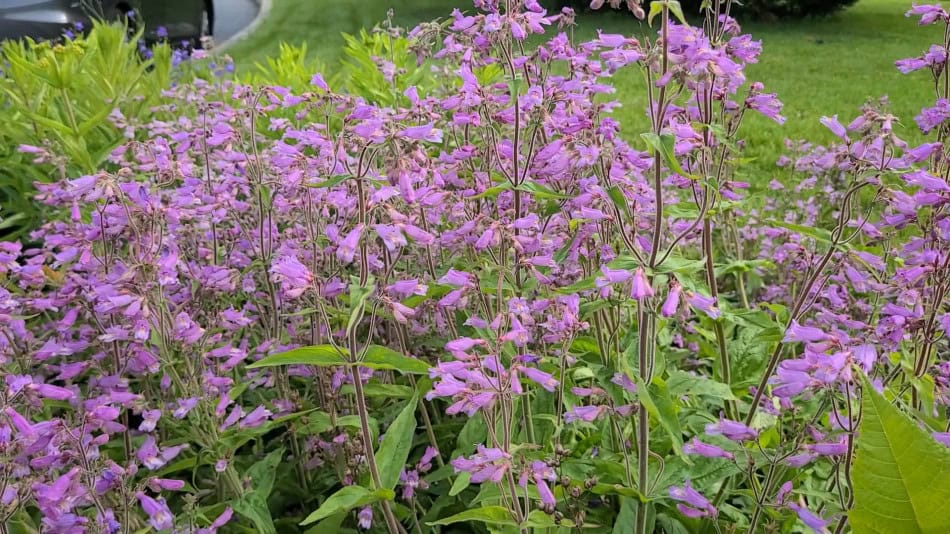
This plant is one that is an ideal choice for hot dry areas near driveways or streets (aka hellstrips). It doesn’t grow too large, can take a drought, and looks great most of the year. This flower would be a great choice for most homeowners, as just about everyone has at least one flowerbed that is prone to having droughts.
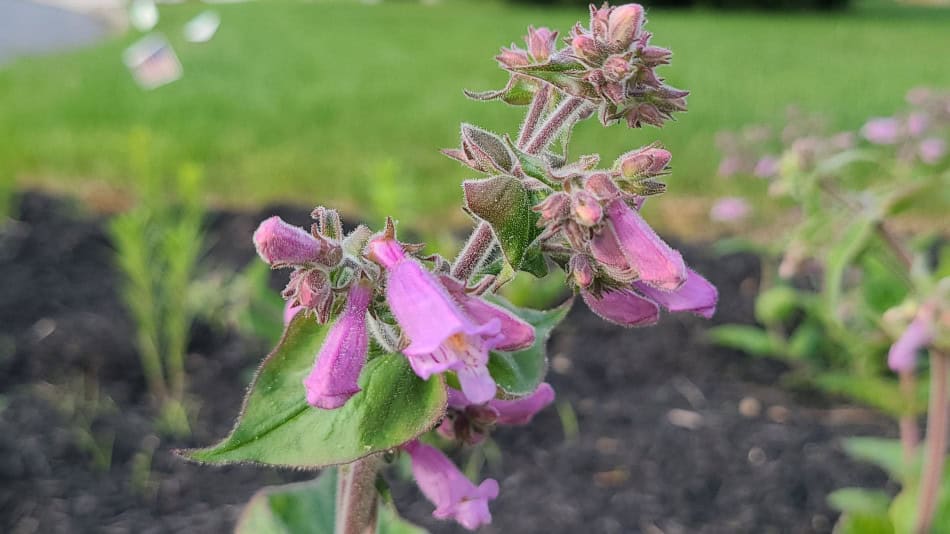
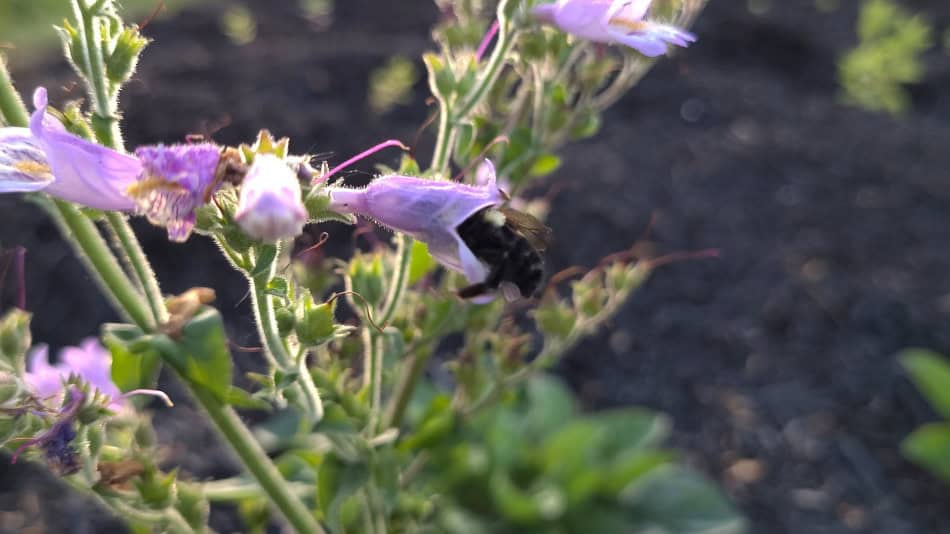
It’s common name, Gray Beardtongue may seem a bit odd considering the flowers have that beautiful shade of pink/purple. But it is because the stalk, leaves, and even the flowers have tiny white hairs on it that give it a ‘gray’ hue. See image below to see what I mean.
Native Range
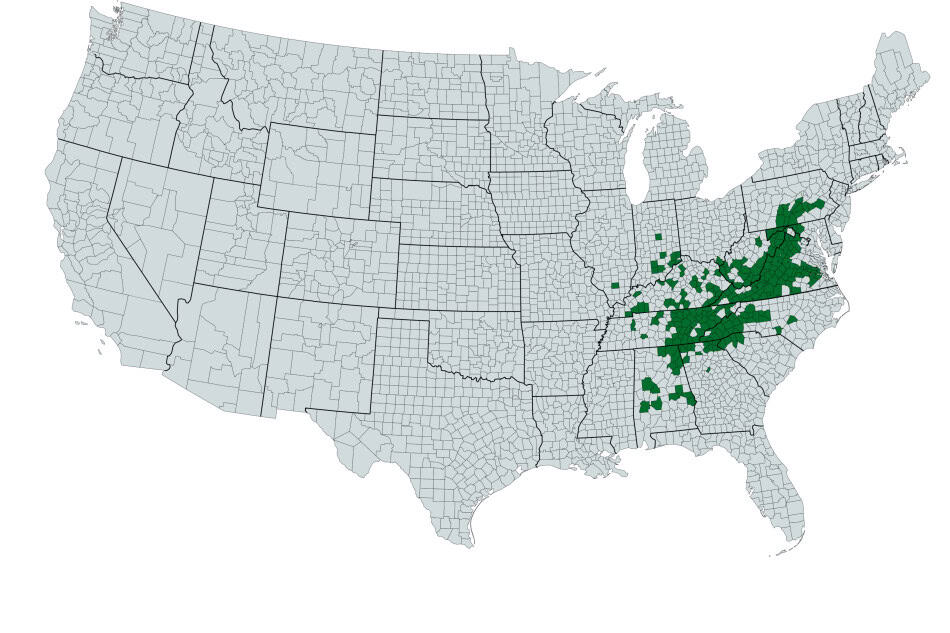
The primary native range of Gray Beardtongue is the Appalachian Mountains from Alabama to Pennsylvania, with isolated pockets dotting the surrounding states[2].
Reference Table
| Scientific Name | Penstemon canescens |
| Common Name(s) | Gray Beardtongue, Eastern Gray Beardtongue, Appalachian Beardtongue |
| Native Range, USDA Zone | Eastern United States, USDA Hardiness Zones 5-8 |
| Bloom Time | Spring |
| Bloom Duration, Color | 4-8 weeks, Pink to purple |
| Height | 1-3′ |
| Spacing / Spread | 12-18″ |
| Light Requirements | Full sun |
| Soil Types | Sandy loam to clay loam, must be well-drained |
| Moisture | Dry to medium moisture |
| Fauna Associations / Larval Hosts | Bees, butterflies, hummingbirds |
Video guide
Below is a video we released on this flower. Please have a look and enjoy the bumblebee ‘blooper’ reel at the end!
Benefits
Beauty
The flowers of Gray Beardtongue are absolutely gorgeous. Planted en masse, they create a stunning display of pink to lavender blooms. The color of the flower seems to change depending on the angle of the sun, which makes them even more interesting.
Wildlife
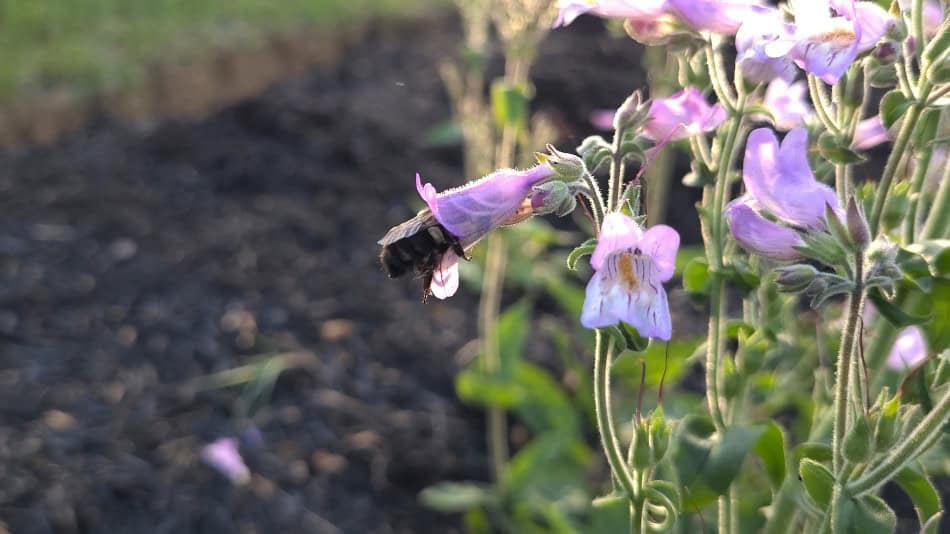
When it comes to bees, this flower is one of the busiest in Spring. Once the sun is up, various species of bumblebee will go ‘spelunking’ into the tubular flowers to access the nectar and pollen at the base. You get to see their little butts sticking out of the blooms, which is quite cute.
Drought tolerant
This species of penstemon is very drought tolerant. It is known for growing on the slopes of mountains, which are often dry. My own plants came from seed gathered from a fully exposed mountain top in West Virginia.
Identification and Characteristics
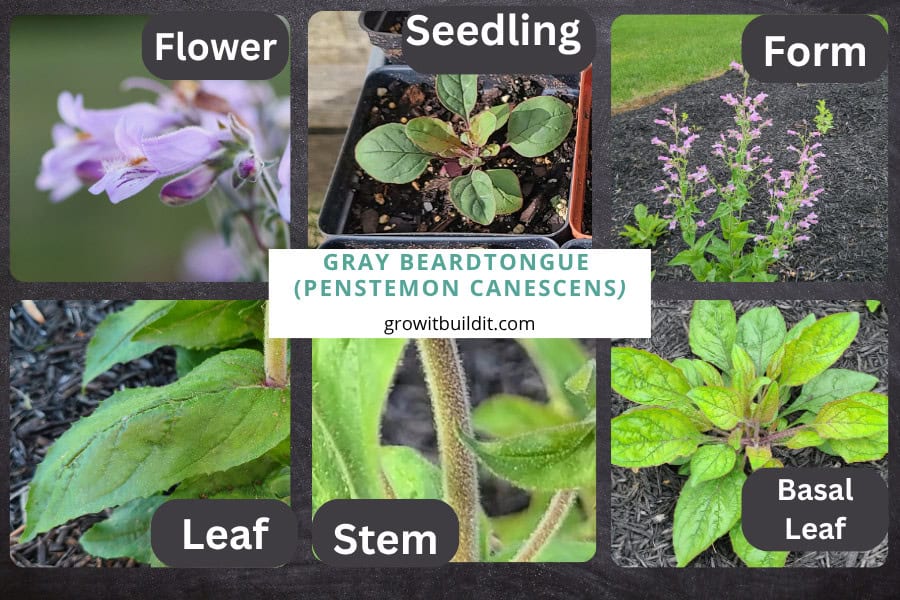
Stalk
The stalks are generally erect, green to red in color and are densely covered in small gray to white hairs. This is where the common name ‘gray’ beardtongue comes from. Overall the plant can grow upwards of 3′ tall. I have never seen it grow much more than 12″ though in the location I have it, which is full sun and dry.
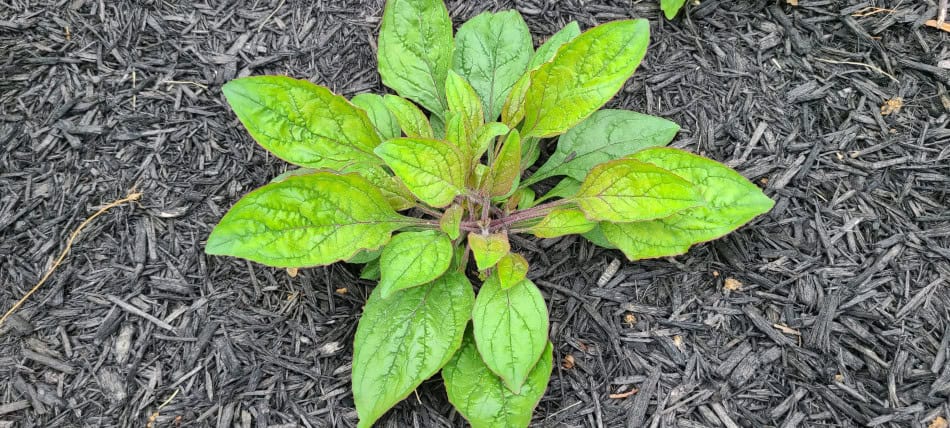
Leaf
This plant will have both basal and stem leaves. The basal leaves are ovate to broad-ovate and usually are around 5″ long by 2-3″ wide at the base, and attached with petioles that are up to 3″ long. The petioles and leaves are often covered with white hairs that give it a gray appearance. Depending on your location and the winter, the basal leaves may stay semi-evergreen all winter.
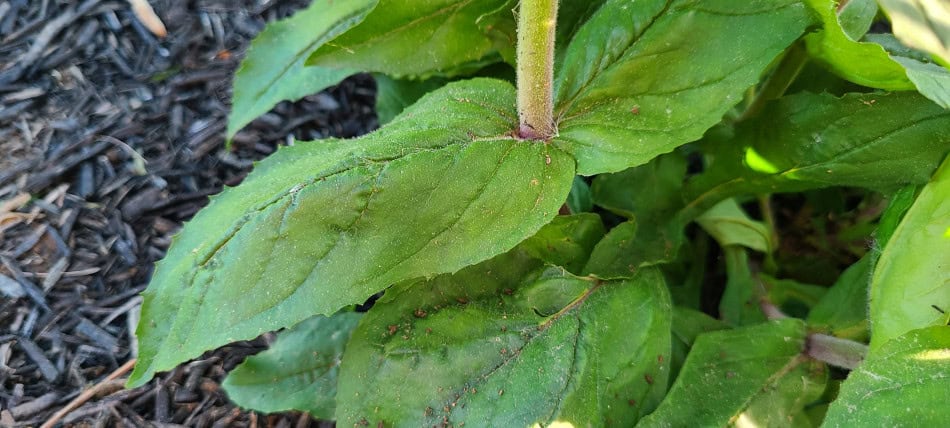
Opposite leaves occur on the stem, clasping without petioles, and covered in white hairs. They too are ovate to broad-ovate or broad-lanceolate in shape, and up to 4″ long by half as wide with slightly serrated margins.
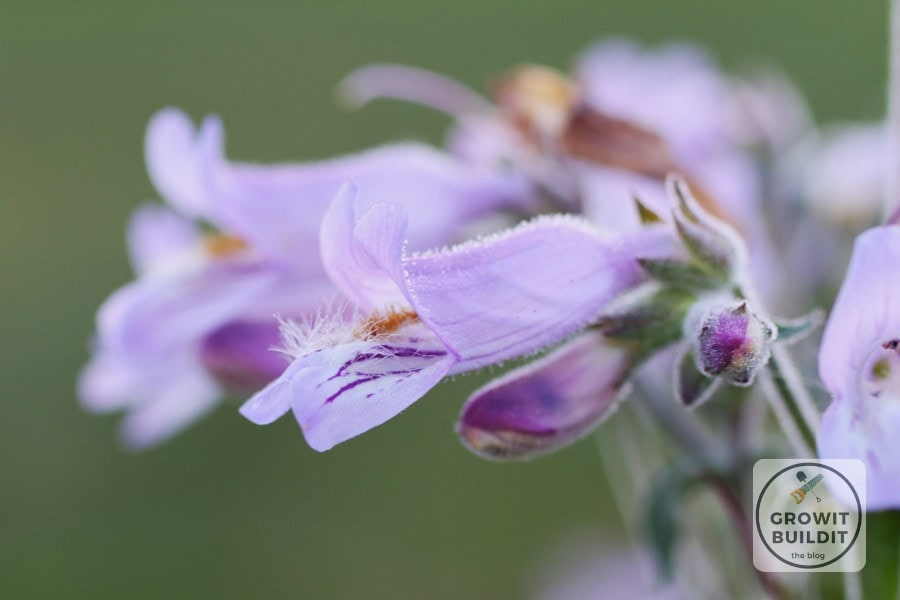
Flower
Racemes of two-lipped tubular flowers occur at the end of stalks, up to 1-1/2″ long by 1/3″ diameter. They are pink to violet in color. The stamens sticking out of the ‘tube’ appear hairy, and hence are the inspiration for ‘beard tongue’.
Root
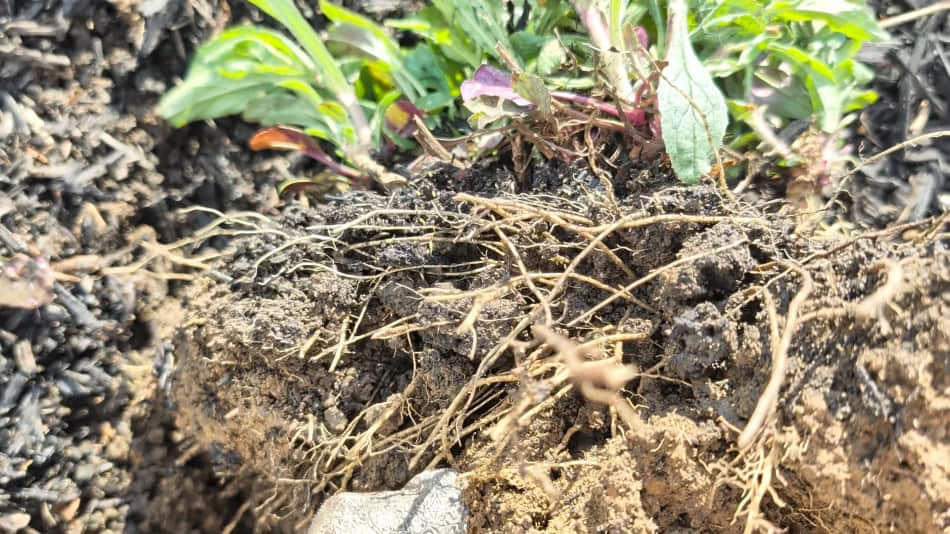
The roots come from a rigid caudex and are stiff but fibrous.
Growing Conditions
Sunlight Requirements
This plant loves the sun. Plant it fully exposed in full sun to get the most blooms.
Soil Requirements
Sandy loam to clay loam or even rocky soils are fine. The primary requirement is that the soil drains well. See here on how to test your soil’s drainage.
Moisture Requirements
Gray Beardtongue is very drought tolerant, and does best in dry to medium-moist conditions. Again, make sure the soil drains well. Do not plant it in areas where water collects.
Maintenance
Depending on your preferences, you can cut the stalks back to ground after flowering or in winter. This is not necessary though, as the stalks will fall down on their own soon enough in Spring!
Fertilizer
Do not fertilize this plant.
How to save seed
Saving seed from Gray Beardtongue is the same as it is for all other penstemons. After the flowers have faded small round capsules will form at the end of the stalk. Once these turn brown, the seed is ripe. This normally takes a month or two after blooming.
But, take a container or bag out to the plants hold the stalk with one hand and cut with the other. Then, without turning the stalk upside down, place it inside the container. So, when the pods are really ripe they will split open. If you turn a stalk upside down, the seed can then just fall out.
But let the pods dry for a week or two in a cool, dark, dry location. Then, simply pop the pods open using your hand or rolling pin, on top of a plate. The seed will fall out. You can store dried seed out of direct sunlight for some years in an envelope or baggy.
How to Grow Gray Beardtongue from seed
Gray Beardtongue seed has a dormancy mechanism to prevent premature germination. To overcome this, the seed must undergo a prolonged exposure to cold and moisture. This happens naturally when the seed falls out to the ground in Autumn, and sits in cold soil all winter. We can do this ourselves by either cold-stratifying the seed on a moist paper towel, in a bag in the fridge. Or, by winter sowing (my preferred method).
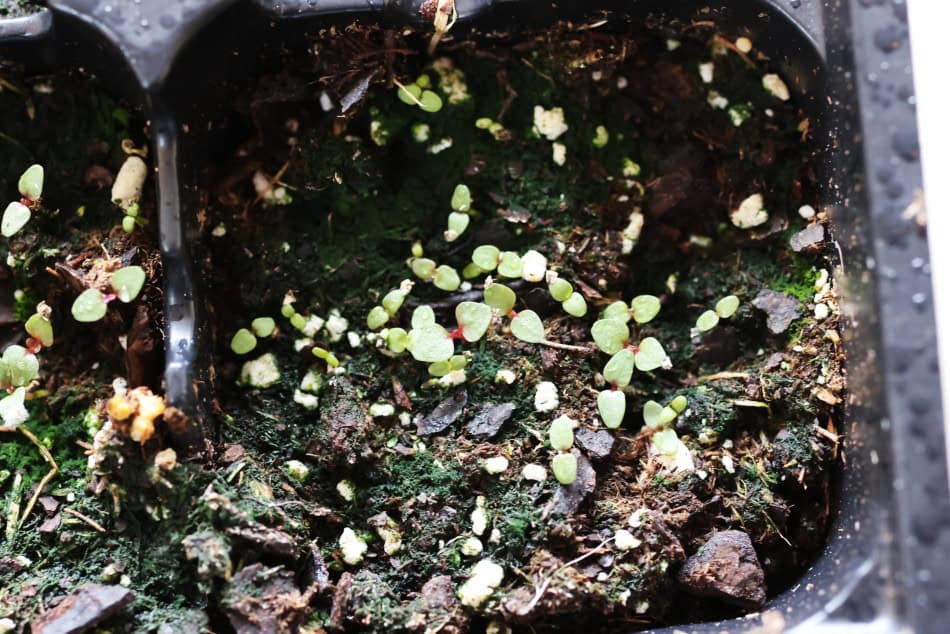
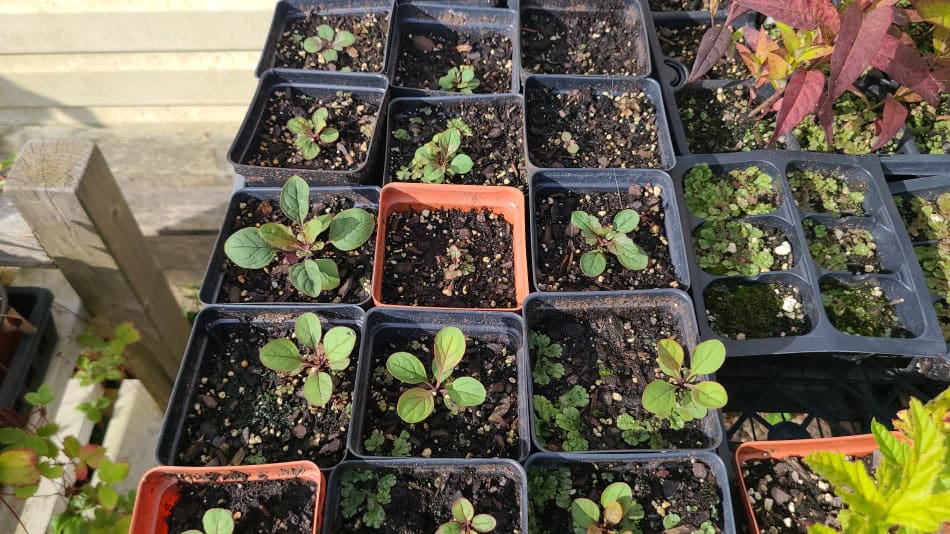
But for planting stratified seed or winter sowing, simply fill a suitable container with moist potting soil. Pat the soil firm, then scatter some seed on top. Press the seed in with your thumb. If you water, do so by watering from the bottom or by misting to avoid washing the seed away. Move the container to a location that receives morning sun and afternoon shade. Germination should occur in early Spring. Once the seedlings get a couple sets of true leaves, you can transplant to it’s final location or separate the seedlings.
Propagating via division
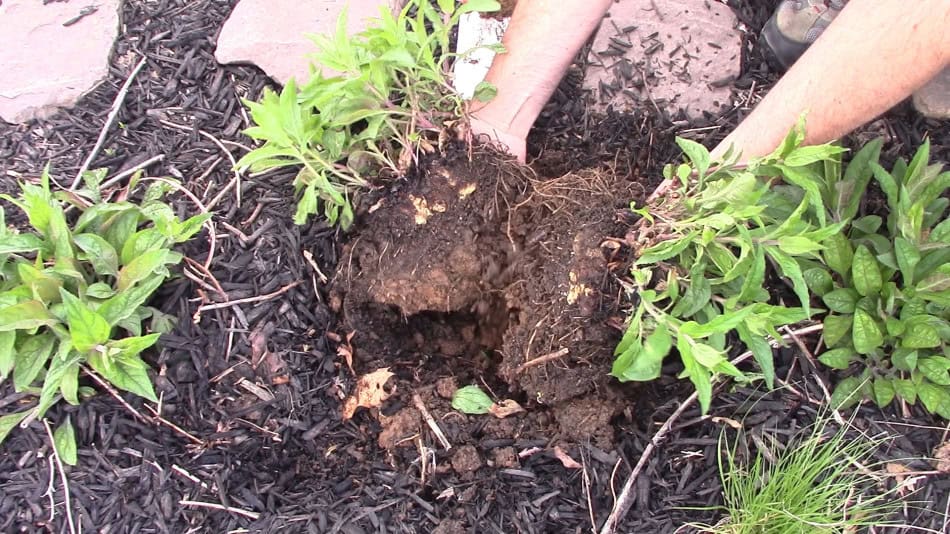
Gray Beardtongue is a plant that you can divide in early Spring or Fall. When only the basal leaves are actively growing (no stalks, no flowers, no seed formation) you can simply pop the whole plant out of the ground, and then cut it with a shovel or garden knife. Replant immediately, and make sure the soil is well watered.
Wildlife, Pests, and Diseases
Pollinators
Gray Beardtongue will primarily attract long-tongued bees such as bumble, carpenter, and mason bees. There are a variety of other pollinators that you can observe too (and will). References state that butterflies and hummingbirds are also attracted to it[3], however I have yet to see any visit my plants.
Deer and Rabbits
Deer and rabbits seem to leave this plant alone. I have never seen any damage to any of my plants.
Disease
Gray Beardtongue is unaffected by disease.
Where you can buy Gray Beardtongue
Gray is not typically sold in nurseries, as not many nurseries specialize in natives. But it can be purchased at specialty nurseries that deal in Native Plants. You can find native plant nurseries near you on our interactive map.
Where to buy seeds
We have ordered a variety of native flower seeds from Everwilde Farms, which you can order right from Amazon through our link on our RECOMMENDED PRODUCTS PAGE. (We may earn a small commission when you purchase through our links, at no cost to you. This helps support our website.)

Uses of Gray Beardtongue
Landscaping
This plant is a great choice for any fully exposed slope or well draining site. I grow mine in what is the equivalent of a ‘hell strip’, in that it is right along my driveway and only gets rainwater. I know that other references state it can grow upwards of 3′ tall, but I have not seen anything like this at all. Perhaps it is my ecotype, which came from a mountaintop in West Virginia, but my plants are generally around 12″ tall. Now, I know I just said that their location doesn’t get supplemental water, but in Spring all soils around here are generally quite moist – so a lack of water would not seem to be the reason.
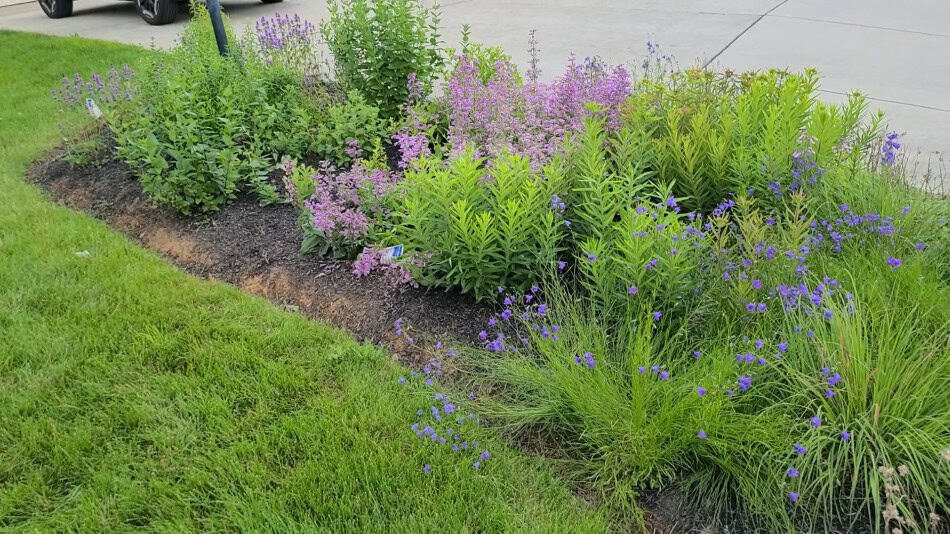
But overall this plant doesn’t seem to be too large, and is well-behaved. I highly recommend it. The image above shows it in our flower bed with Harebell and Downy Wood Mint blooming concurrently.
Companion Plants
Gray Beardtongue will do well with numerous other species that like full sun and drier conditions. Some grasses that come to mind would include Pink Muhly, Little Bluestem, Dropseed, and Purple Love Grass. Try pairing it with some of the following.
For companion flowers, try some of the following:
- Anise Hyssop
- Aromatic Aster
- Black Eyed Susan (R. hirta)
- Black Eyed Susan (R. fulgida)
- Downy Wood Mint
- Harebell
- Hairy Beardtongue (P. hirsutus)
- Pale Penstemon (P. pallidus)
- Plains sunflower
- Prairie Smoke
- Spotted Beebalm
- Shooting Star
Final Thoughts
This is arguably one of the prettier species of Penstemon, as the shades of pink/purple are unique for the Eastern United States where it is native. It’s amazing drought tolerance make it an excellent choice for a low-maintenance spring bloomer that does a great job attracting bees.
Find more native plants here
References:
[1] – Pennell, Francis Whittier. “The Scrophulariaceae of eastern temperate North America.” Academy of Natural Sciences, 1935. p221
[2] – Penstemon canescens (Britton) Britton eastern gray beardtongue, USDA NRCS. Accessed 01MAY2026
[3] – Federal Highway Division, Ecoregional Revegetation Application (ERA)
Recent Posts
October 6th, 2026 Do you ever feel overwhelmed by the amount of chores that come with gardening? Ever miss a planting window because you forgot? Are you a total beginner at gardening and don't...
Wrinkle-leaf Goldenrod is a herbaceous perennial flower native to Eastern North America[1]. Scientifically known as Solidago rugosa, it can grow up to 5' tall by 3' wide in full sun and moist to...