
Flowering Dogwoods (Cornus florida) are one of the showiest native trees around. They are frequently planted in landscaping for both residential and commercial applications. It isn’t hard to see why, as the large flowers they produce really stand out against the early Spring.
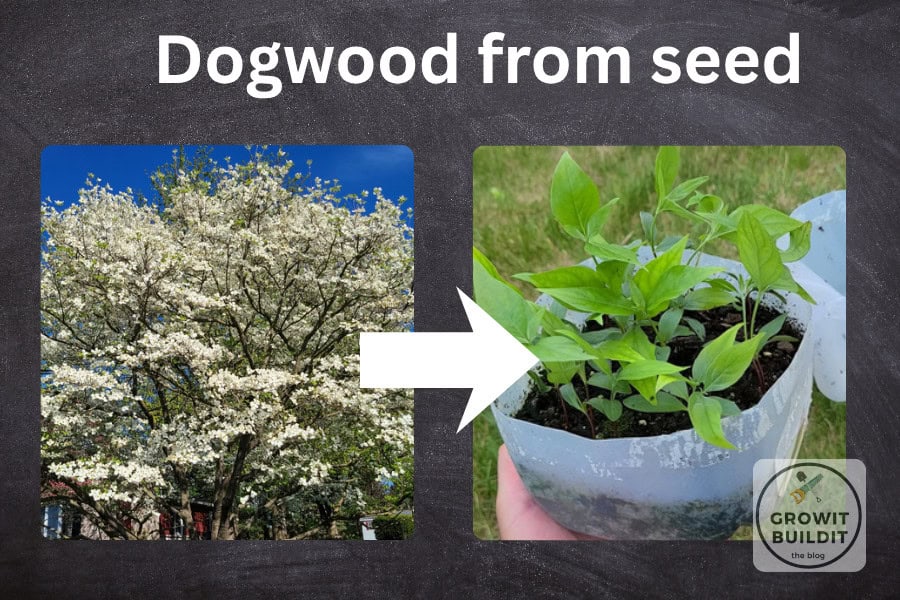
They aren’t the easiest trees to grow from seed though, as the storage mechanism for the seed seems to be really important. And they need a long cold stratification period to break dormancy. But, I will cover all of that in this article.
Foraging seed
Dogwood trees begin producing fruit after the flowers have faded. It will generally be ready for harvest 3-4 months after flowering. You need to monitor the tree you are interested in saving seed from, and once the fruit begins to turn red, harvest it. Simply pluck the fruit off the tree and place into a baggy.
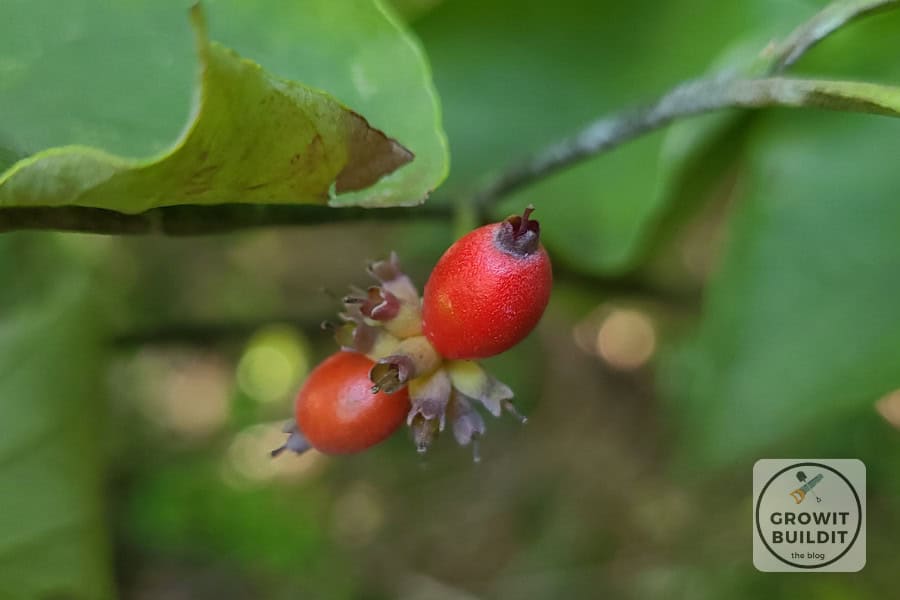
Note – if you need help identifying a dogwood, see my Dogwood identification guide.
Storage / preparation
Dogwood seed needs to be stored in the fridge in a sealed container. It is best to grab the fruits directly from the tree, then place them into a baggy in the fridge until you are ready to process them. These seeds shouldn’t be allowed to dry out.

To prepare the seed, you can massage it in a kitchen strainer or scrape it with your fingernail. This method is frustrating, as the flesh really likes to stick to the seed.
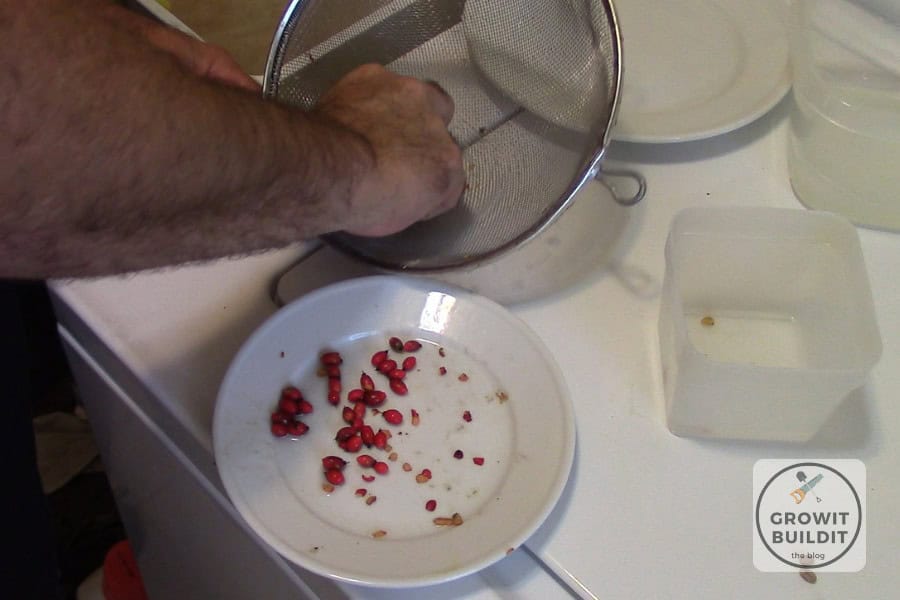
But once you have cleaned most of the flesh off, you should soak the seed in a 10% bleach/water solution to sterilize it. Then, rinse, and place the seed into a folded up moist paper towel or moist sand and place this in a sealed container or bag, and place in the fridge to start the cold stratification process. Dogwood seeds need to cold stratify for around 120 days to break dormancy[1][2]. You can either leave the seed in the fridge, in a moist paper towel or sand for this period, or you can winter sow the seed once outdoor temperatures get cold.
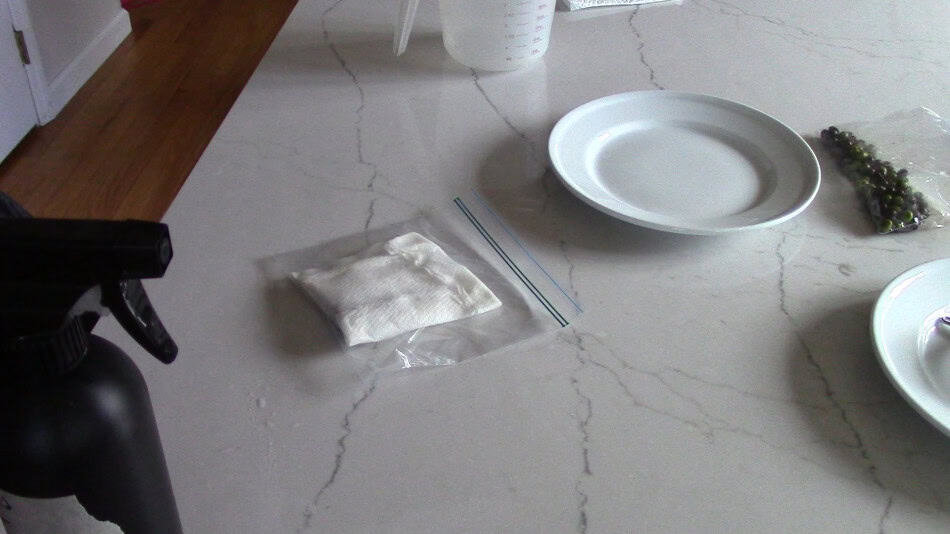
If you are using the fridge, it is good practice to check the seeds weekly to make sure they doesn’t dry out.
Sowing Dogwood seed
Ok, so for planting seed that has been stratified for 120 days in the Spring, or for winter sowing seed, you just need to plant them about 1/4″ deep, and keep them moist. It can help to soak the seeds in water for 24 hours prior to planting (I did). I used a milkjug for winter sowing, and simply filled it with moist potting soil, pressed the seed firmly into it, and then covered it with 1/8-1/4″ (3-6 mm) of more soil.
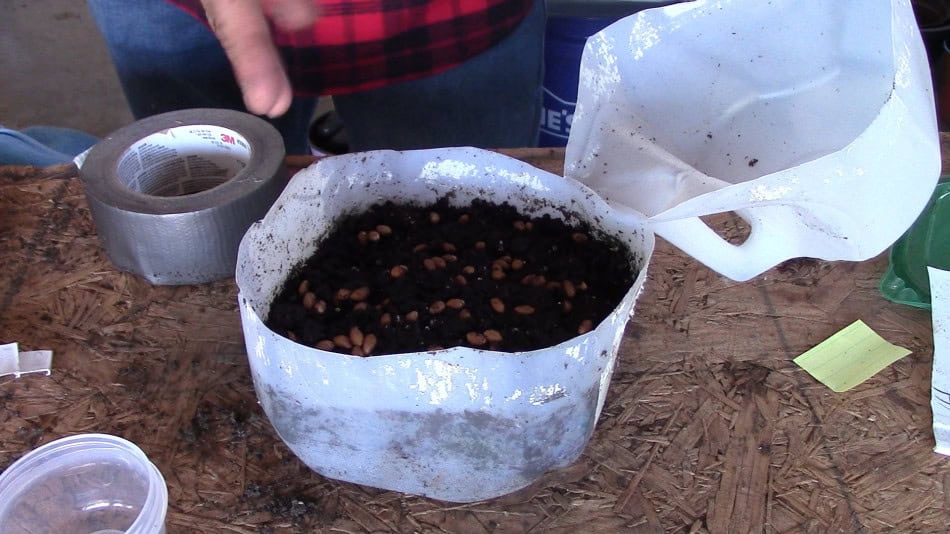
Note – I’m winter sowing the seed using a milk jug. To read more on this process, see my guide here.
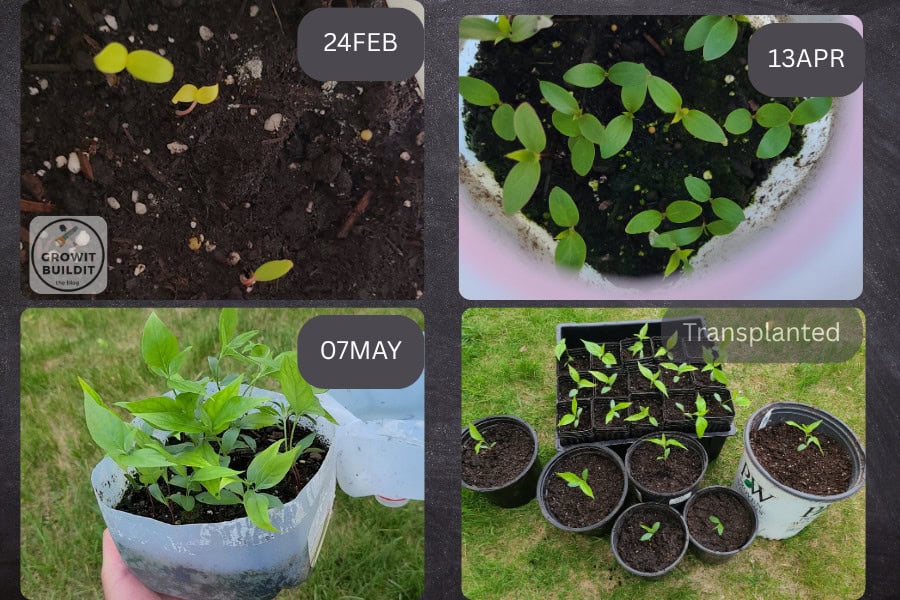
I kept the milkjug in my unheated garage, and sowed it in November. For reference I’m on the border of USDA hardiness zone 6/7. It is important with most tree seeds that they not be able to freeze solid, as it can often kill the seed. The first germination occurred sometime in February, and by six weeks later most seeds had germinated.
Separating seedlings
By 07MAY I had a couple sets of true leaves, and felt it would be ok to separate the seedlings. Note that at this point I could have planted them out to their final location. But since I planned on giving some away, I figured I would pot them into proper tree pots.
So, for separating seedlings you best tools are moisture, a plastic fork and knife, and patience. I carefully (and gently) pulled the trees apart. I then placed them into individual containers that were mostly filled with soil. While holding onto the leaves, I would hold the baby dogwood at the height I wanted and then sprinkle/tamp soil around it, taking care to not damage the root. This isn’t a fast job, but you can do it quickly enough. I reviewed my footage and it took me roughly 1-2 minutes per seedling.
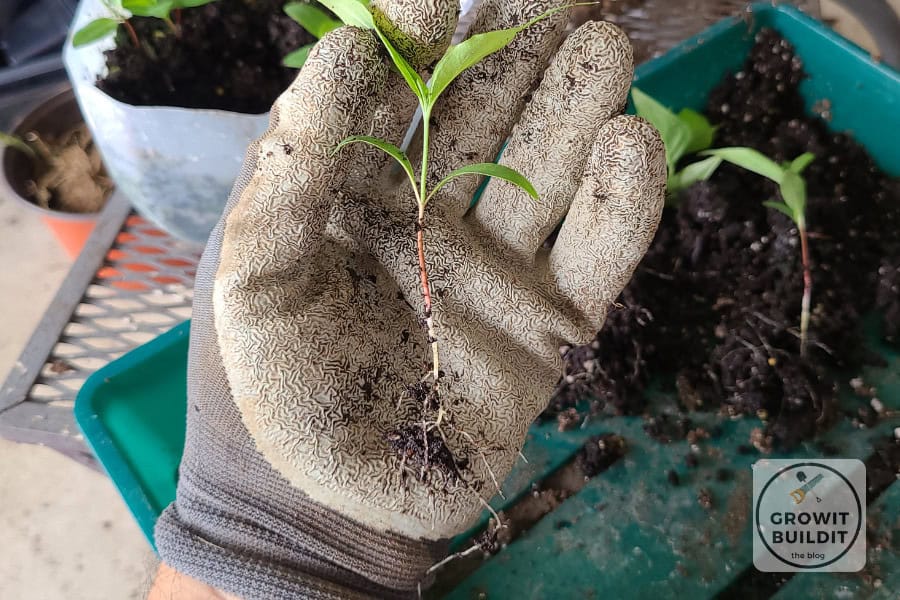
After you have repotted them, it is important to keep the trees in the shade for several days. The roots take a couple days to reattach to the soil, and until that happens they can’t transport much water and nutrients to the leaves. And the leaves will evaporate moisture to cool themselves. So, keep them in the shade for a few days, the seedlings will be fine.
Transplanting to final location
The best time to plant out seedlings or saplings is in Spring or Fall – not the heat of the summer. I kept my dogwoods in pots all season, only letting them have morning sun and afternoon shade. But by the fall, once temperatures begin to cool, it is a great time to transplant them to their final location as the heat demands are less.
Dogwoods like full sun to part-sun, and well draining soil[3]. For moisture they like moist to medium moist soils. So, find a location like this, and you should be good to go.
Deer and rabbits
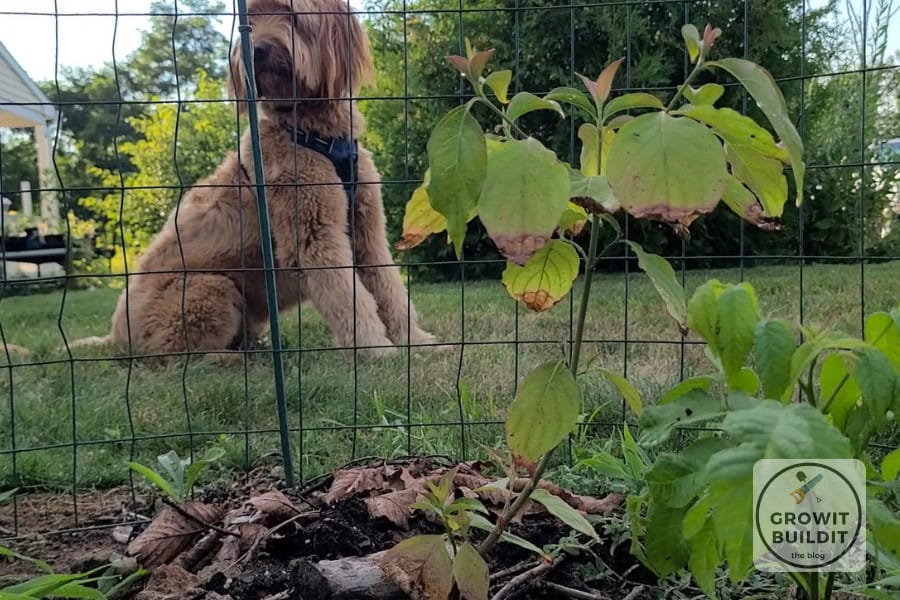
For any seedling, you should protect them from deer and rabbits. I used some left over fence this time, but plastic tree shelters work too. Also, in winter, the small tender bark on the trunk of young trees are particularly vulnerable to rabbits. Wrap them in chicken wire!
More notes on seed storage / prep
So, in this article all the pics I am showing you are my own. I foraged the seed, cleaned and prepared it in one day (05 SEP). So, all the seed was cold-stratifying in a paper towel, in my fridge a couple hours after plucking the berries off the seed. A few weeks later though, a friend of mine in Ohio mailed me some Dogwood seed he had foraged. He mailed it in a sealed bag, dry. When I received it, I immediately placed the bag/seed into the fridge, but did not stratify it. This was on 22SEP.
Fast forward six weeks to November 11th, and I felt it was cool enough outside that I could plant all my seed. So, in one jug I planted the seed I foraged, and in the second jug I planted the seed I got in the mail (after soaking both seed samples in water for 24 hr). The germination rate of the seed I foraged was very high, while the germination rate for the seed I received in the mail was much slower, and lower. So, take that for what it is worth. Starting the cold stratifying process earlier can really help depending on the species you are dealing with!
Video guide
Below is a video I just released showing the entire process, from identification to foraging, prep, stratification, germination….I hope you enjoy it!
Conclusion
Growing Flowering Dogwoods (C. florida) from seed is a fun, yet somewhat challenging way to save some cash while landscaping your yard. The best situation is when you can forage the seed yourself, as then you ensure it never dries out. However, if you are going to purchase seed online, you would be wise to inquire as to their storage methods. Seed loses viability over time, and Dogwood seed seems to lose it much more quickly if it is allowed to dry out.
Find more native trees here
References:
[1] – U.S. Dept. of Agriculture. 1948. Cornus L. Dogwood, p. 146-150. In: Woody plant seed manual. U.S. Dept. Agr., Washington, D.C., Misc. Publ. 654. Accessed 25APR2026.
[2] – Davis, Opal Hart. “Germination and early growth of Cornus florida, Sambucus canadensis, and Berberis thunbergii.” Botanical Gazette 84.3 (1927): 225-263.
[3] – McLemore, B. F. “Cornus florida L. Flowering Dogwood Cornaceae.” Silvics of North America: Conifers 654 (1990): 278.
Recent Posts
October 6th, 2026 Do you ever feel overwhelmed by the amount of chores that come with gardening? Ever miss a planting window because you forgot? Are you a total beginner at gardening and don't...
Wrinkle-leaf Goldenrod is a herbaceous perennial flower native to Eastern North America[1]. Scientifically known as Solidago rugosa, it can grow up to 5' tall by 3' wide in full sun and moist to...