
Sweet Coneflower is a herbaceous perennial flower native to the Midwestern United States[1]. Scientifically known as Rudbeckia subtomentosa, it grows 3-5′ tall in full sun and moist to medium-moist soil[2][3]. Also known as Sweet Black Eyed Susan, it blooms yellow daisy-like flowers for four weeks in late summer, it attracts bees, butterflies, and birds who eat the seeds[4][5].
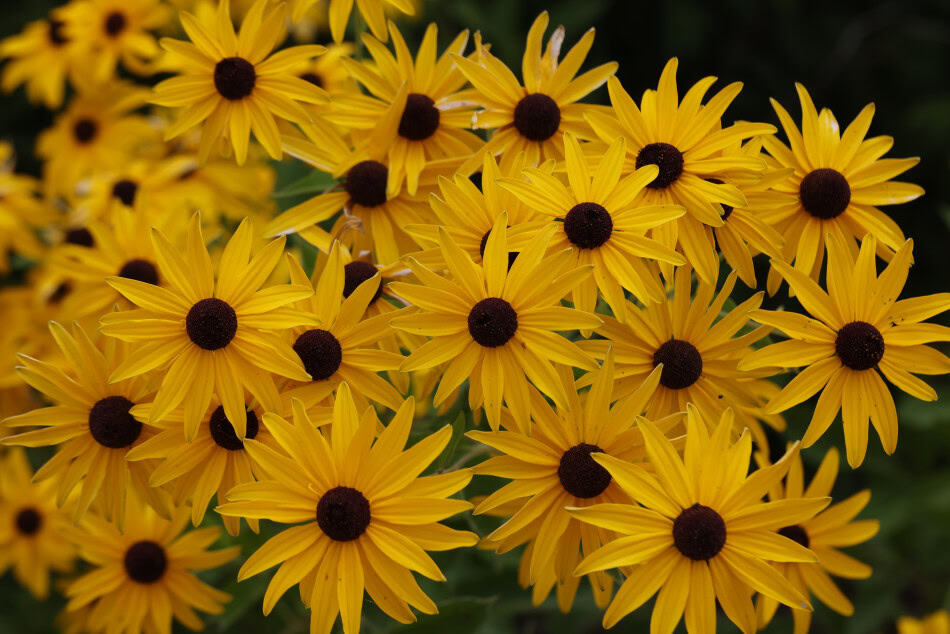
There are many different species of yellow daisy-like flowers, and all are generally referred to as Black Eyed Susan. And these members of the Rudbeckia genus each have their own qualities. But the flower known as Sweet Coneflower, or Sweet Black Eyed Susan stands above most others (literally) and in my opinion offers the showiest blooms. Of all flowers commonly known as ‘black eyed susan’, it has the largest blooms. The petals also stay horizontally erect, and don’t droop. This can make for an amazing display in mid to late summer, as it generally blooms after the biennial (R. hirta), and a bit earlier than the perennial (R. fulgida).
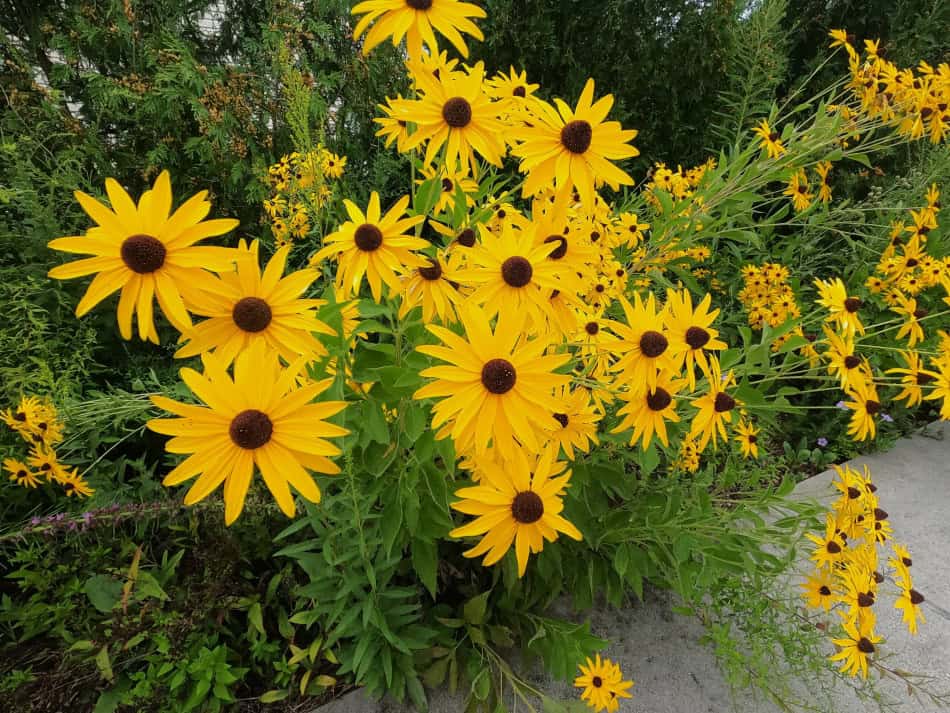
I have been growing this flower for about six years at the end of my wildflower “test strip”, adjacent to a native White Cedar. And I’ve allowed it to self-seed, with some assistance from the birds. This has now become nothing short of a glorious display in August when these flowers tend to bloom.

And yes, I mentioned that the birds love this flower, and they do! Below is a short clip I uploaded to YouTube. It was in Autumn a couple years ago, I was able to watch finches spend a long time picking out the seeds. It’s kind of funny, I have a ‘finch’ feeder with the nyjer seed, but they never seem to eat it. I guess this is why – I am feeding them naturally with all the seed heads my flowerbeds produce.
But let’s take a closer look at some this plant. Below I’ll cover everything you need to know regarding identification, germination, growing conditions…etc:
Native Range
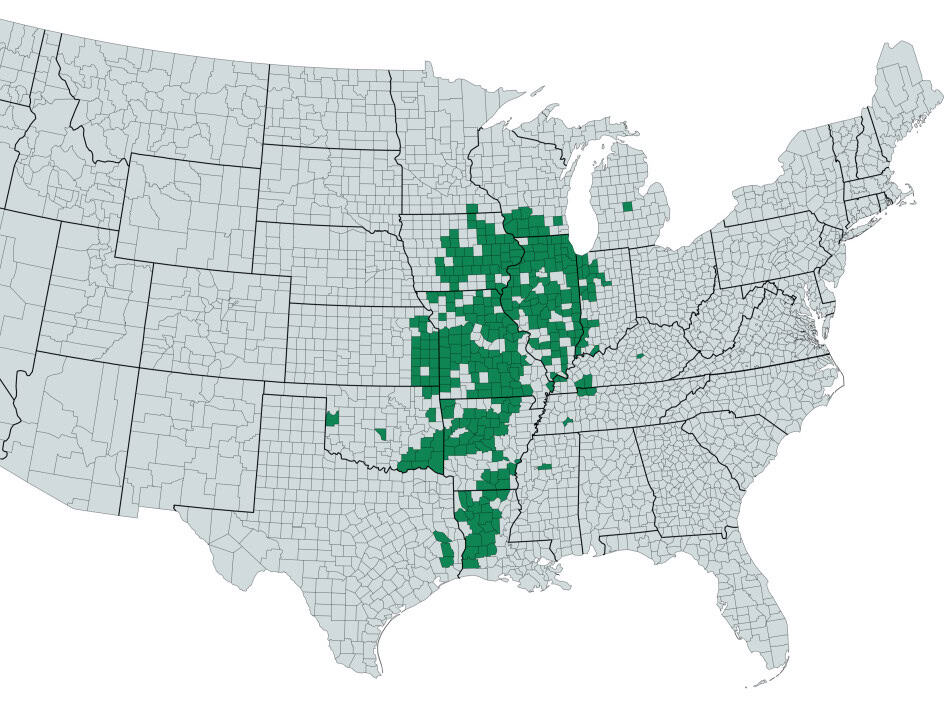
The primary native range for Sweet Coneflower is the central United States, from Louisianna and Texas north to Iowa and Southern Wisconsin. There are other isolated populations that exist, in a seemingly random fashion.
Reference Table
| Scientific Name | Rudbeckia subtomentosa |
| Common Name(s) | Sweet Coneflower, Fragrant coneflower, Sweet Black Eyed Susan |
| Native Range, USDA Zone | American Midwest, USDA Hardiness Zones 4-8 |
| Bloom Time | Late summer |
| Bloom Duration, Color | 4 weeks, yellow |
| Height | 3-5′ |
| Spacing / Spread | 1-2′ |
| Light Requirements | Full sun to part sun |
| Soil Types | Sandy loam to clay loam, must drain well |
| Moisture | Moist to medium-moist |
| Fauna Associations / Larval Hosts | Bees, butterflies, beetles, wasps, pollinating flies, birds. |
Pros and cons
Pros
Beauty
I grow multiple species of Rudbeckia and this one is by far the showiest. The flowers are larger than other types of Black Eyed Susan, and the petals are horizontal. It really kicks the wow factor up a notch.
Pollinators
This plant is a workhorse for pollinators, although it isn’t as obvious….Ok, so what do I mean by that? Well, I’ve grown this one for years, and when looking at it from a distance you don’t often notice any conspicuous pollinators like bumblebees working the flowers, nor large butterflies, at least not often. But if you get closer you will find small bees, wasps, pollinating flies, and others steadily working the flowers.

Adaptable
Sweet Coneflower can grow in a wide variety of conditions provided it has sun, and at least some moisture. I have had mine actually survive droughts. I believe it has survived because it receives afternoon shade.
Cons
Flopping
After growing this for seven years, the main drawback I see in regards to Sweet Coneflower is that it definitely has a tendency to lean or flop over depending on the lighting and competition. I find that I have to perform the Chelsea Chop on it around July 4th (zone 7, PA) to help keep it upright. In fact, I featured it prominently in my video on the Chelsea Chop as one of the plants I’m ‘chopping’.

Self-seeding
One other drawback that I have experienced is that the plant will self-seed to some degree. Now, these seeds aren’t traveling far on their own. I strongly suspect that it is because of birds eating the seed and then spreading them in other areas of the same flower beds.
Identification and Characteristics

Stalk
The main stems are round, light green, and have white hairs. Typically growing 3-4′ tall, but it is reported that it can reach a maximum height of 6′.

Leaf
Ok, the characteristics of the leaves are different based on their position on the stalk. Lower leaves are up to 8″ long by half as wide, lanceolate in shape, have dentate margins, and will have 3-5 lobes.
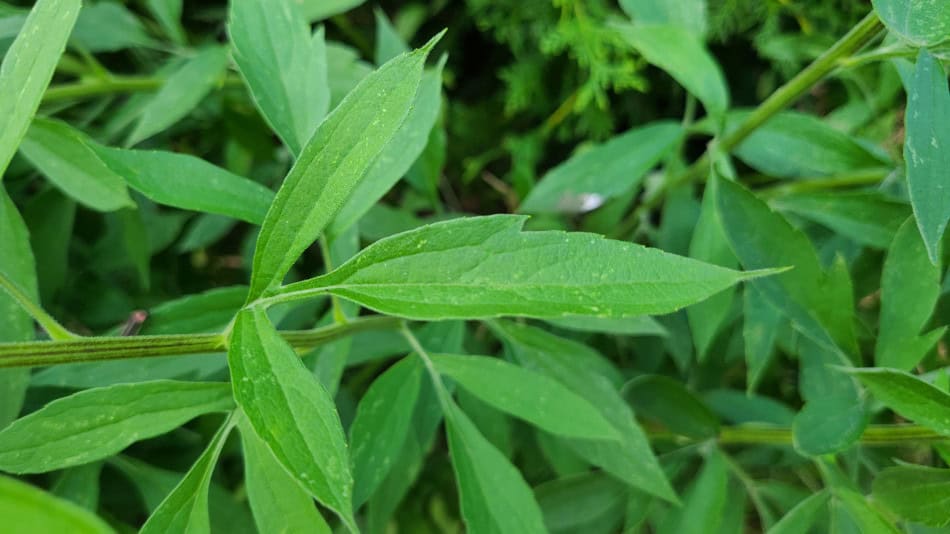
The upper leaves will be up to 3″ long by 1-1/2″ wide, elliptic to ovate in shape, and serrated margins. The undersides have hairs.

Flower
Flowerheads occur at the top of the stems, and are larger than other species of Rudbeckia, coming in at 3-4″ diameter. The outside of the central disc will have 10-20 petals (which are actually ray florets) and will be yellow in color. These petals generally don’t droop, making the flowerheads very attractive. There will be numerous central disc florets.

Related ==> See our guide on how to save seeds from Black Eyed Susans
Root
The root system is fibrous with short rhizomes.
Growing Conditions
This flower will grow best in full sun and moist to medium-moist soils that drain well. It can tolerate part-sun, but the plant will ‘reach’ for the sun and often lean/flop over.
Maintenance
You should plan on performing the Chelsea Chop on this flower by the 4th of July, or slightly earlier. Also, removing spent flowerheads will prevent self-seeding.
Fertilizer
Do not fertilize this plant. It will grow exceptionally tall and most certainly flop over.
Growing Sweet Black Eyed Susan from seed
This is a very easy plant to grow from seed. The seed will need to have a cold-moist stratification period of 30 days to achieve a high germination rate[6]. You can do this by using a moist paper towel/baggy in the fridge, or by winter sowing. I strongly recommend you try winter sowing, as it is the easiest method.
But for winter sowing or planting stratified seed, simply fill a suitable container with moist potting soil. Sprinkle seed on top of the soil and press in with your thumb, but don’t cover the seed. Place the container in a location that receives morning sun and afternoon shade, and water in the mornings via misting so you don’t wash away the seed. Germination occurs in Spring, once outdoor temperatures approach 60F.

Once you have several sets of true leaves, you can separate the seedlings or transplant to their final location.
Wildlife, Pests, and Diseases associated with Sweet Black Eyed Susan
Pollinators
As mentioned above, numerous pollinators have been known to visit the flowers. Charles Robertson in his 1929 study observed 97 different species visiting the flowers[5]. These include leaf-cutters, digger bees, carpenters, skippers, beetles, and many others. I have even seen the occasional Monarch visiting the flowers.

Deer and Rabbits
Young plants and new foliage are often at risk for being eaten by deer and rabbits. On established plants, deer and rabbits tend to leave the flowers alone. I suspect this is due to their rough texture. Still though, if you are already mixing up Liquid Fence to keep deer and rabbits away, then it takes almost no effort to protect these too.
Disease
The only cosmetic diseases I see on these plants occur late in the season and are often leaf disease.
Where you can buy Sweet Coneflower
Sweet Coneflower is not typically sold in nurseries, as it isn’t a typical ‘garden friendly’ plant. There is however a cultivar knowns as ‘Henry Eilers’ that is sometimes available[4]. But the straight native species can often be purchased at specialty nurseries that deal in Native Plants. You can find native plant nurseries near you on our interactive map.
Where to buy seeds
We have ordered a variety of native flower seeds from Everwilde Farms, which you can order right from Amazon through our link on our RECOMMENDED PRODUCTS PAGE. (We may earn a small commission when you purchase through our links, at no cost to you. This helps support our website.)

Uses of Sweet Coneflower
Landscaping
These plants can anchor a flowerbed that is large enough to accommodate their height. Performing the Chelsea Chop will help control the height, and delay the blooming period. You can also use them in a wildflower meadow, prairie, or a border. Another strategy to deal with the leaning/flopping is to surround the plant with grass – of which Little Bluestem is about the ideal choice due to height.
Companion Plants
This plant grows well with pretty much any other sun-loving plant and shares the preferred growing conditions. Some good suggestions would be the following:
- Purple Coneflower
- Liatris sp.
- Verbena hastata
- Tall Larkspur
- Fall Phlox
- Gray-headed Coneflower
- False Sunflower
- Plains Sunflower
- New England Aster
- Heart-leaved Aster
Final Thoughts
If you love the look of Black Eyed Susans, then you really need to consider adding Sweet Coneflower to your gardens. It really does have the showiest flowers of the Rudbeckia genus, and it is very easy to grow. The only real drawback is they may lean or flop depending on the light conditions or competition. And the only maintenance is to deadhead if you don’t want any self-seeding, however, you also won’t get to see any finches eating the seed!
Find more native plants here
References:
[1] – Rudbeckia subtomentosa, USDA NRCS. Accessed 28NOV2025.
[2] – Rudbeckia subtomentosa, Flora of North America. Accessed 01DEC2025.
[3] – Aniśko, Tomasz. When perennials bloom : an almanac for planning and planting. Portland : Timber Press. 2008. pp397-398
[4] – Hanson, Beth. Fragrant Designs. Brooklyn, NY : Brooklyn Botanic Garden. 2009, pp30
[5] – Robertson, Charles. “Flowers and insects; lists of visitors of four hundred and fifty-three flowers.” (1928).
[6] – Oates, Kelly M., Thomas G. Ranney, and Darren H. Touchell. “Influence of induced polyploidy on fertility and morphology of Rudbeckia species and hybrids.” HortScience 47.9 (2012): 1217-1221.
Recent Posts
When it comes time to build a garden, most people are faced with the chore to remove the grass. And there are many methods that will work for doing so. But, as the title of this article questions,...
Green Milkweed is a herbaceous wildflower native to North America[1], and is a host plant for caterpillars of the Monarch Butterfly[2]. Scientifically known as Asclepias viridis, it grows up to...