
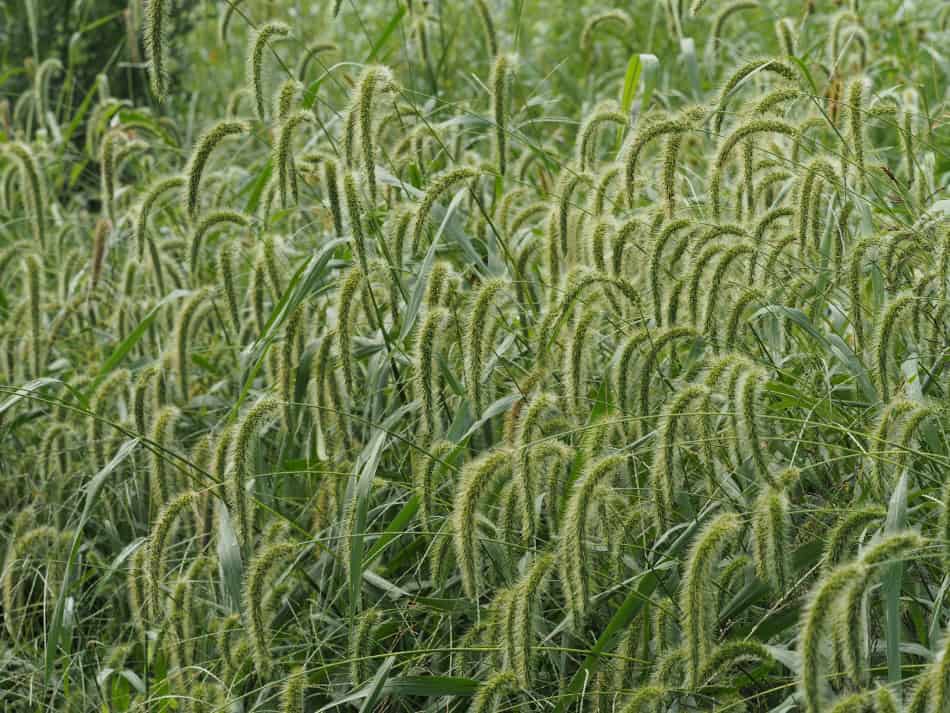
One of the more common weedy grass species one may encounter in North America is commonly known as Foxtail Grass. Foxtail grass is a common name that is used for several species of grasses of the Sertaria genus. These species have proliferated themselves across the continent, and can be found in yards, the forest edge, farm fields, and other disturbed areas such as roadsides, railroads, or even the cracks in the sidewalk.
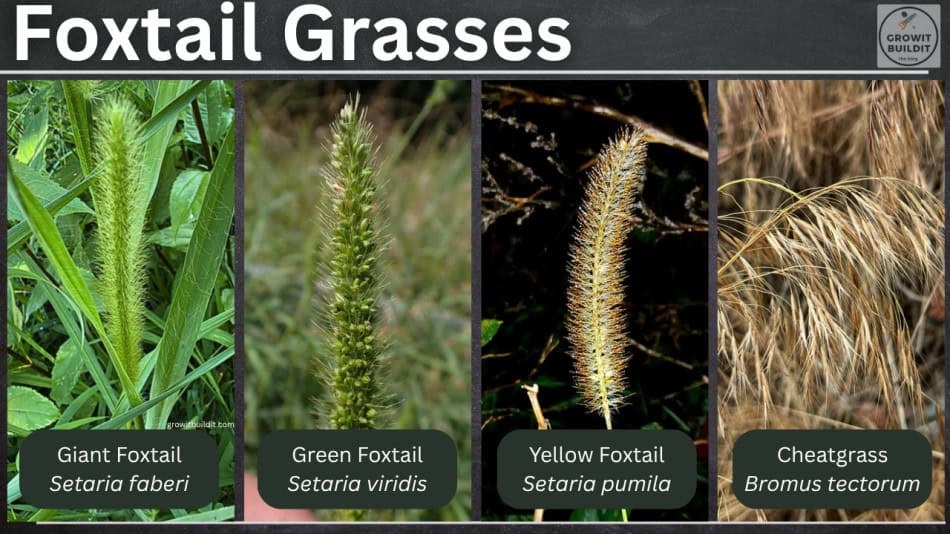
The species I’m going to cover are some of the weediest grasses that have seemingly colonized the whole world, and definitely most of North America. You can find them in any disturbed area such as farm fields, railroad tracks, and even cracks in the sidewalk! Now, foxtail grasses have a long history in that it was first cultivated for the seeds in Northern China, as they can be eaten or ground into a flower for making bread/porridge[1]. While this is possible to do, it is noted as being very difficult to clean the grains from the chaff, particularly the awns, which are the pointed sharp pieces that help give it the ‘fox tail’ appearance.
But this plant does serious damage to agriculture due to it’s weedy nature, ease of germination, and that it can have several generations in a single growing season. You see, their lifecycle is only 8 weeks long, and fresh seed can germinate at a pretty high rate (20-60%). But if the area is prone to cold evenings, then that can serve as a form of stratification leading to near 100% germination rates[2].
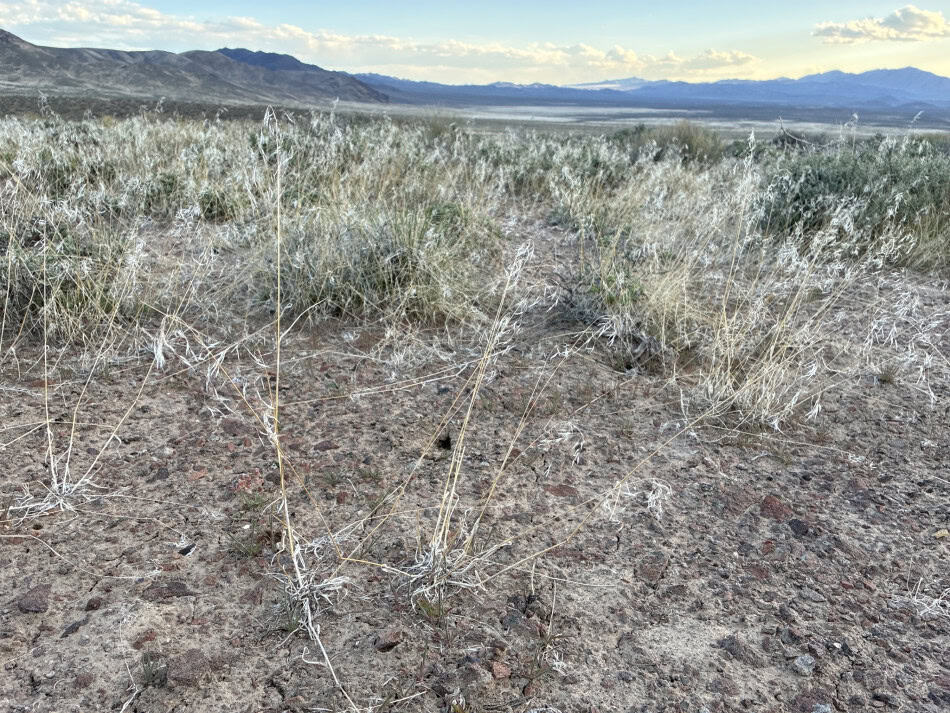
These grasses may even seem normal because they are so common. However, they are noxious weeds and should be killed when possible, as a single plant can produce hundreds of seeds, and this can happen several times in a growing season. The reasons to oppose these species are several;
- They displace native vegetation, reducing the amount of host plants
- The seed heads contain ‘awns’, which are the spike like growth that give the seedhead it’s ‘fox tail’ appearance. These can poke and injure dogs, cattle, and other livestock
- Their presence in farm fields can cause significant reduction of crop yields
But, in this article I’ll cover the main species to watch out for and how they are harmful, teach you how to identify them, and then how to control them.
Types of Foxtail Grass
All the grasses described in this article are annuals, meaning they will not survive the winter. However, that means that they will produce a significant amount of seed and die at the end of their lifecycle.
Below is a table showing the main types of Foxtail grass you may encounter. Note that there is one other grass included that is commonly known as Cheatgrass (Bromus tectorum). I’ve included this one because it’s seed heads also produce the pointy awns that can injure animals. But click on the images to enlarge
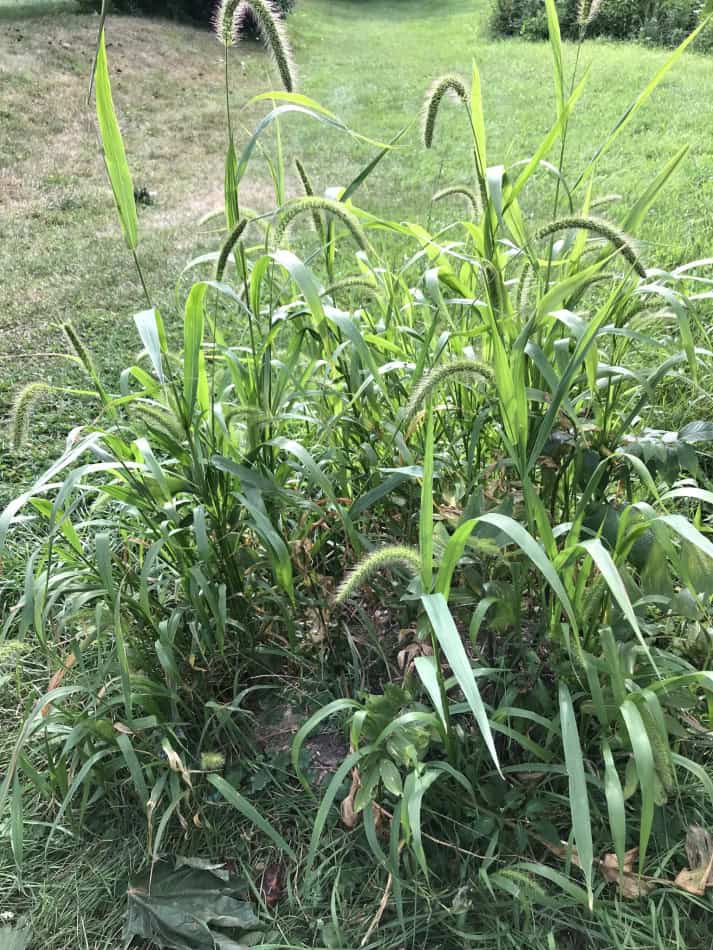 | 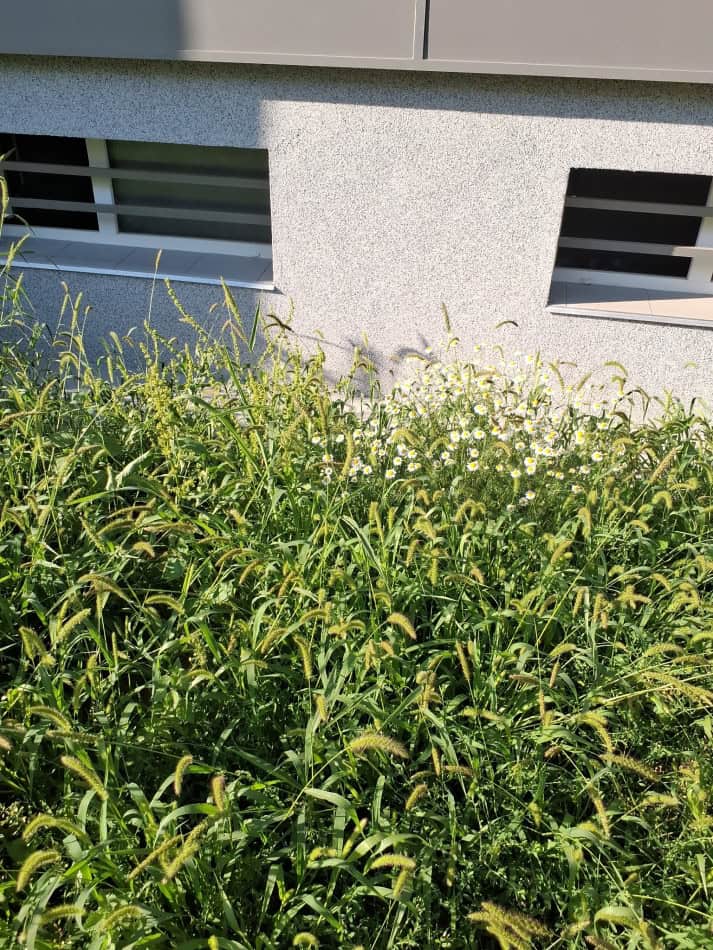 | 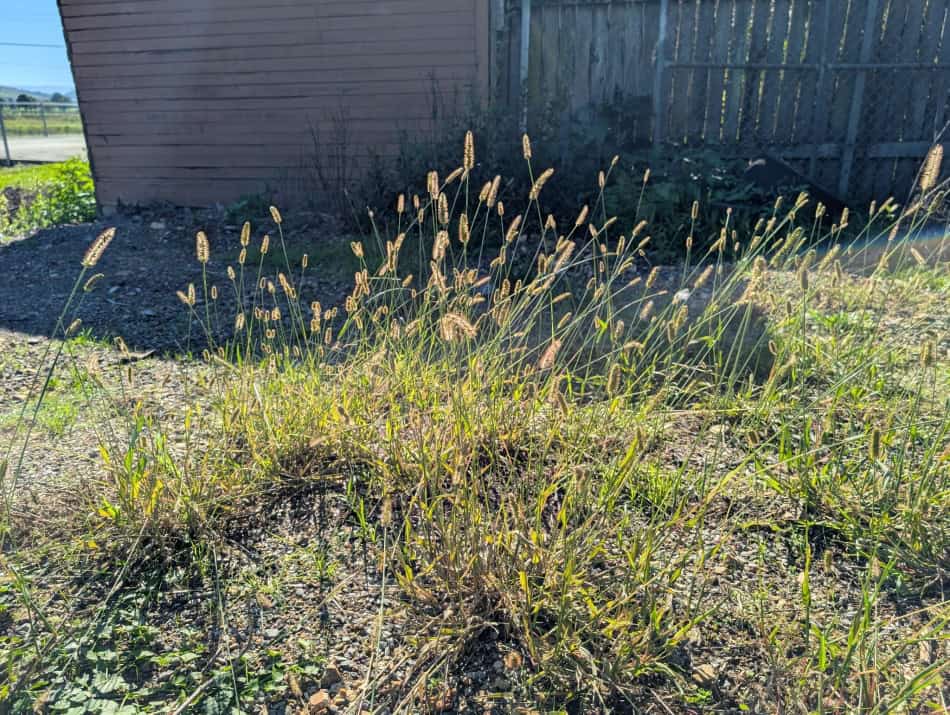 | 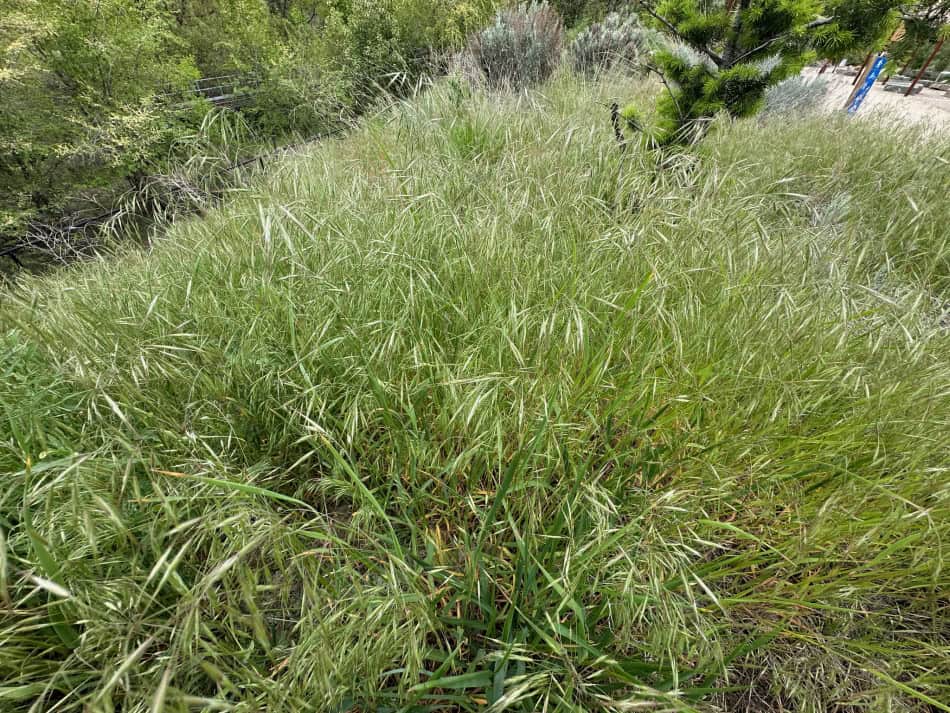 | |
| Common Name | Giant Foxtail | Green Foxtail | Yellow Foxtail | Cheatgrass |
| Botanical name | Setaria faberi | Setaria viridis | Setaria pumila | Bromus tectorum |
| Height | 1.5-6.5′ (50-200 cm) | 6-18″ (15-50 cm) | 8-40″ (20-100cm) | 6″-24″ (15-60 cm) |
| Soil types | Poorly drained, compacted soils | Almost any – sandy to clay. prefers well-drained | Sandy to clay, prefers well-drained | Sandy to clay |
| Moisture | Dry to moist | Dry to moist | Dry to moist | Dry to slightly moist |
Identification
Giant Foxtail
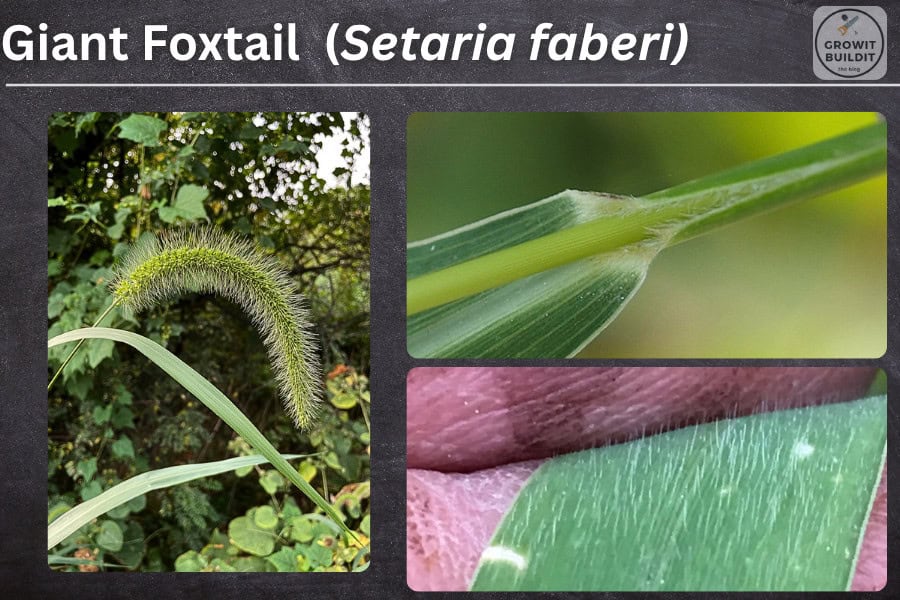
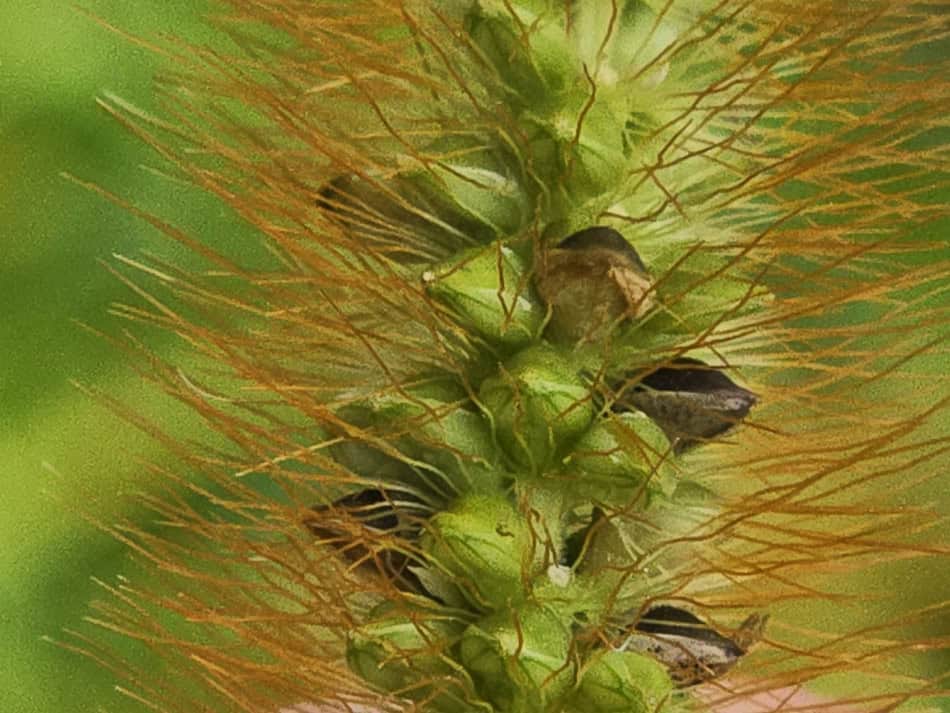
The stems of Giant Foxtail often reach heights greater than 6′ tall (2 m), and are terete with prominent ridges that run longitudinally. Most often erect, but can lean/flop in absence of other vegetation. Leaf blades are up to 16″ long by 3/4″ wide with pointed tips. The upper surface is hairy, and has a bend of hairs where it attaches to stem. The inflorescence is up to 8″ long and roughly 1″ diameter. The head most often nods, and each spikelet will have 3-6 yellow/green bristles[3].
Green Foxtail
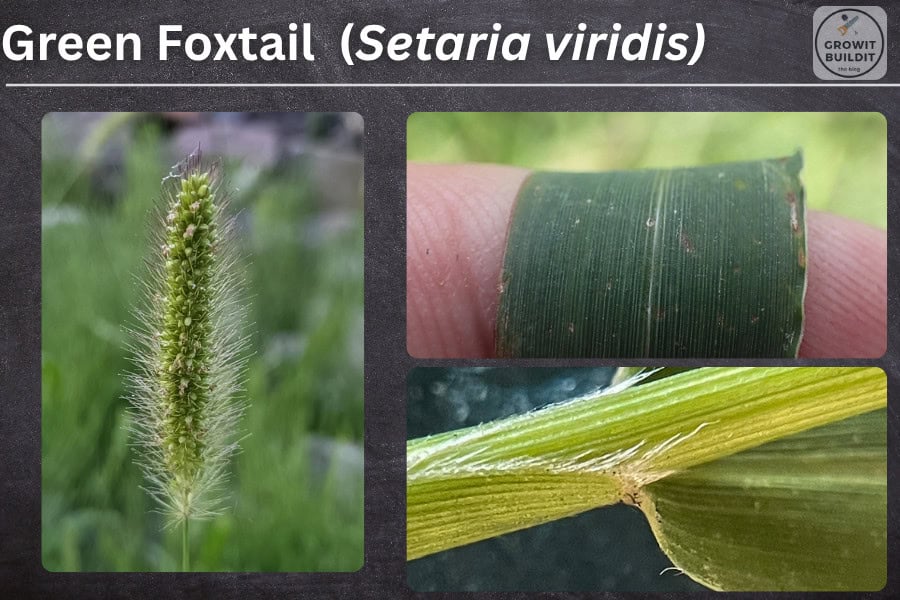
The stems of Green Foxtail are up to 18″ long, leaf blades are up to 3/8″ wide. The upper leaf surface is smooth, which can distinguish it from Giant Foxtail. The inflorescence can be either erect or nodding panicle up to 6″ long of spikelets less than 1/8″ long[1][5].
Yellow Foxtail
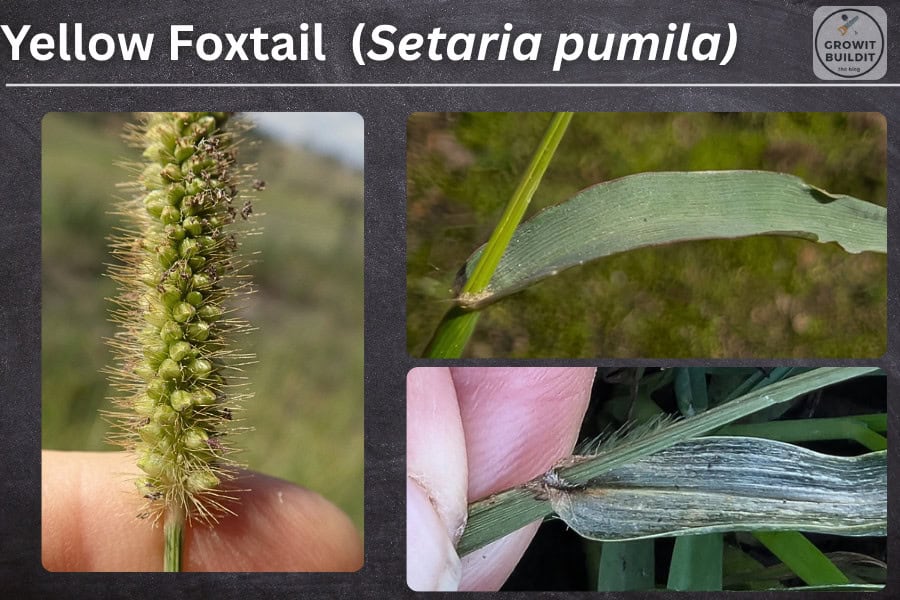
The stems are up to 24″ long, the leaf blades are approximately 1/4″-3/8″ wide. The shape of the stem is more flat when compared to Giant or Green Foxtail. There are long, kinked hairs up to 7/16″ (10mm) long on upper surface near the stem. Sheathes are hairless, and inflorescence is an erect panicle of spikelets that is up to 6″ in length. Awns (bristles) will be 1/8″-1/4″ long, and stiff[4]. The awns of this plant really give it a ‘yellow’ hue, making identification fairly easy.
Cheatgrass
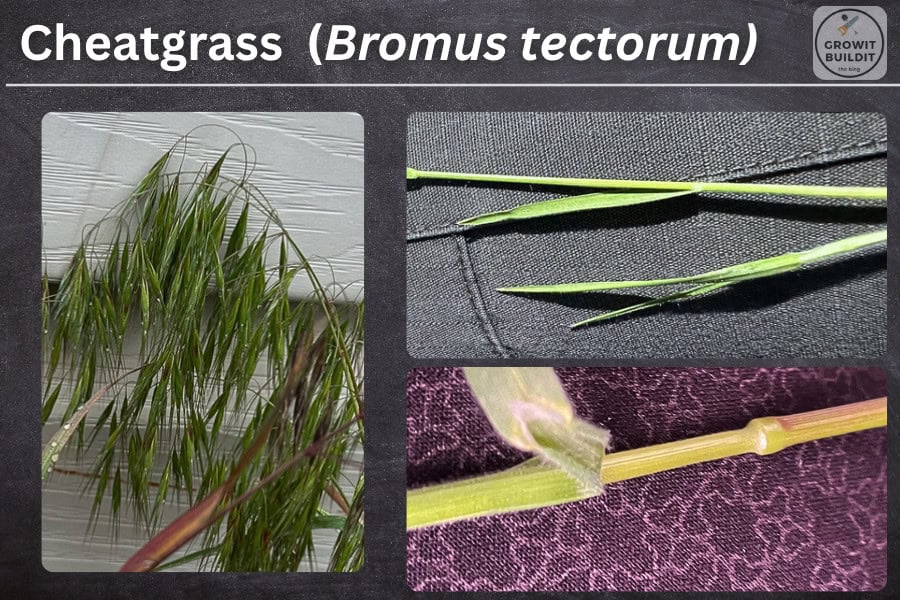
Stems of Cheatgrass can be up to 24″ long, although the plant height will often seem less than this due to the nodding of the inflorescence. Leaf blades approximately 1/8″ wide (3mm), and pubescent to pilose. Sheaths can be glabrous. The inflorescence is a nodding panicle up to 6″ long of spikelets that are usually around 1/2″ in length with three to six florets. The overall plant is green, but turns red-brown at maturity[8].
How Foxtail grasses are harmful
Weedy & displacing natives
Like all invasive species, they spread quickly and reduce the available space for natives. Native plants evolved in our local ecosystems to cohabitate with the local flora and fauna. Also, native plants are often host plants, meaning that they feed caterpillars, which in-turn feed birds. See here to read more on the importance of host plants.
Seed head injuring pets & animals
One of the major problems is that foxtail grasses can cause injuries to pets/livestock[10]. When a plant reaches the end of it’s lifecycle, the seedhead will resemble the ‘foxtail’. The little spikes coming out of the seed head are known as awns, and these are stiff, sharp plant material that can act as a splinter, poking into a dog’s nose or paw. This can lead to infection. Additionally if they eat a seed head it can cause injury in their mouth or esophagus. In fact the damage can be so severe that someone took it upon themself to create and entire website to eliminating these invasive grasses.
Reducing crop yields
Foxtail germinates easily, grows quickly, and within a farm field will compete with crops for nutrients and moisture. This effect will reduce crop yields significantly, having a serious negative economic effect on the farmer. For wheat, crop yields have been reduced upwards of 44%[11]. And for corn, an objectively taller plant, yields have been seen to drop as much as 28%[12].
How to control Foxtail
The control method for foxtail grasses heavily depends on the circumstances, namely the amount of plants growing, whether it is a monoculture or interspersed with other species, and whether or not it can be mowed.
Controlling isolated plants / patches
It’s relatively easy to control isolated specimens when discovered. In general, people will notice the ‘foxtail’ like appearance. At this point you can cut the plant to ground and throw the seed head away in the garbage. Most likely the plant will not be able to reproduce another seed head this season. If the plant has produced a mature, or nearly mature seed head though, carefully cut those off and throw them in the trash!
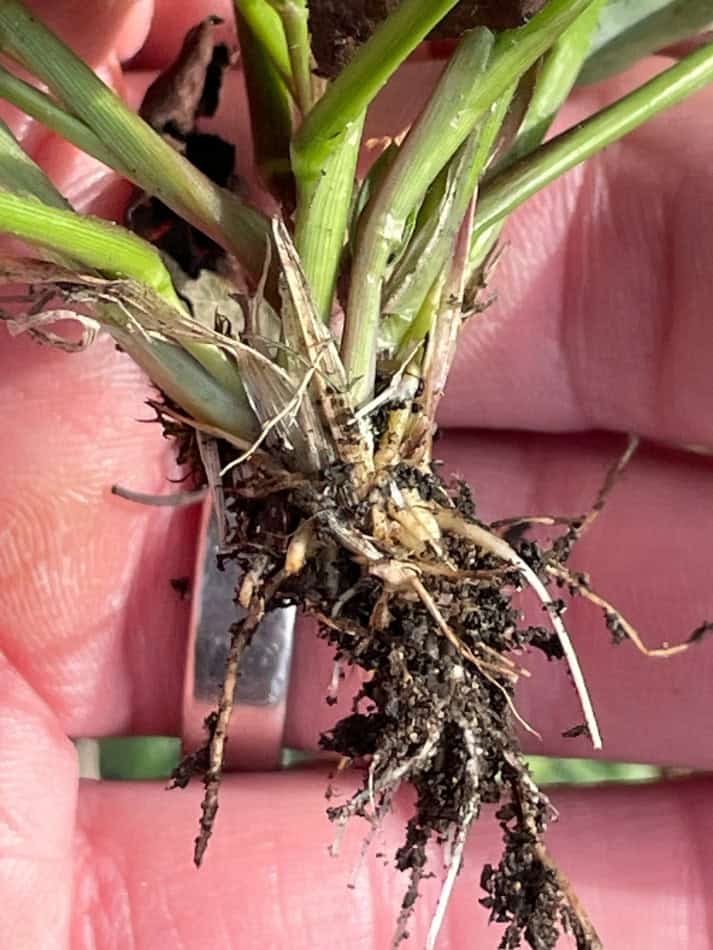
Also, when young, the plants can be uprooted and pulled. Just make sure you get the root crown.
Larger areas, with plants interspersed
When foxtail grasses are more common in larger areas, mowing or string trimming is often your best strategy. Again, before the seed heads have much time to form is best. Or mowing before seed heads set can help prevent the next crop of seed from setting.
Within crop fields
As much as I hate to say it, herbicide may be the best option depending on the crops being grown. Glyphosate is effective at killing foxtail grasses, and is largely responsible for most modern control[13]. Although take care to ensure the herbicide sticks to the leaf. Use of a surfactant would be helpful in this regard.
Large infestation / monocultures
For extremely large infestations, it is best to mow close to the ground during flowering, before seed set. Then, consider a follow up mowing to ensure the plants die without setting seed.
Establishing natives as a control measure
One of the best methods for stopping the invasion would be to seed any disturbed area with natives. Once established, they can easily compete with all foxtail grasses. Some good candidates would be Big Bluestem or Little Bluestem or Blue Grama, Side Oats Grama, or Buffalo Grass for drier areas.
Final Thoughts
Foxtail grasses are successful invaders that seemed to have colonized nearly the entire planet. They are aggressive self-seeders that should be eradicated upon sight. Each plant can produce hundreds of seed that seem to germinate the following spring without effort. These plants should be killed because they steal nutrients and water from crops, have seed heads that injure pets and animals, and displace native plants.
Read more on invasive species here
References:
[1] – Defelice, Michael S. “Green foxtail, Setaria viridis (L.) P. Beauv.” Weed Technology 16.1 (2002): 253-257.
[2] – Acharya BR, Roy Choudhury S, Estelle AB, Vijayakumar A, Zhu C, Hovis L and Pandey S (2017) Optimization of Phenotyping Assays for the Model Monocot Setaria viridis. Front. Plant Sci. 8:2172. doi: 10.3389/fpls.2017.02172
[3] – Giant Foxtail, Iowa State University Extension. Accessed 04JUL2026
[4] – Yellow Foxtail, Montana Field Guide, accessed 04JUL2026
[5] – Green Bristle Grass, Setaria viridis, Montana Field Guide. Accessed 04JUL2026
[6] – Giant Foxtail – Setaria faberi, Wisconsin Horticulture Division of Extension. Accessed 04JUL2026.
[7] – Cheatgrass, National Park Service. Accessed 04JUL2026
[8] – Cheatgrass – Bromus tectorum. Montana Field Guide, accessed 04JUL2026.
[9] – Allan, M. 1978. Weeds: The Unbidden Guests in Our Gardens. New York: Viking Press. 191 p.Google Scholar
[10] – Kutasi, O., et al. “Foxtail grass (Setaria viridis)-induced ulcerative stomatitis-gingivitis resembling viral vesicular stomatitis in horses.” Livestock Science 215 (2018): 41-45.
[11] – Blackshaw, R. E., E. H. Stobbe, and A. R. W. Sturko. “Effect of seeding dates and densities of green foxtail (Setaria viridis) on the growth and productivity of spring wheat (Triticum aestivum).” Weed Science 29.2 (1981): 212-217.
[12] – Nieto H, Jorge, and David W. Staniforth. “Corn‐Foxtail Competition Under Various Production Conditions 1.” Agronomy Journal 53.1 (1961): 1-5.
[13] – Pendergast, Thomas H., et al. “Widespread non-target-site resistance in Setaria viridis to four classes of herbicide.” Theoretical and Applied Genetics 139.6 (2026): 148.
[14] – Sebastian J, Wong MK, Tang E, Dinneny JR. Methods to promote germination of dormant Setaria viridis seeds. PLoS One. 2014 Apr 18;9(4):e95109. doi: 10.1371/journal.pone.0095109. PMID: 24748008; PMCID: PMC3991590.
Recent Posts
So, if you are going to be spending time in the woods, or even anywhere with taller weeds you should take care to protect yourself from ticks. They cause numerous diseases like Lyme disease, and now...
At some point in your life, you are going to have to loosen a rusted, stuck, or seized screw. It is almost guaranteed! So, depending on the situation, one of these will work. I've noticed that lots...