
If you’ve been researching native plants, you may have come across the term “Keystone Plant” or “Keystone Species”. Often spoken or reverence or casually noted for their importance. So, what exactly are they?
In short, a keystone species is any species whose removal would result in a disruption to the local ecosystem and significantly reduce the biodiversity[1]. The term keystone is analogous to how a central keystone holds up an arch or bridge – if you remove the keystone, the whole structure collapses. Keystone plants, are simply species of plants that meet the aforementioned criteria. Common examples of keystone plants in North America would include Oak, Hickory[3], or native cherry trees, Goldenrods, and Asters.
The removal of a Keystone Species, even if their numbers were small to begin with, will have a disproportionate impact on the environment. It has a primary role in maintaining a healthy balance of the flora and fauna locally or regionally. If you are wondering if a species is a keystone species, just ask yourself the following: Would the loss of this species result in the subsequent loss of many other species in the same environment? If the answer is yes, than it may be considered a Keystone Species.
- Keystone Species is any species whose presence has a disproportionate impact on the health and biodiversity of an ecosystem, regardless of it’s abundance
- Any organism that meets the above criteria (animal, insect, fungi, plant) can be a keystone species
- Both predators and prey can be keystone species
Background and history
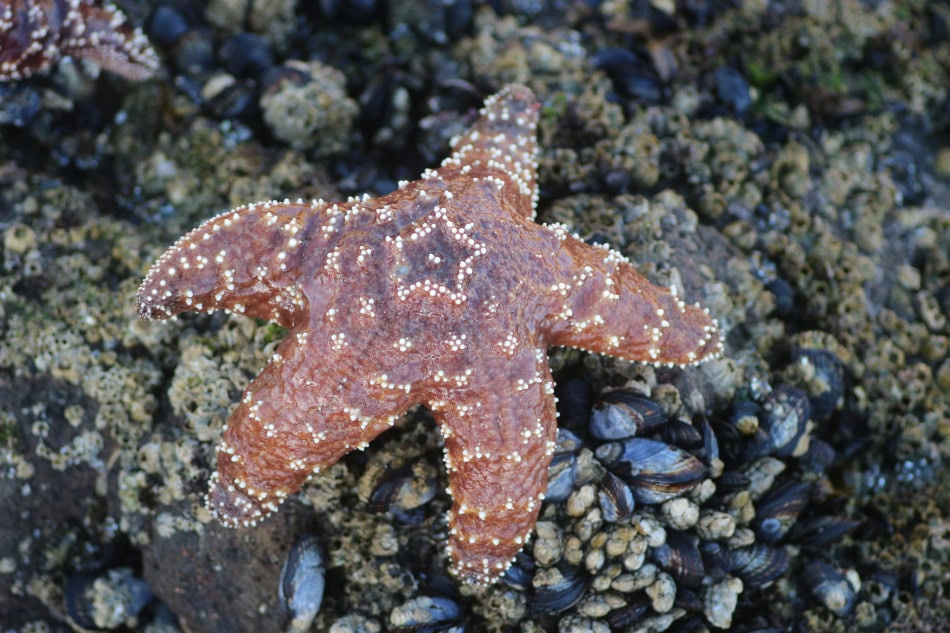
The concept of the Keystone Species was first introduced by Dr. Robert Paine in 1969[2], who conducted an experiment by removing a predator from a local tidepool ecosystem. He literally just removed a species of starfish (Piaster ochraceus) out of the tidepool and found via survey that most other species disappeared.
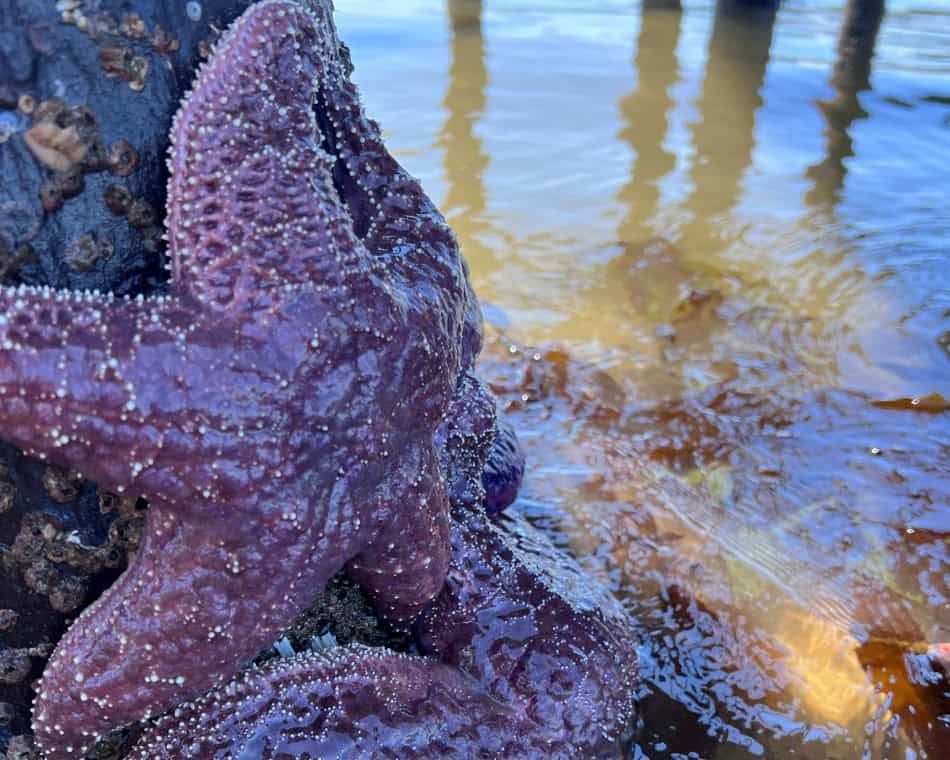
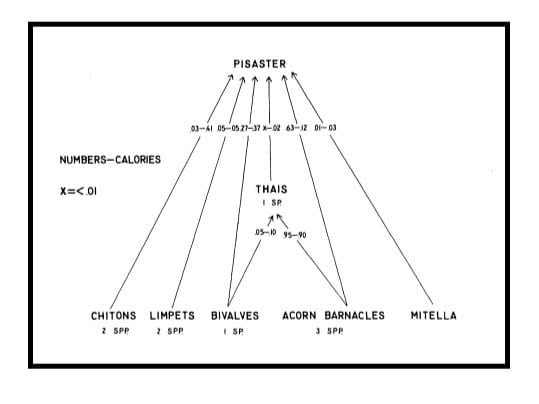
Paine found that there were two main predators in Mukkaw Bay – the Ochre Sea Star (Pisaster ochraceus) and a snail, Nucella emarginata. And both would consume the various mollusks, however, when the starfish was removed, the biodiversity plummeted. Essentially N. emarginata (alone) could not eat barnacles fast enough, and these barnacles would reproduce quickly and take up all the available space. Thus, the number of chitons, limpets, bivalves, and other organisms dropped to almost nothing. The starfish can normally consume 40-60 barnacles at a time. When the snail consumed barnacles, it left the shell. And this rendered the space unusable for other mollusks.
So how can a plant be a keystone species?
While the original concept of a keystone species related to a predator, plants can also be considered a keystone species. However, it doesn’t relate to them being predators, but rather their ability to be prey for insects and larvae. You see, insects and caterpillars are important parts of the food chain. They are preyed upon by other insects and birds. These birds are further parts of the food chain for other mammals. So, if a plant species can host many species of insect, or if the flowers can feed numerous species of specialist pollinator, it can be considered a keystone species[6].

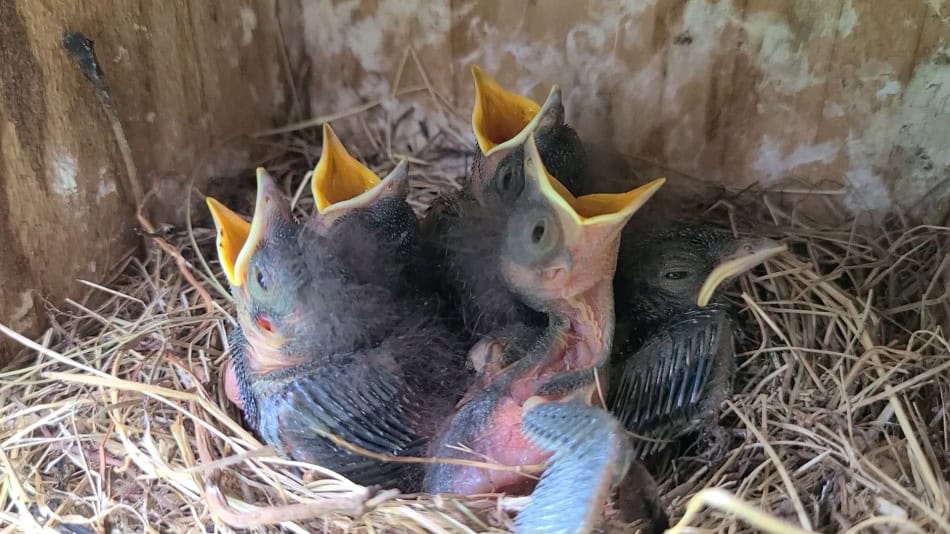
It has been shown repeatedly that trees make the best Keystone species, as a single specimen of Oak can host upwards of 400 species[4][5]. But other species such as hickory or native Black Cherry trees can also provide similar numbers. All this is to say nothing of the benefit to birds and mammals from the nuts/fruit they produce. So, considering the size that a mature Oak can reach in a savannah setting, it may host hundreds (thousands?) of larvae on a single tree. These caterpillars can feed birds (and their babies) during the growing season. And then, just when you think it’s over, a large portion of the remaining caterpillars will go into a dormancy on the tree and continue to feed birds throughout the winter!
But what about flowers?
So, regular herbaceous flowers will generally provide pollen or nectar, which will feed bees and other pollinators. Some species though will also host insects, much the same as trees do. Although you need many more of the plants to make a meaningful impact.
However, some species only feed certain types of bees, specialist pollinators if you will, which have a limited number of plants they feed on. These species of plants can be considered more critical.
Some examples of plant types that can meet this criteria are Asters (Symphiotrichum sp.), Black Eyed Susan (Rudbeckia sp.), Goldenrod (Solidago sp.), and Sunflowers (Helianthus sp,). These genus of plants host numerous species of insect, and their pollen and nectar are fed on by many different specialist pollinator. Additionally, their stems are often used for laying eggs or hosting gall wasps.
So what should you do in your garden?
If you enjoy gardening for wildlife, the single best thing you could do would be to plant keystone species of plants whenever possible. Now, a small townhouse in the city can’t support a large White Oak tree, but it may be able to support a smaller Bear Oak or Dwarf Chinkapin Oak. Also, there are numerous species of shrub that meet the criteria of a keystone species – particularly viburnums.

But even if you don’t want to add shrubs or trees, there are numerous species of sunflower, black eyed susan, and Aster that are not only garden friendly, but rugged and tough additions to any yard that can survive nearly any growing conditions. Orange Coneflower being a popular choice, but don’t overlook some of the smaller native sunflowers (H. petiolaris is a personal favorite – long blooming but compact). The more of these you add (always in groups of 3 or more for flowers), then the more wildlife you will support and be able to observe in your own yard.

Conclusion
Keystone plant species can be considered the workhorses of insect and pollinator ecosystems, which are in-turn the key food source for our beloved birds, which themselves are part of the greater food chain. The more keystone plants you have in your yard and area, the healthier your local ecosystem will be with the most biodiversity. So, I challenge you to add some to your yard this growing season! See our directory for native plant nurseries if you want to buy some directly/locally, or see our native plant profiles if you intend to grow some from seed on your own.
Find more native plants here
References:
[1] – Mills, L. Scott, Michael E. Soulé, and Daniel F. Doak. “The keystone-species concept in ecology and conservation.” BioScience 43.4 (1993): 219-224.
[2] – Paine, Robert T. “Food web complexity and species diversity.” The American Naturalist 100.910 (1966): 65-75.
[3] – Fralish¹, James S. “The keystone role of oak and hickory in the central hardwood forest.” Upland Oak Ecology Symposium: History, Current Conditions, and Sustainability: Fayetteville, Arkansas, October 7-10, 2002. No. 73. Southern Research Station, 2004.
[4] – Tallamy, Douglas W. The nature of oaks: The rich ecology of our most essential native trees. Timber Press, 2021.
[5] – Tallamy, Douglas W., et al. “OAKS: Kingpins in Northern Hemisphere Food Webs.” American Entomologist 71.4 (2025): 38-43.
[6] – Keystone Plant List for Eastern Temperate Forests, National Wildlife Federation, accessed 21FEB2026.
Recent Posts
When it comes time to build a garden, most people are faced with the chore to remove the grass. And there are many methods that will work for doing so. But, as the title of this article questions,...
Green Milkweed is a herbaceous wildflower native to North America[1], and is a host plant for caterpillars of the Monarch Butterfly[2]. Scientifically known as Asclepias viridis, it grows up to...