
Alright, so when it comes to woodworking, most of the old hand tools that I love so dearly have fallen out of favor. In fact, most modern woodworkers barely own a handsaw and couldn’t even sharpen let alone set-up a bench plane. However, there is one hand tool that still remains in just about everyone’s toolbox, even if it is gathering dust and rust, they all have them because every so often….you just need it. And that is a block plane.
What is a block plane?
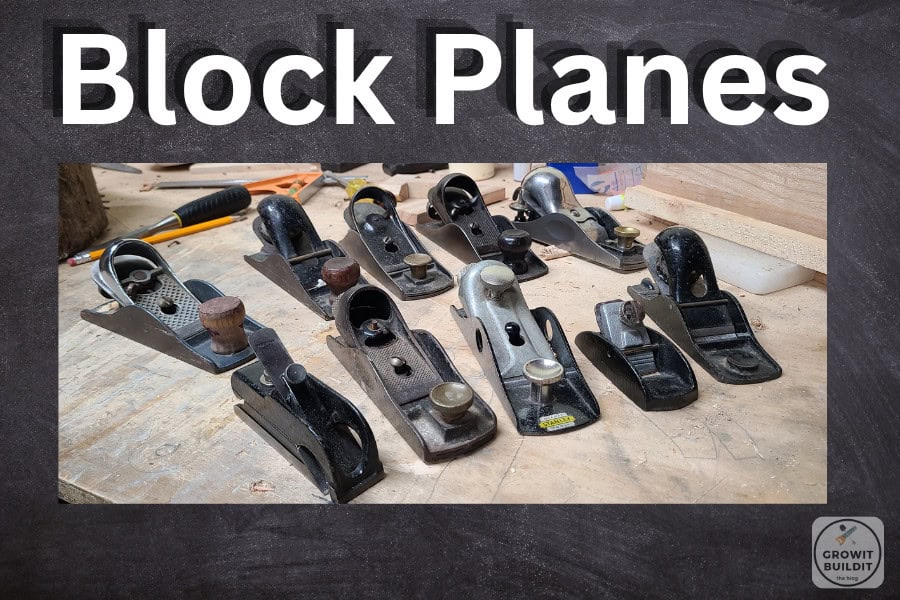
Ok – here is my attempt at summarizing a real-world definition that is practical and succinct. A block plane is a small plane that will fit in one hand, and can be tuned to take fine/thin shavings, chamfers, or to square off end grain. In modern times, most people keep one for when they need to hang a door, as it can be used to get the fit just right. However, these handy little tools really do deserve a spot in nearly every tool box.
Mr. Chris Finn, a British joiner with some forty-odd years experience said it best. When it comes to block planes, most people miss the point. Ultimately, a block plane is a tool that can even up or make small shape changes to a workpiece where traditional larger tools can’t reach, and modern power tools most definitely can’t do without excessive set-up time or facilities. Think about it – the drawer you’re installing doesn’t quite fit, and while you could don your dust mask, hook up your palm sander to a dust collection and spend 3 minutes using a random orbital sander…..isn’t it just easier to make a few light passes with a block plane? Isn’t it cleaner? Doesn’t it require less equipment and capital investment?
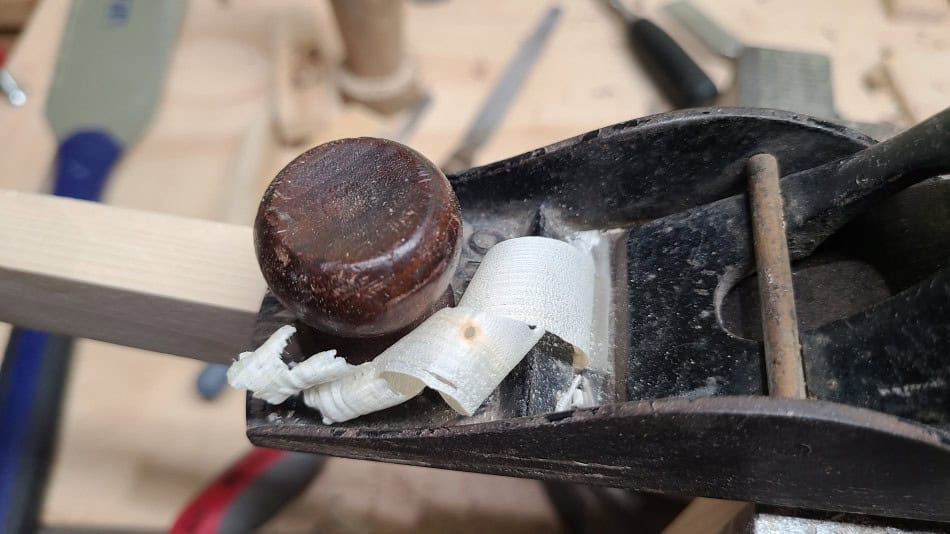
Or if that corner of the cabinet door is making a slight interference when closed….it’s real easy to add a small chamfer with a well sharpened Stanley 220, or even a 110….which are very affordable. If you’re cutting miters and the miter saw isn’t quite right….you can make quick adjustments with a block plane.
What about a high spot on some end grain? Sure, you can wrap a piece of sand paper around some scrap 2×4 and get to work, guessing and testing. But isn’t it more accurate, quicker, and satisfying to just make light passes with a low-angle block plane…that is designed and excels at shearing off end grain wood fibers?
Main types of block planes
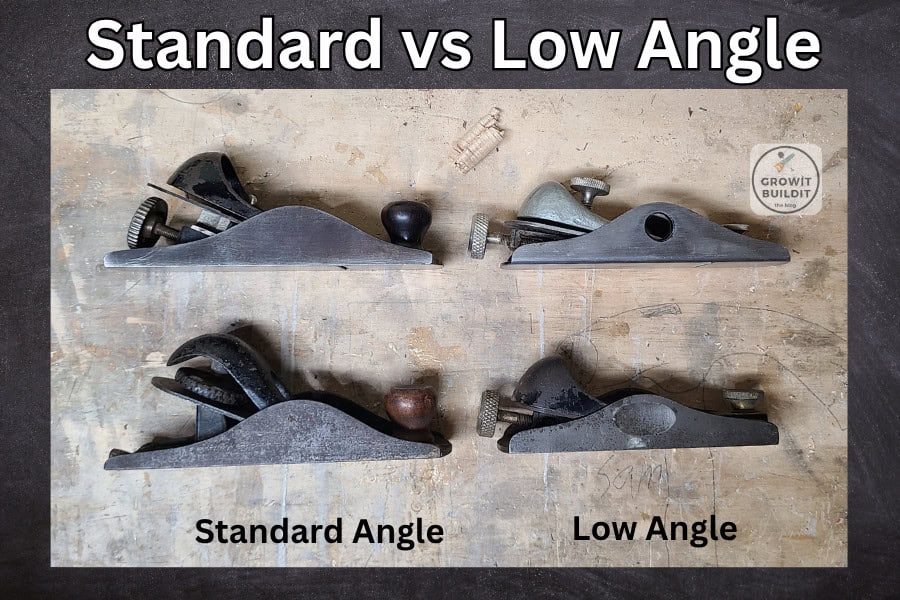
So, there are numerous designs and types of block planes. But for simplicity’s sake, I’m going to categorize them into three distinct categories based on the bed angle and cutting angle of the iron. But, before we go on, we should look into the bed angle, cutter angle, and how it compares to a standard bench plane.
What is the bed angle?
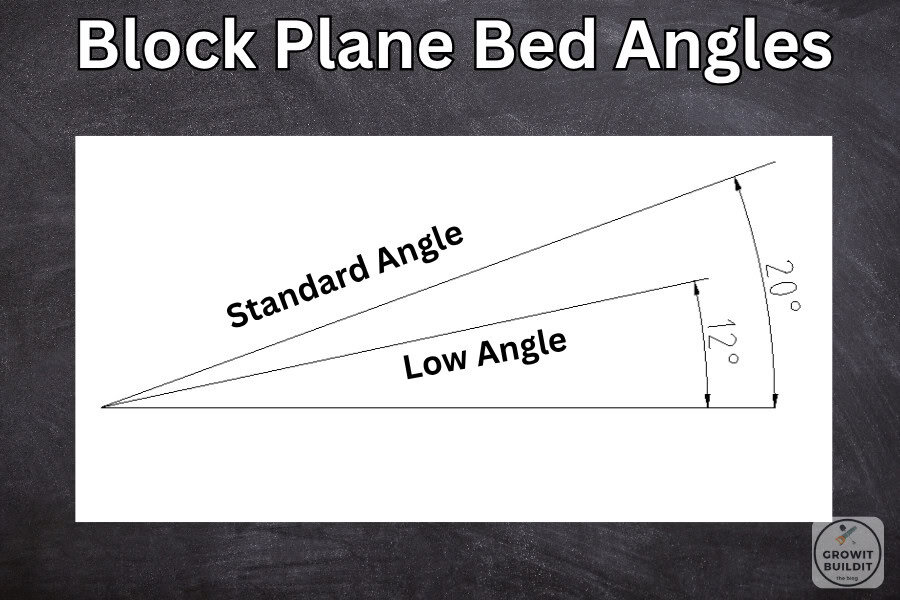
The bed angle of any handplane is the angle of the flat portion of the iron, relative to the horizontal surface you’re intending to plane. On a traditional smoother or jack plane, or really any bench plane, this is 45 degrees. And it is actually the angle of the frog.
What is the cutter angle?
The cutter angle, or cutting iron angle is the angle that you sharpen the bevel of the iron to. So, it is just the angle the bevel makes with the bottom of the iron.
For most people, this is 20-25 degrees. And there are many debates and anecdotes on whether 22 degrees is better, or 26 degrees…. I personally don’t even bother measuring mine, since on a bench plane it doesn’t matter. For a block plane, it *could* matter, which you will understand after the next couple of sections.
What is the combined angle?
Ok, so here is where all these angles come together and mean something. First, we’re going to not worry about block planes, but take a closer look at a regular bench planes. In particular, a regular number four smoother.
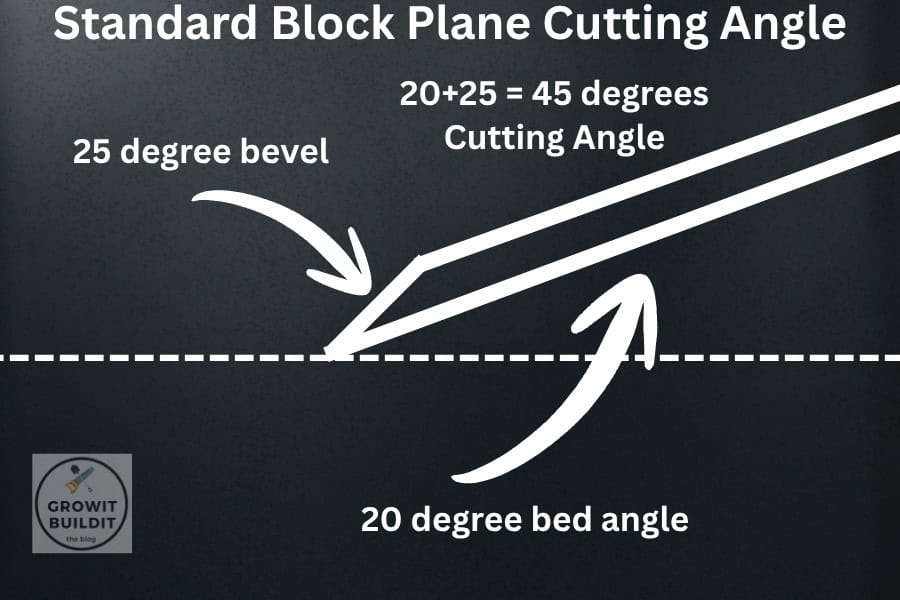
On standard bench planes, like this Stanley, the bevel is positioned face down. This renders that cutting angle to that of the frog, or bed angle, and the bevel angle doesn’t matter. So, for standard bench planes the actual cutting angle with the wood is always going to be 45 degrees.
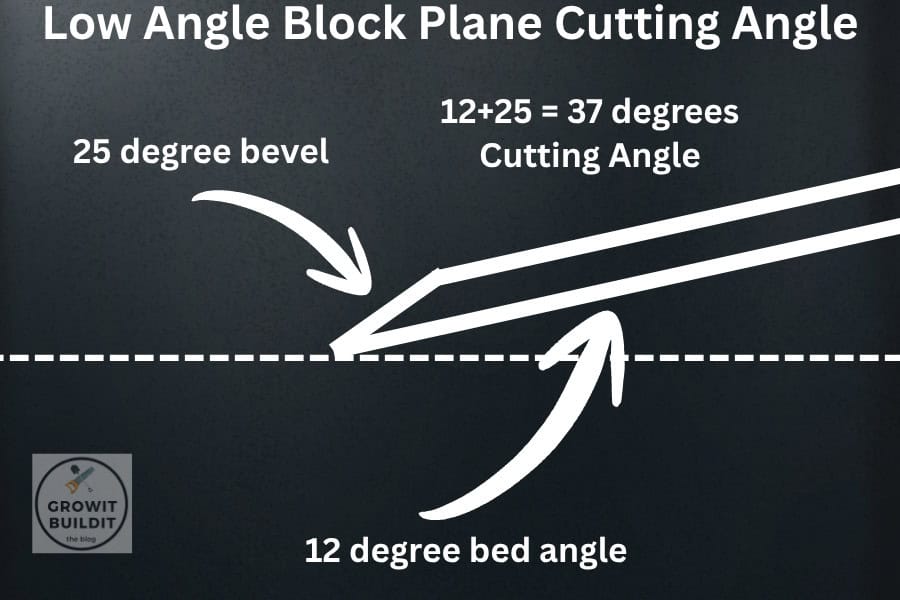
Conversely, for a low angle block plane, the combined angle is typically going to be about 37 degrees (25 bevel angle + 12 degree bed angle). Now, while 8 degrees does not sound like much of a difference, it really seems to matter, in particularly for planing end-grain. It is something that you just
Ok, that’s great, but what does a standard angle block plane do?
Well, first, the bed angle of a standard angle block plane is 20. But, on a block plane, the iron is positioned so that the bevel faces up. So, now the cutting angle is the sum of both the bed angle and the bevel angle. And, if you sharpen to 25 degrees, than it has the same cutting angle as a regular jack or smoother plane. But, why would you use a block plane? Well, simply put, a small block plane can fit on pieces that a larger jack or smoother plane cannot. So, a block plane gives a convenience for it’s own size, as well as where it needs to work.
Standard Angle Block Planes
Alright – so standard angle block planes have a bed angle of 20 degrees, and typically have a bevel of 25 degrees. So, their combined angle is 45 degrees, the same as a regular smoother or jack plane (Stanley no4 or no5, for reference). These planes can cut just as well as the regular sized bench planes, but are much smaller and compact. So, they can be used with one hand, and plane in areas too small for a larger bench plane.
Low Angle Block Planes
Ok, so what to say about low angle block planes…well, their primary advantage is that they cut end grain, really, really well. To understand why, we first have to understand that a board is made up of long wood fibers that run the whole length of the board. And, when we want to plane end grain, it can be a bit challenging for a standard angle block plane or bench plane. The steeper angle wants to pull up the fibers, but sine they are on their end, that doesn’t work as well as a low-angle block plane. But a low angle block plane comes in at a smaller angle, and shears the fibers more like a razor when shaving your face.
Specialty Block Planes
Alright, so let’s talk about specialty block planes….there are a lot of them, and all are purpose built. Basically, if you have a block plane that either looks really weird, small, or strange, then you probably have one of these specialty block planes. Most often you can find strange sized planes, like the one shown below (it came in a larger tool box I bought). Sometimes they are just extremely tiny, and are made just so they can fit into places where standard planes, and block planes can’t fit. The example below is likely used by lutheirs making guitars or violins.
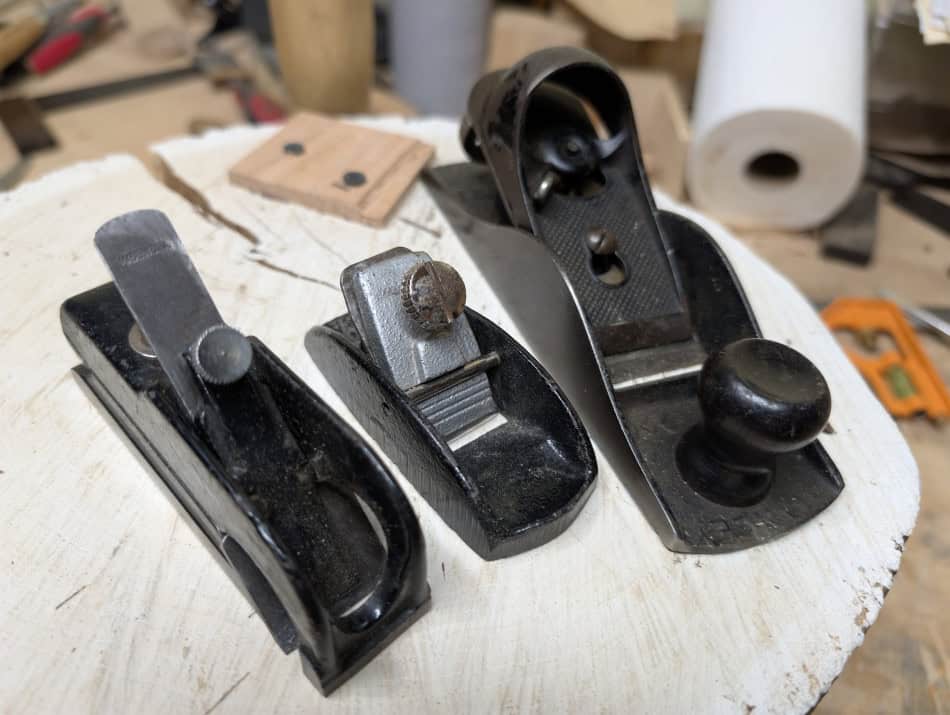
Another example that is somewhat common would be a bull-nose plane. These are purpose built for cleaning out rebates, the inside of windows, or anywhere that you need to get the blade as close to the front of the sole as possible. These specifically are quite common, but do fetch a decent price of around $30 on ebay.
Where to buy used block planes
Ebay and Facebook Marketplace are probably the best way to purchase block planes online. To understand the market, use Ebay and check on sold items to see what they typically go for. It will give you a solid understanding of what to expect. Other than that, should you see a yard or garage sale, they often have old tools for really cheap. Now, very frequently the tool in question will be rusty and old, and possibly damaged. Getting a tool into useable condition isn’t too hard, as I document here when I restored my 110 block plane to a useable shape.
What Block Planes do you need?
Wow, look at that heading – if there ever was a loaded question……there are so many types and variants of block planes around. I think Stanley alone made 60 different models over the years….well how many do you actually need? The answer for most people, is two – a standard angle and a low-angle block plane.
Common standard angle models
So, there are dozens and dozens of standard angle block planes. I’m going to list the three most common types you may encounter below. Which one should you get? Well, the easiest one to use is probably the 220, as it is easy to adjust by just turning a knob in the back. But, if you happen upon another one marked at $2 at a yard sale, well, why not buy it?
Stanley 110
The Stanley 110 was likely the most produced block plane of all time. First patented in 1875 by Justus Traut, it’s simple design and effectiveness kept the cost low, making the tool ubiquitous in garages and tool boxes. It is 3 pieces, a bed, blade, and a cap with a knob. You tighten the knob to hold the blade in place, but don’t over-tighten it as you can actually deform the blade. If you are buying one of these, make sure the blade has plenty of life left in it, as they do not make replacements.
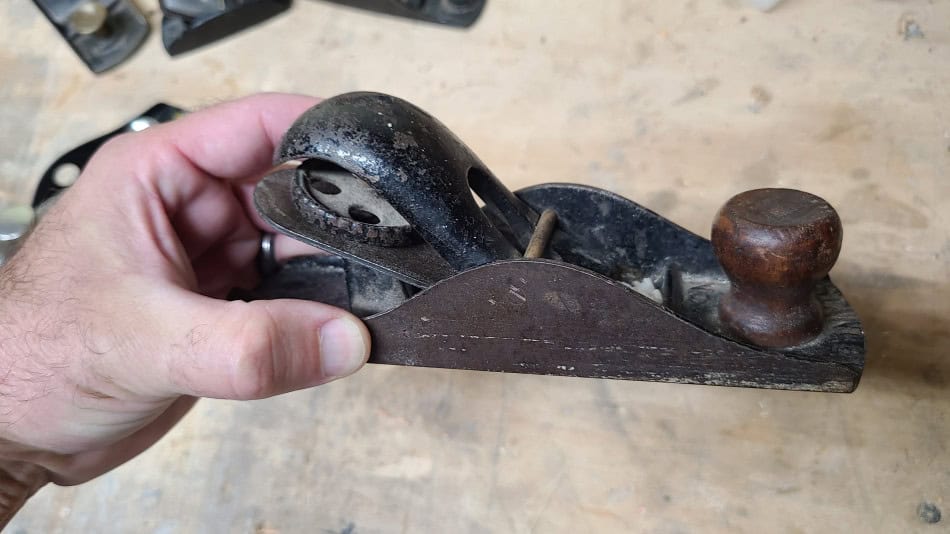
I’ll make another post describing adjustments of the 110 in detail in the future. To give it a bit of mystery, the Stanley 110 was nearly the most common block plane in the world in the early 1900’s, but is very much out of favor now….and why? Well, most of the people who knew how to adjust it are dead. It isn’t taught in school, and isn’t intuitive.
Stanley 220
This is a very common block plane, with a simple knob for extending/retracting the blade. Patented in 1900 by the incredible inventor Justus Traut, the lever cap snaps it in place, then keep it snug (not overly tight) with the screw. Very easy plane to use, very common. As of 2026, ono ebay I would not pay more than $20 w/ shipping for one of these if you are looking for a deal.
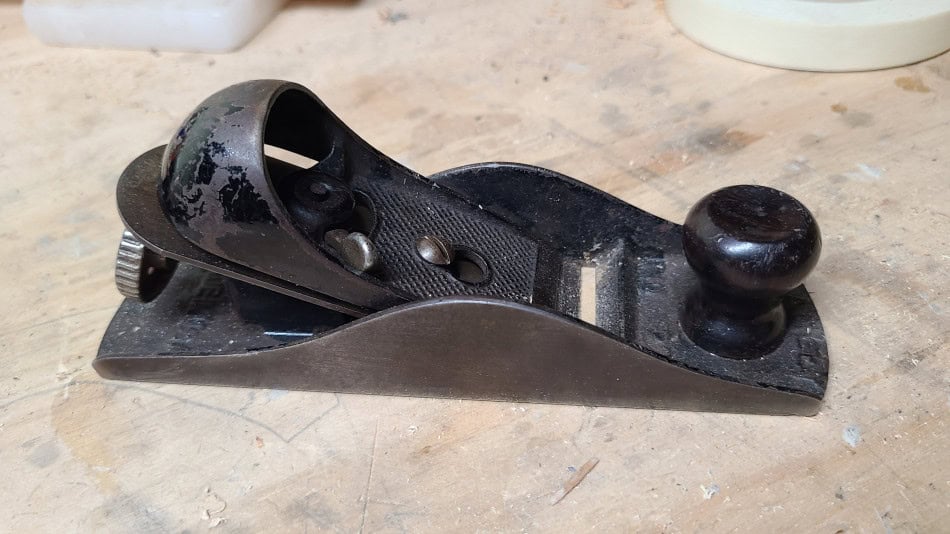
Stanley 9-1/2
Another very common tool, and has been around since the mid-1800’s. The photos I’m showing you is of mine, which was made around 1875. It still works, and is probably the oldest plane I own.
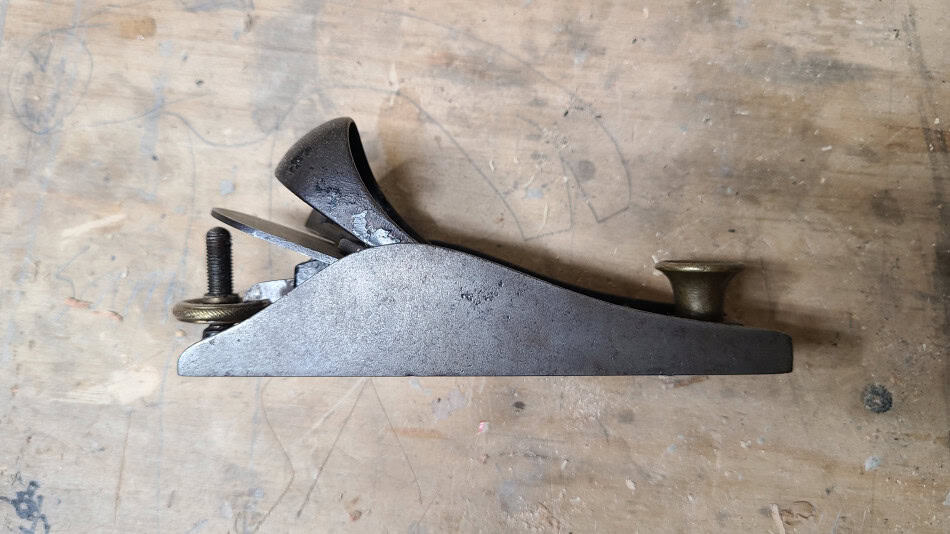
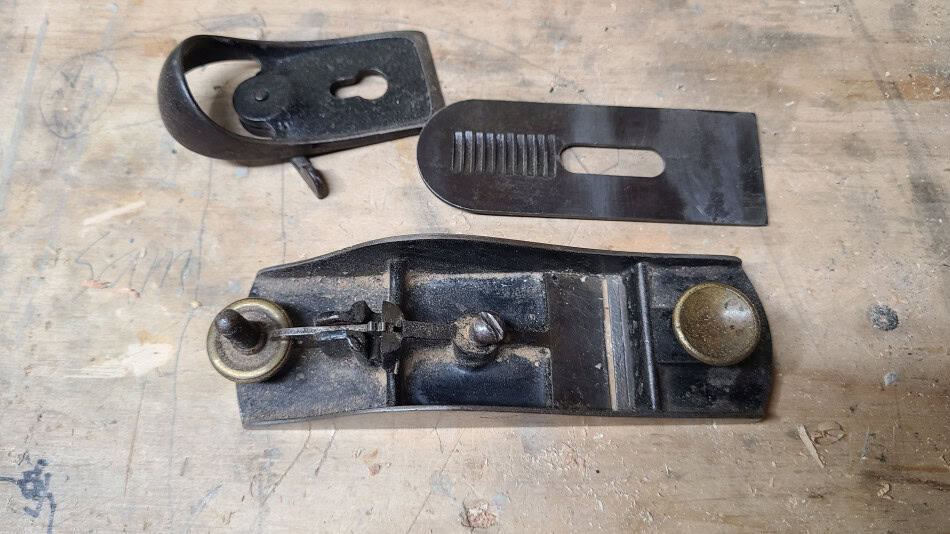
But this has a strange mechanism for extending/retracting the blade. You adjust the wheel up and down, which moves a lever, which rotates a toothed mechanism that fits in the grooves of the iron. It works, but sometimes you will have to sharpen 1-2 mm off your iron as the mechanism may not be able to extend it outwards, but the next groove on the iron makes it always stick out. Frustrating.
Low angle block planes
For acquiring low angle block planes, well, people seem to be more proud of those so they are a bit pricier. If you happen to see one at a garage sale with no-name on it, but it has all the features of the 60-1/2, then pick it up. These designs by Stanley have been, and are still copied today by tons of manufacturers.
Stanley 60-1/2
The quintessential low-angle block plane is the Stanley 60-1/2. These can be bought for around $20 on Ebay, covered in rust. If you want a nicer version, then you should expect to pay $40 before shipping, which, in my opinion is kind of steep. These planes all have adjustable mouths, which is a topic for another discussion, but in my opinion is not necessary for a plane that is primarily used to trim end-grain. Adjustable mouths allow you to control the thickness of shaving, and to reduce the likelihood of tear-out. But when planing end-grain, tear-out isn’t really a concern, so, why pay more for the 60-1/2?
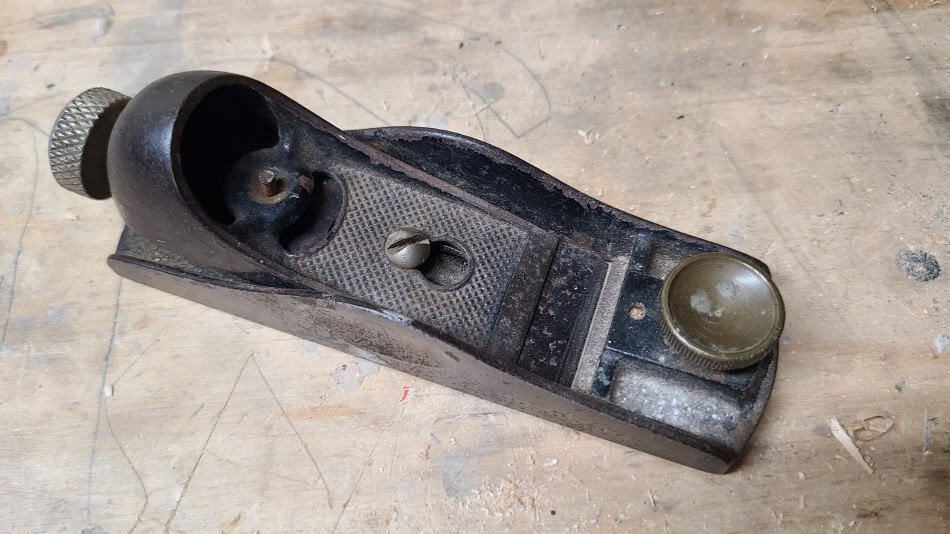
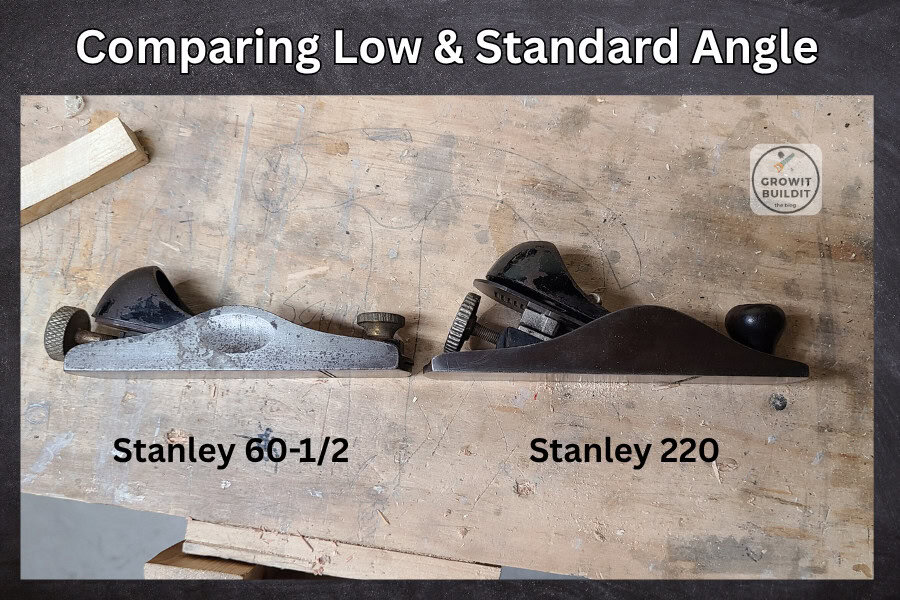
One other important note on the 60-1/2. Since it has the same style blade adjustment (the knob) this plane can often be confused with the 220. So, an important differentiator is that 60-1/2 will be stamped on the side of the bed, at the middle/bottom. Also, 60-1/2 have adjustable mouths. Below you can find a couple pictures to help you though.
Stanley 118
Ok, the expense of a 60-1/2 allows me to advertise the Stanley 118, low-angle block plane. This plane has a single-piece bed, formed steel body that won’t shatter upon being dropped. Stanley in-fact advertised this plane as ‘boy-proof’. It does not have an adjustable mouth, but has the low-angle like the Stanley 60-1/2. These can often be bought for $5-$15 before shipping on Ebay. These planes are cheap considering the function they provide.
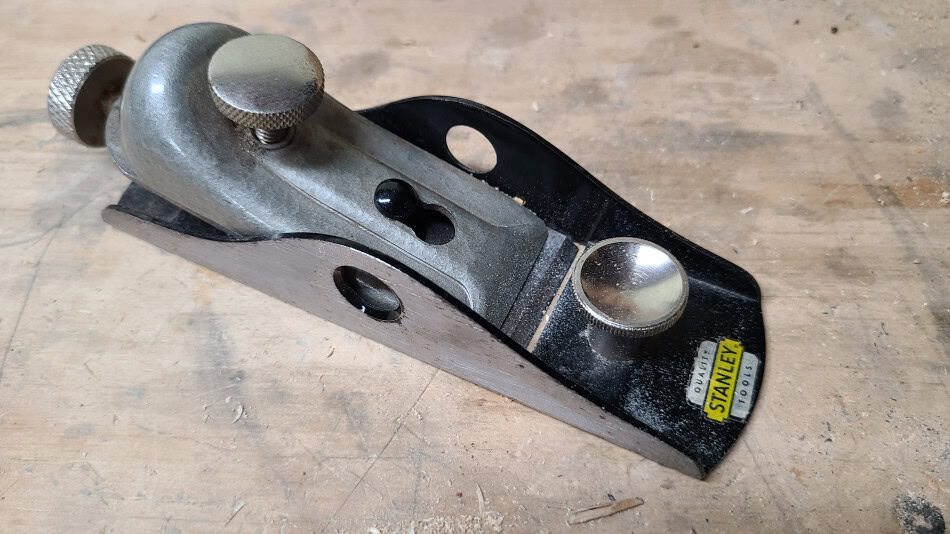
I secretly think these Stanley no118 low-angle block planes will become valuable someday, perhaps in the next 10 years once more of the lever-caps of the 60-1/2 have shattered. In anticipation of this wishful thinking event, I can now say I’m the proud owner of four Stanley no118, which if my predictions are correct, could make me a hundredaire in the near-future.
Stay tuned.
Find more DIY tips here!
Addendum
Just a brief note, if you want to find a really great resource on all handplanes, The Superior Works: Patrick’s Blood and Gore is probably the best resource out there. The site has been online since the early days of the internet, and it is a great resource for anyone looking for very specific details on all the various handplanes and tools Stanley made over the last 150 or so years. Sometimes a tool gets a long write up, often just a little blurb, but he is giving first hand experience every time.
Recent Posts
October 6th, 2026 Do you ever feel overwhelmed by the amount of chores that come with gardening? Ever miss a planting window because you forgot? Are you a total beginner at gardening and don't...
Wrinkle-leaf Goldenrod is a herbaceous perennial flower native to Eastern North America[1]. Scientifically known as Solidago rugosa, it can grow up to 5' tall by 3' wide in full sun and moist to...