
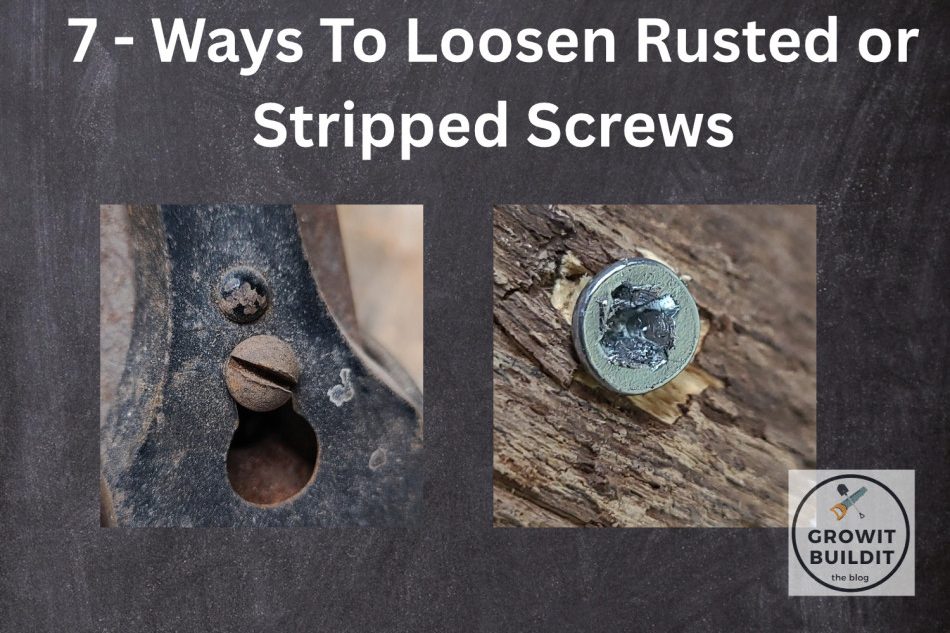
At some point in your life, you are going to have to loosen a rusted, stuck, or seized screw. It is almost guaranteed! So, depending on the situation, one of these will work. I’ve noticed that lots of things you order online come with cheap hardware that is much more prone to having the heads strip out, and with the proliferation of cordless drills, well, these situations happen even more frequently!
1 – Remove any paint
If you’re dealing with a painted item (like a door or window), then scrape away any paint that could be holding the screw in place like glue. Dried paint isn’t exactly a strong adhesive, but it is providing a resistance to turning, and we should eliminate it.
2 – If stripped, use a rubber band!
Using a rubber band to get better grip on the head is a tried-and-true method for breaking loose a screw that has had it’s head stripped. You know, where the inside of the phillips or flat-head have been removed from the screwdriver spinning.
But the basic idea is in the image on the right (click to enlarge). Essentially you will just stretch a rubber band firmly over the head, so it is in tension. Then, while doing this, force your screwdriver into the head. The rubber fills in any gaps between the screw-driver and what is remaining of the head, thus giving you a good chance to loosen it.
One extra bit of advice I can give you with this method is to really make sure you put your weight into it when trying the break it free. Sometimes it is going to take all you’ve got.
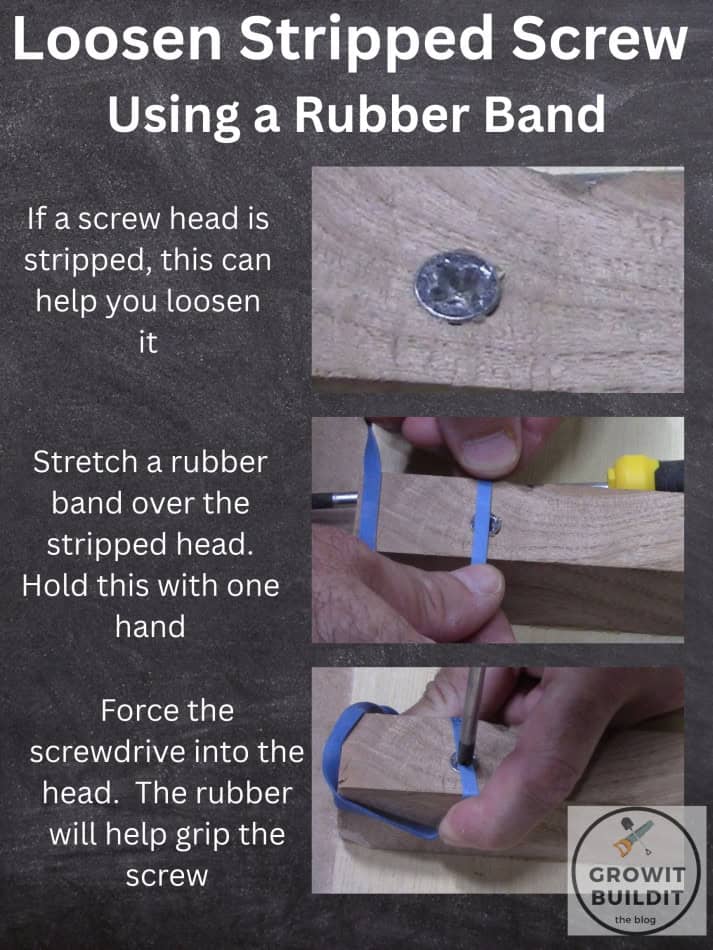
Should the head of the screw begin rounding or stripping out, then this trick may be of great help. I’ve used this many times on hardware that came with cheap blinds to install, or cheap crappy furniture that we’ve all bought from Amazon.
But to do this, you simply stretch a wide rubber band over the screwhead with one hand. Then, while under tension, force your screwdriver into it. The rubber will help ‘grip’ the head, and can often allow you to break something free.
3 – Penetrant oil (particularly for rusted hardware)
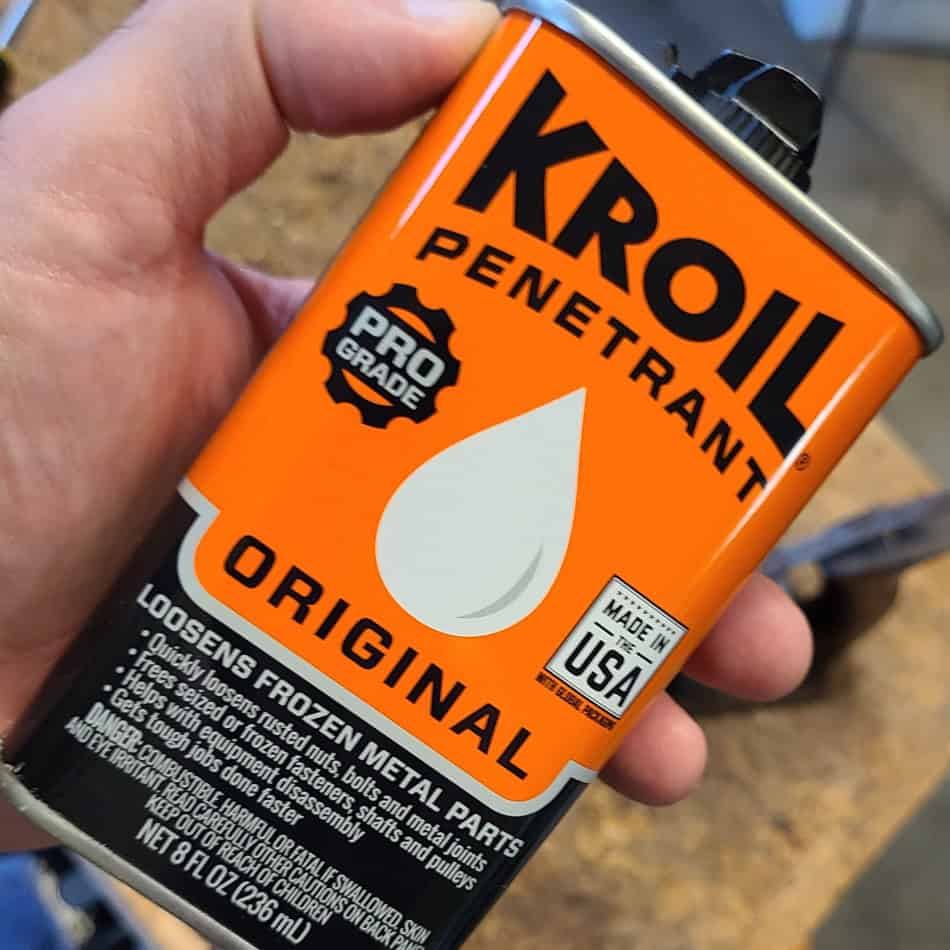
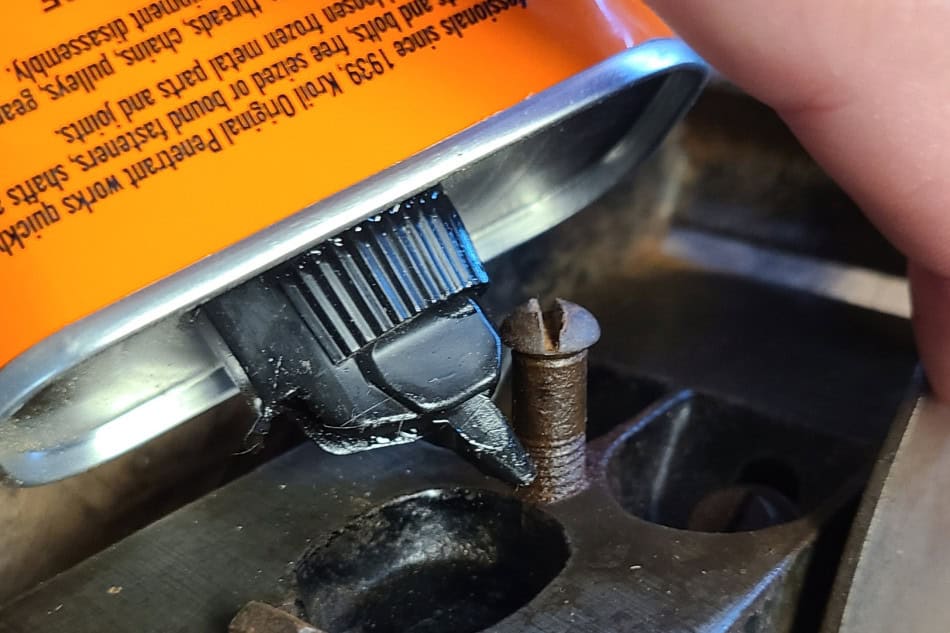
For rusted screws, bolts, or anything similar, penetrate oil can save the day. The best is to by a can of PB Blaster, or any ‘liquid wrench’ and spray it on any threads you can see, then wait a few minutes for it to penetrate. Come back with your screwdriver or wrench, and hopefully it breaks free. If it doesn’t, you can always reapply several more times over a day or two.
4 – Use a hammer
If you’ve tried the penetrate oil above, another nice trick (for items that won’t move) is to just use a hammer. Simply place your screw driver into the head, and while trying to loosen the screw, gently tap it with the hammer. The combination of impact plus torsion is often enough to break free rusted hardware.
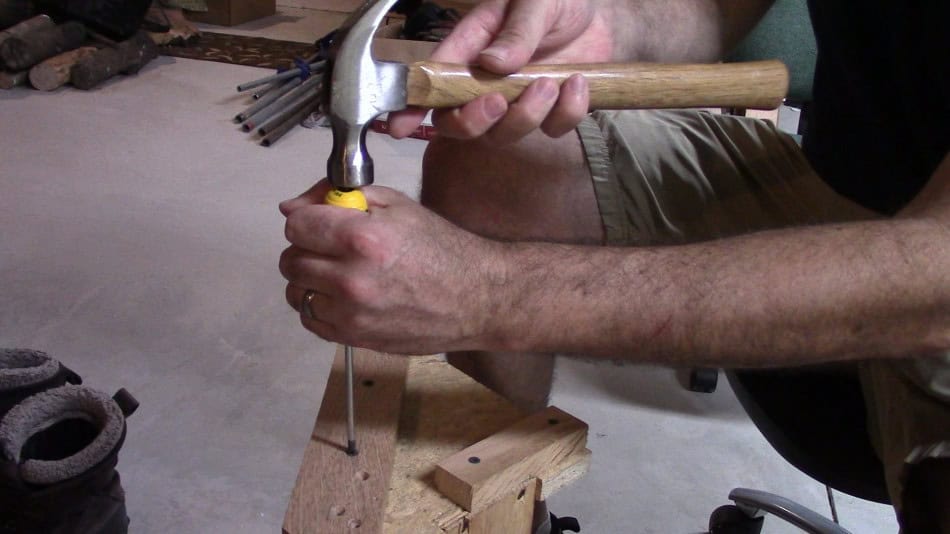
If you’re trying this on something smaller, like an old rusted handplane, then make sure you clamp it down well before tapping. Also, you aren’t driving a nail – so just tap it firmly, but gently, while at the same time turning the screw driver. You aren’t swinging for the fences here, but the impact/vibration will often break it free.
5 – Use heat / cold cycles
Another great trick that is a bit more involved is to apply heat/cold to the hardware. The heat will expand the screw, hopefully widening the hole or breaking any corrosion bonds. Applying cold close behind will shrink the bolt/screw faster than what it is attached too….
There are a few strategies one could use here, but ultimately, whatever you have available should be used. The best can be a soldering iron, heat gun, or if outdoors (and no risk of fire), a blow torch.

6 – Use a screw extractor
Screw extractors are available at many home repair / hardware stores. The basic idea is that you drill into the stuck screw, insert (torque) the extractor until it is really biting on the screw, then just loosen and remove it. These can be a bit harder to make work, but they can be effective if used properly.
7 – Drill it out
The last resort is to drill out the bolt/screw. Simply get a drill bit that is the same size as the screw head and drill it out. Make sure your drill is on the slowest speed when doing this.
Find more DIY projects here
Recent Posts
October 6th, 2026 Do you ever feel overwhelmed by the amount of chores that come with gardening? Ever miss a planting window because you forgot? Are you a total beginner at gardening and don't...
Wrinkle-leaf Goldenrod is a herbaceous perennial flower native to Eastern North America[1]. Scientifically known as Solidago rugosa, it can grow up to 5' tall by 3' wide in full sun and moist to...