
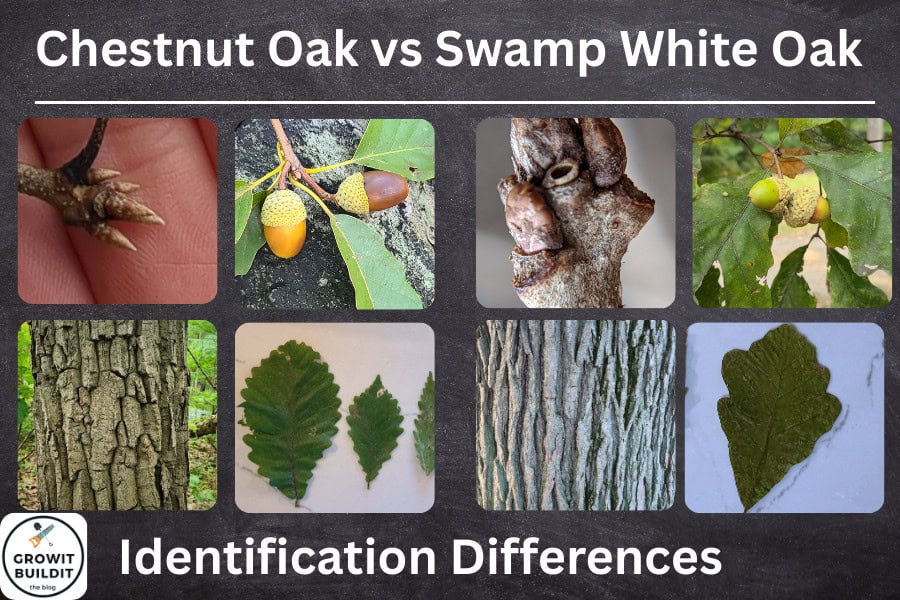
When it comes to identifying Oak Trees, there are some species that will give you fits! In particular, comparing a Chestnut Oak to a Swamp White Oak can be challenging as there are some features that are very similar. Specifically, the leaves and the acorns (if un-capped) can be very hard to differentiate. But, in this article I will compare the two species in detail, so that you can confidently differentiate them in the field.
Habitat Comparison
First and foremost, if this is a ‘wild’ tree, examine the surrounding habitat. Chestnut Oak is most often found on rocky ridges and slopes, or areas where there is plenty of drainage. While Swamp White Oak likes to grow near water (unsurprisingly) or lower spots, where it can have constant access to moisture.
If you are seeing these trees in a landscaping application though, then they can usually both grow in full sun and well-draining soil. So, head down to the next section.
Bark comparison
Mature trunks
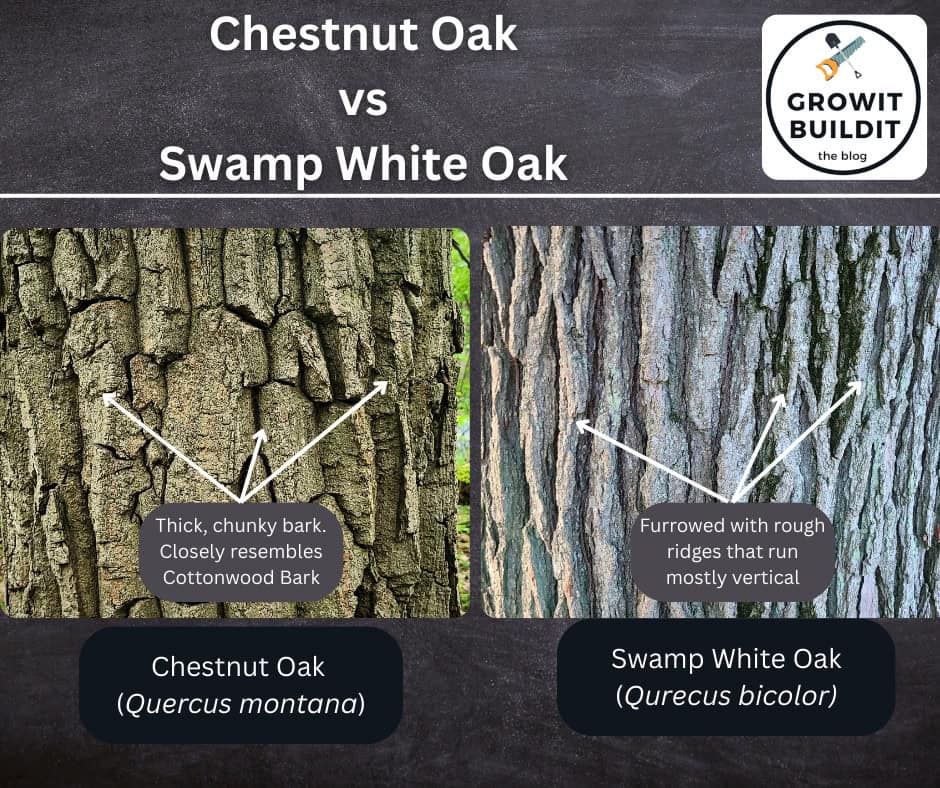
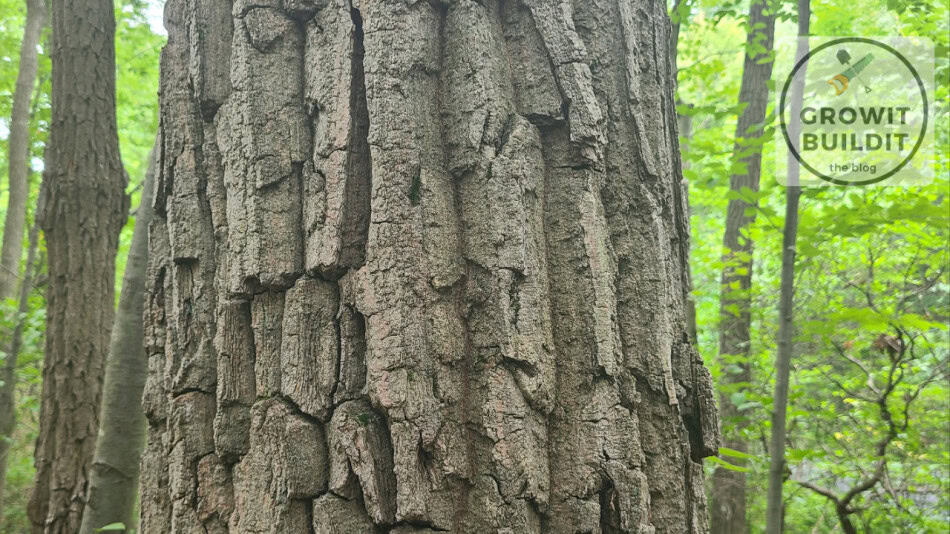
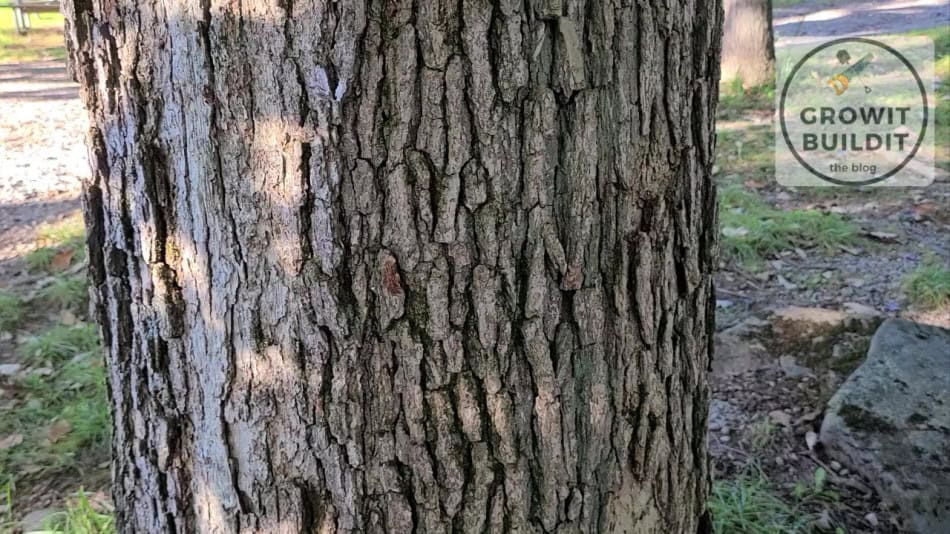
Bark is the single easiest characteristic to differentiate Chestnut Oak from Swamp White Oak. For mature trees, Chestnut Oak appears to be comprised of very large irregular chunks that are a couple inches thick. This contrasts nicely with the irregularly furrowed bark of Swamp White Oak.
Branch and twig bark
Unfortunately it is harder to differentiate the two species by immature bark of twigs or branches. Both are gray in color (sometimes brown), and both have small white spots known as lenticels.
Leaf Comparison
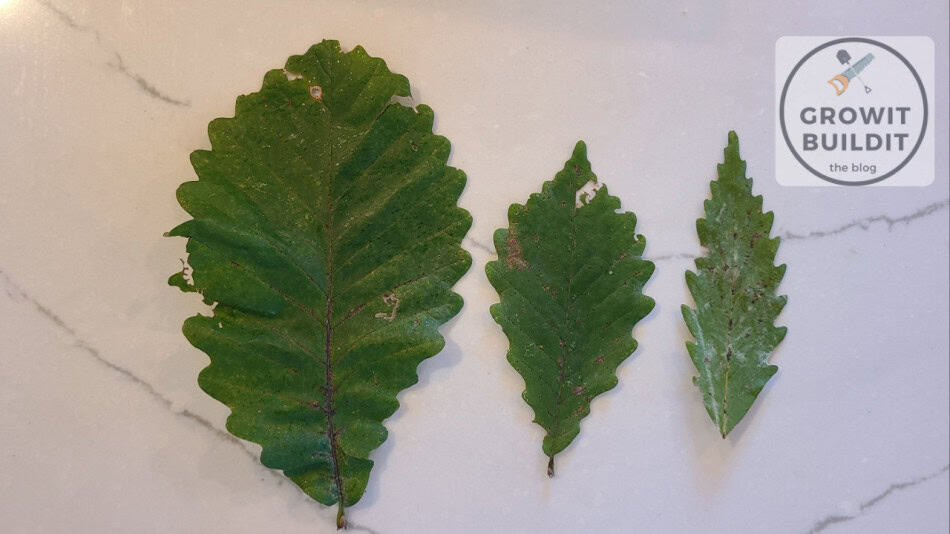
When it comes to leaves, comparing these two species can be quite difficult. Both are in the white oak family, so the tips of the lobes are blunt or rounded. Both have fuzzy undersides. And both have the same overall shape.
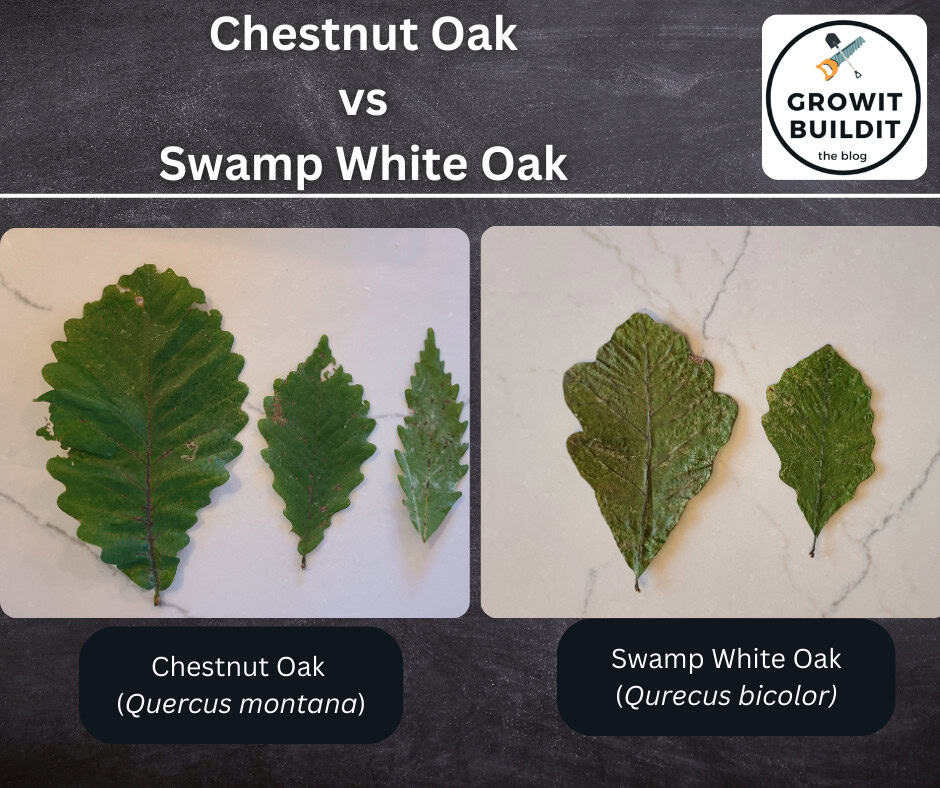
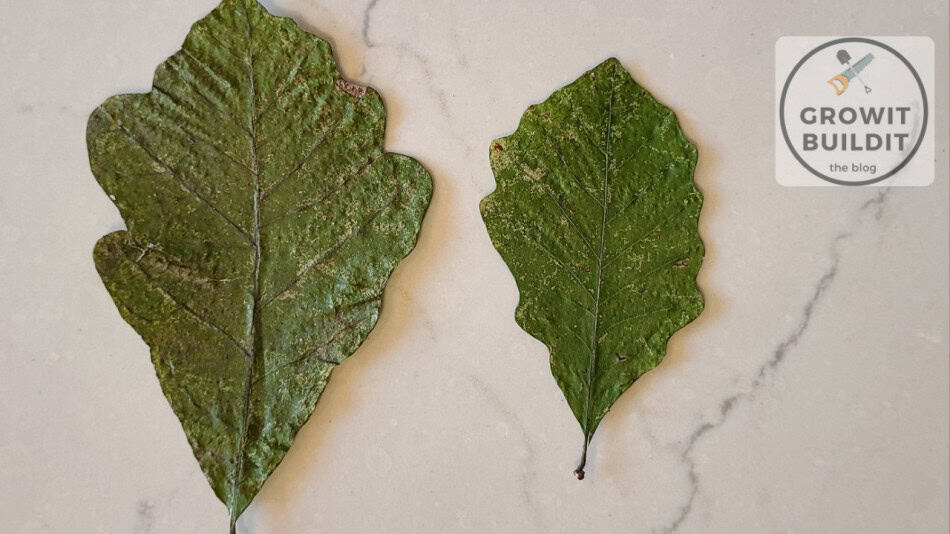
There are only two ways I know to get a clue as to differentiating the species, and that is with the margins and venation. Chestnut Oak has crenate margins, while Swamp White Oak has more undulate or blunt teeth. But this isn’t always the case though. As the image below is of Swamp White Oak, and that one looks a lot like a Chestnut Oak to me.
But, looking at the venation on the underside of the leaf may be the key.
Acorn comparison
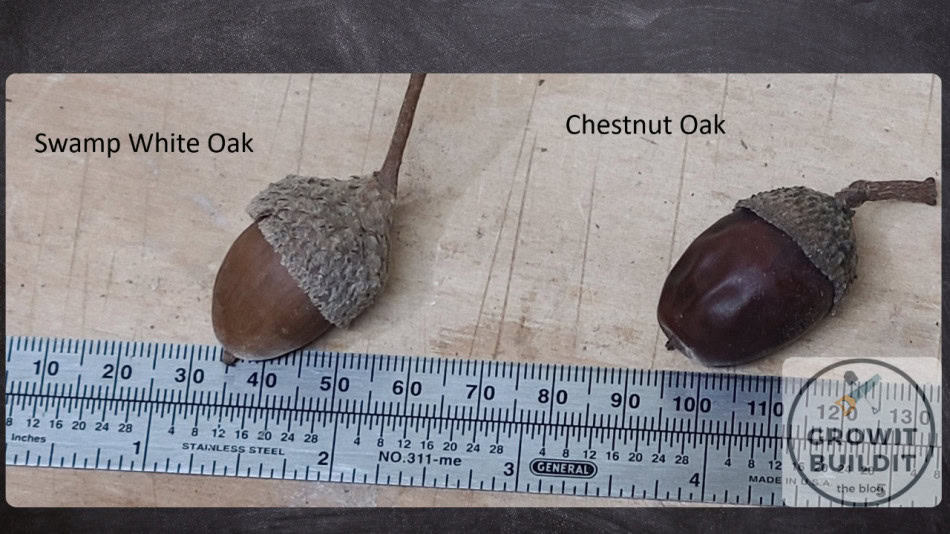
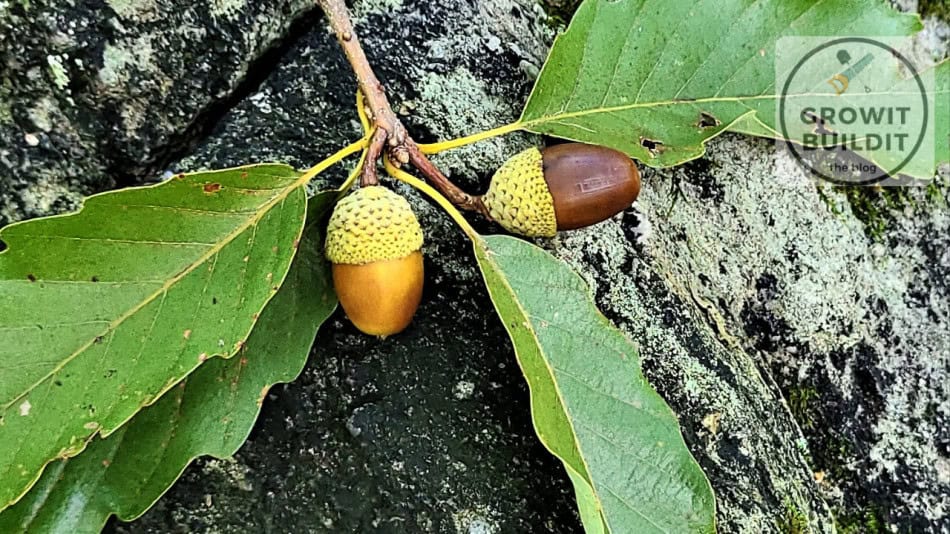
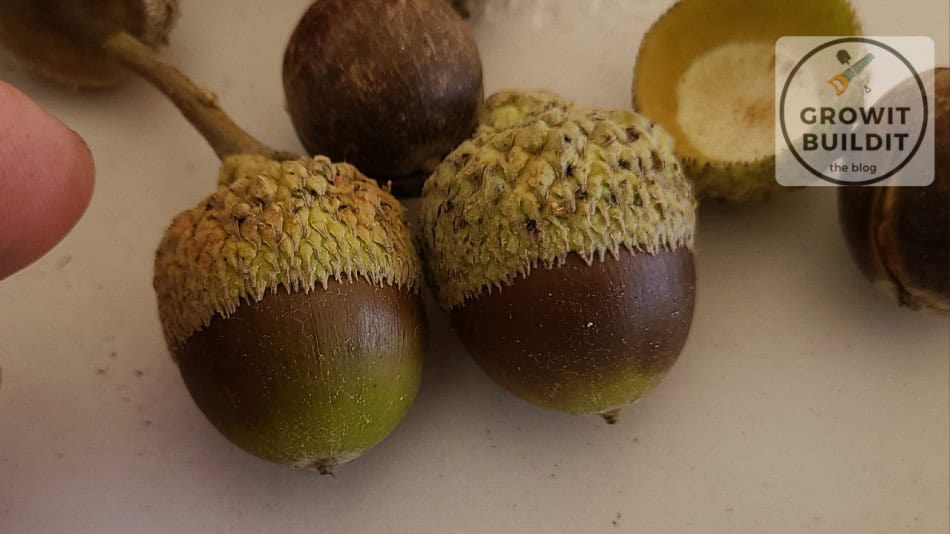
Chestnut Oak acorns are some of the largest, coming in up to 1-1/2″ long. Swamp White Oak can overlap in size, growing more than 1″ long. The caps can be used to tell them apart somewhat though. Chestnut Oak caps are thin and really follow the form of the acorn. While Swamp White caps are thicker at the top.

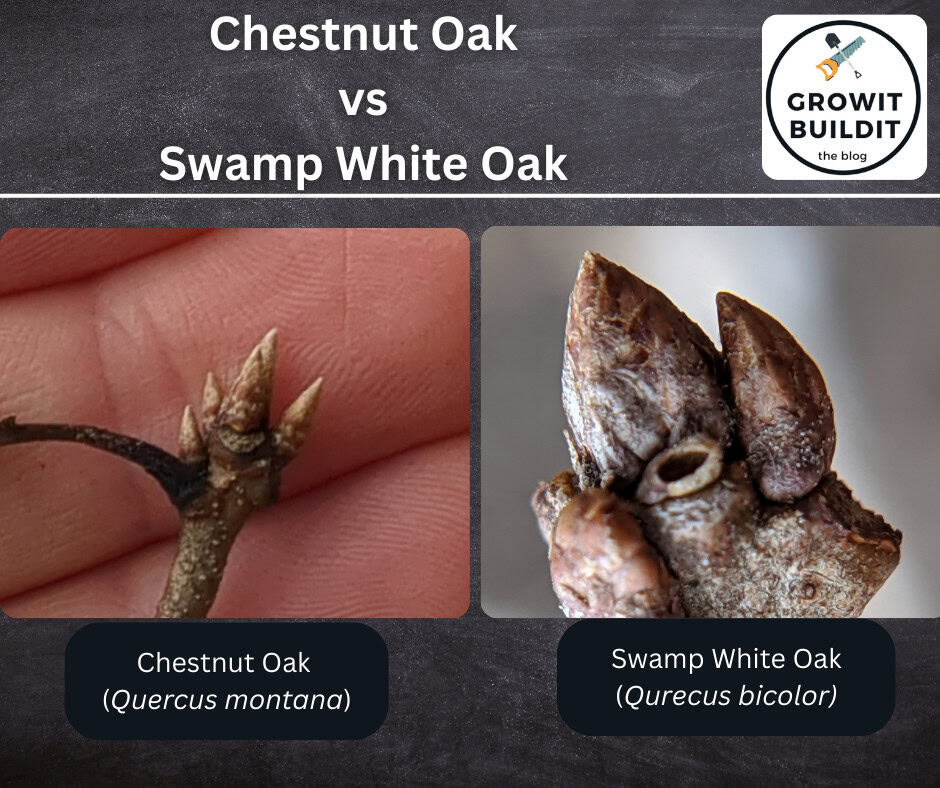
Bud comparison
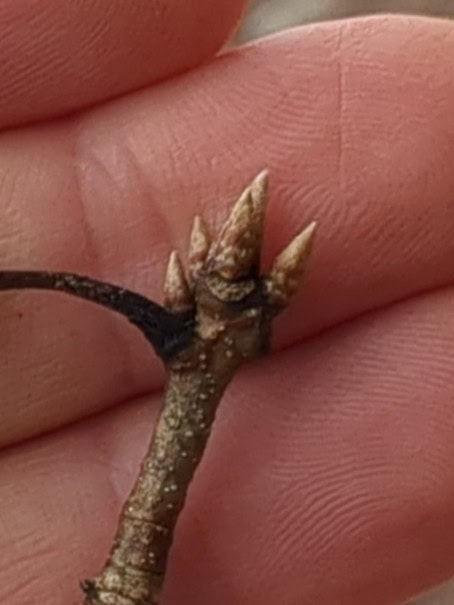
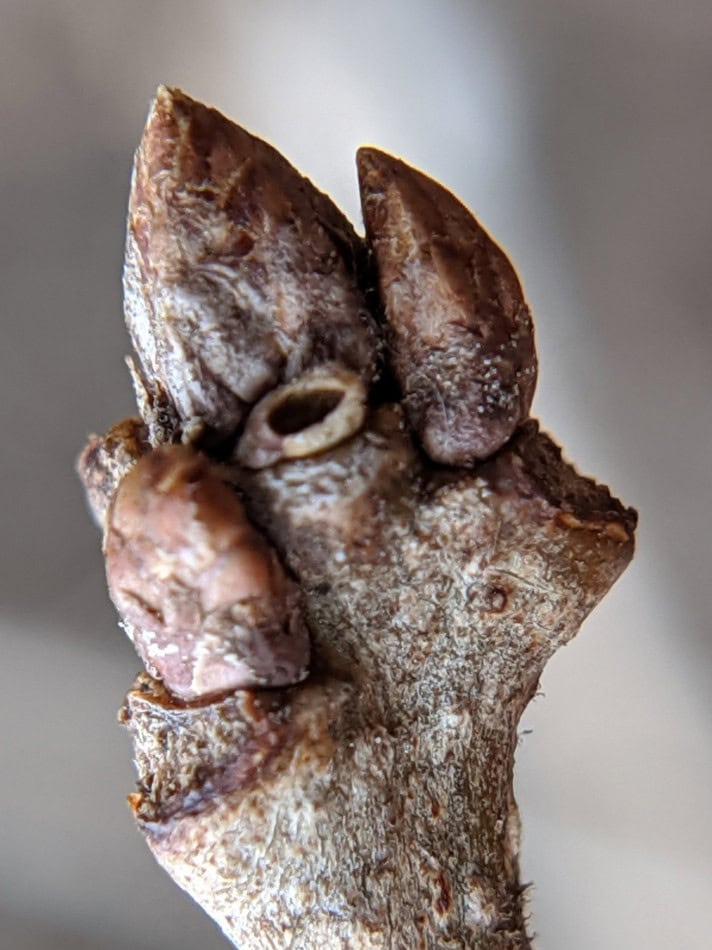
The buds of both trees look really similar. I personally could not differentiate these two species from buds alone.
Chestnut Oak
Bark
Bark is gray to brown, hard flat-topped ridges when mature. Very ‘chunky’ and thick when mature.
Leaves
Alternate, up to 6″ long, obovate to elliptical in shape. Margins are crenate. Glossy green upper surface and a pale green underside. The underside feels fuzzy.
Buds
Acorns
Acorns are 1 to 1-1/2″ long, and will discard their cap when mature. The cap is very thin in comparison to swamp white.
Swamp White Oak
Bark
Gray with either irregular vertical furrows/ridges, and sometimes scaly.
Leaves
Alternate, up to 7″ long and 4″ wide, irregular denante margins, obovate shaped. They are dark glossy green on top while undersides are pale green with white hairs.
Buds
Acorns
Acorns are approximately 1″ long. They have bowl-shaped caps that cover about one-third of the acorn.
Conclusion
Chestnut and Swamp White Oak trees have a lot of similarities in characteristics, especially when it comes to leaves, buds, and acorns. However, being able to see the bark, or the cap on an acorn will usually result in a positive identification. So, find the tree and look at that bark – and you will have no doubt what species you are looking at!
Find more native trees here!
References:
[1] – Robert A. McQuilkin “Quercus prinus Chestnut Oak.” Silvics of North America 2 (1990). Archived Version.
[2] – Rogers, Robert. “Quercus bicolor Willd.—Swamp white oak.” Silvics of North America 2 (1990): 614-624.
[3] – Quercus montana, Fire Effects Information System. US Forest Service. Accessed 13DEC2025
[4] – Nesom, Guy. SWAMP WHITE OAK Quercus bicolor Willd, USDA Plant Guide. 2002.
Recent Posts
Green Milkweed is a herbaceous wildflower native to North America[1], and is a host plant for caterpillars of the Monarch Butterfly[2]. Scientifically known as Asclepias viridis, it grows up to...
Keystone Plants - What Are They, And Why Are They Important?
If you've been researching native plants, you may have come across the term "Keystone Plant" or "Keystone Species". Often spoken or reverence or casually noted for their importance. So, what exactly...